 Save
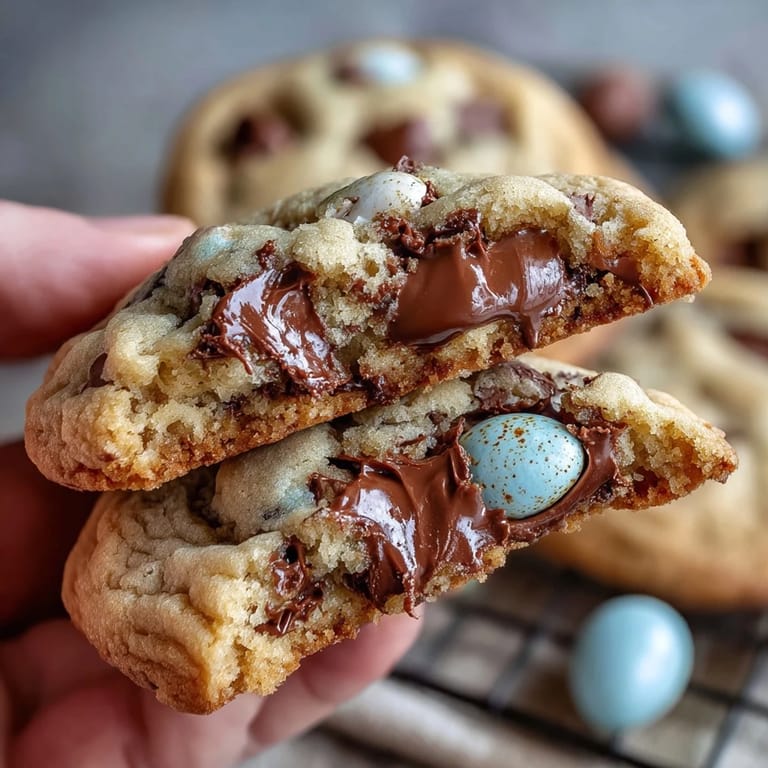
Save My daughter burst through the kitchen door that March afternoon with a bag of Cadbury Mini Eggs she'd found at the grocery store, immediately declaring we needed to bake something worthy of them. I'd been standing there with my coffee, thinking about ordinary chocolate chip cookies, when she held up those pastel shells and suddenly the whole idea shifted. We ended up creating these soft, chewy cookies together, and honestly, watching her face light up when she bit into that first warm cookie with the crunchy mini eggs scattered through it made the whole afternoon feel less like baking and more like spring arriving early.
Last Easter, I brought a batch to my neighbor's porch as a little surprise, and she texted me three times that day asking if I'd made them commercially—people genuinely didn't believe I'd baked them from scratch in my own kitchen. That's the moment I realized these weren't just decent cookies; they were the kind of thing that made people pause mid-conversation to really taste what they were eating.
Ingredients
- All-purpose flour (2 1/4 cups): This is your foundation, and measuring it correctly matters more than you'd think—scoop and level rather than scooping and tapping the measuring cup on the counter, which packs it down and makes your cookies dense.
- Baking soda (1/2 teaspoon): This tiny amount is what gives you that soft, chewy texture instead of a cakey cookie, so don't skip it or double it.
- Salt (1/2 teaspoon): It sounds small, but salt is what makes every other flavor pop and keeps these from tasting one-dimensionally sweet.
- Unsalted butter (1 cup, softened): Softened means it should be at room temperature and slightly give when you press it—this creates that light, creamy base for everything else.
- Brown sugar and granulated sugar (3/4 cup and 1/2 cup): The brown sugar brings moisture and a subtle caramel note while the granulated sugar helps spread, creating those lightly crispy edges.
- Eggs (2 large): These bind everything together and add richness, so room temperature eggs mix in more smoothly than cold ones from the fridge.
- Vanilla extract (2 teaspoons): Use pure vanilla, not imitation—it sounds pretentious but you'll genuinely taste the difference in the final cookie.
- Semi-sweet chocolate chips (1 cup): You can swap these for milk or dark chocolate depending on your mood, and honestly, a mix of both creates beautiful pockets of different chocolate flavors.
- Cadbury Mini Eggs (1 1/2 cups, roughly chopped): Roughly chopping them means some pieces stay chunky for crunch while others break into smaller bits that melt slightly—don't chop them too fine or you lose that texture magic.
Tired of Takeout? 🥡
Get 10 meals you can make faster than delivery arrives. Seriously.
One email. No spam. Unsubscribe anytime.
Instructions
- Get your oven ready:
- Heat your oven to 350°F and line two baking sheets with parchment paper—this step takes literally two minutes but saves you from scrambling when you're ready to bake. The parchment is non-negotiable because it prevents sticking and gives you those slightly crispy bottoms.
- Mix the dry ingredients:
- Whisk together your flour, baking soda, and salt in a medium bowl and set it aside—this pre-mixing distributes the leavening evenly so you don't get weird pockets of underbaked dough.
- Cream the butter and sugars:
- Beat the softened butter with both sugars until the mixture is light, fluffy, and pale—this usually takes about three minutes with an electric mixer and is where the magic of texture begins. You're basically incorporating air, which makes the final cookies tender.
- Add eggs and vanilla:
- Add your eggs one at a time, beating well after each addition, then mix in the vanilla extract—adding them separately instead of all at once helps them incorporate smoothly without the mixture looking curdled.
- Bring wet and dry together:
- Gradually add your dry ingredients to the wet mixture, mixing just until combined—overmixing here is the enemy because it develops gluten and makes cookies tough and cakey instead of chewy. Stop as soon as you don't see white flour streaks anymore.
- Fold in the chocolate and eggs:
- Use a spatula to gently fold in the chocolate chips and chopped Mini Eggs, being careful not to crush them too much—you want distinct pockets of chocolate and that satisfying candy crunch throughout.
- Portion your cookies:
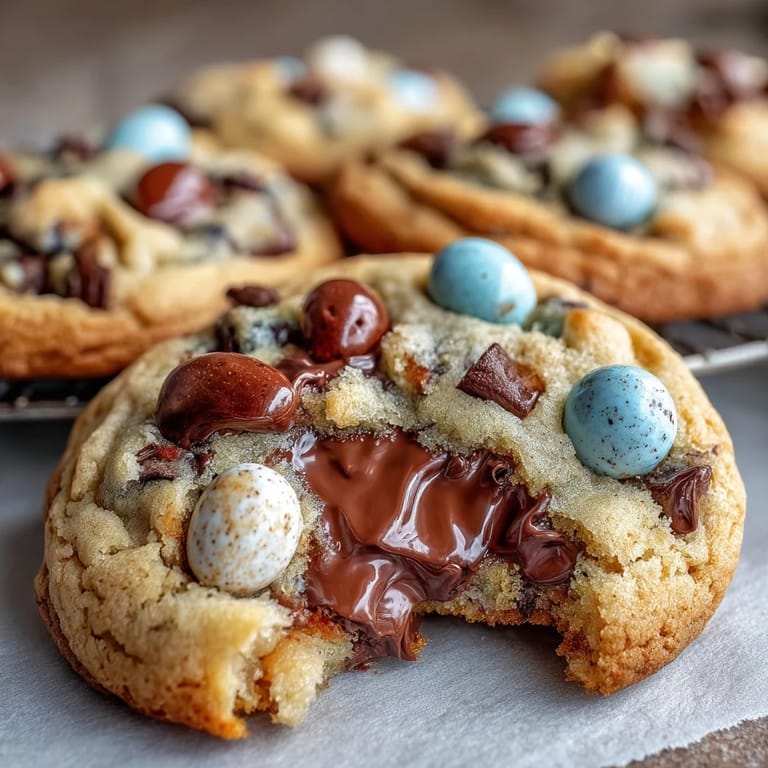
- Scoop tablespoon-sized balls onto your prepared baking sheets, spacing them about two inches apart because they'll spread as they bake. If you want to get fancy, press a few extra Mini Egg pieces on top of each dough ball before baking for decoration.
- Bake until perfect:
- Bake for 10 to 12 minutes, pulling them out when the edges are lightly golden but the centers still look slightly underdone—this is the secret to chewy cookies. They'll continue cooking a bit on the hot pan after you remove them from the oven.
- Cool with patience:
- Let cookies rest on the baking sheet for five minutes before moving them to a wire rack—this waiting period lets them set up enough to handle without falling apart, but they're still warm and soft.
 Save
Save There's something special about giving someone a warm cookie that's still slightly soft from the cooling rack, watching them break it open and finding those bursts of crunchy candy inside. That moment when they look up at you with surprise and delight is honestly why I keep making these.
Chocolate Chip Variations That Work
While semi-sweet chips are the reliable choice, I've experimented enough to know that mixing chocolate types creates something more interesting than sticking with just one. Dark chocolate adds sophistication and cuts through the sweetness of the Mini Eggs, while milk chocolate leans into that Easter candy feeling. One time I used a combination of all three—semi-sweet, dark, and milk—and the cookies had this complex chocolate flavor that people kept asking about.
Storage and Make-Ahead Magic
These cookies are the kind of thing you can bake three weeks before an Easter gathering and pull from the freezer still tasting fresh, which means you can actually enjoy hosting instead of spending Easter morning elbow-deep in dough. I store mine in an airtight container with parchment between layers so they don't stick together or get squished.
Why People Always Ask for More
I think it's because these cookies hit that rare sweet spot of being impressive enough to serve at a gathering but easy enough that you're not stressed while making them. There's also something genuinely nostalgic about Cadbury Mini Eggs for a lot of people, so using them in something unexpected feels like a delightful surprise rather than just another Easter cookie.
- Press whole Mini Eggs on top before baking if you want the fanciest looking cookies with minimal extra effort.
- Room temperature ingredients mix together more smoothly and create a better final texture than cold ingredients from the fridge.
- Don't overbake—soft centers that seem almost underdone will set as they cool and give you that perfect chewy texture everyone loves.
 Save
Save These cookies have become my go-to when I want to make something that feels special without requiring a culinary degree. Every time someone bites into one, I get that same little thrill my daughter had on that March afternoon.
Recipe FAQs
- → Can I substitute the Cadbury Mini Eggs with other candies?
Yes, you can replace them with similar candy-coated chocolates or colorful sprinkles to maintain texture and visual appeal.
- → What baking temperature works best for these cookies?
350°F (175°C) helps achieve soft centers with lightly golden edges, ensuring a perfect texture.
- → How can I make the cookies crunchier?
Press extra candy pieces on top before baking or bake a minute or two longer for added crispness.
- → Are these suitable for freezing?
Yes, store the baked cookies in an airtight container in the freezer for up to 3 months without losing flavor.
- → What can I use to mix the dough effectively?
Hand mixers or electric mixers work well, but a sturdy whisk and patience can also do the job.