 Save
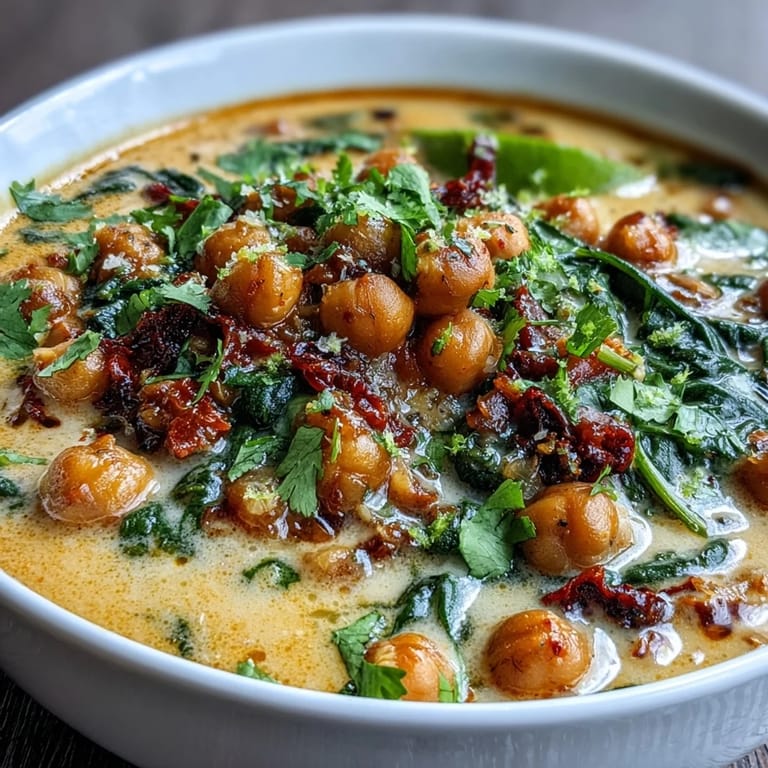
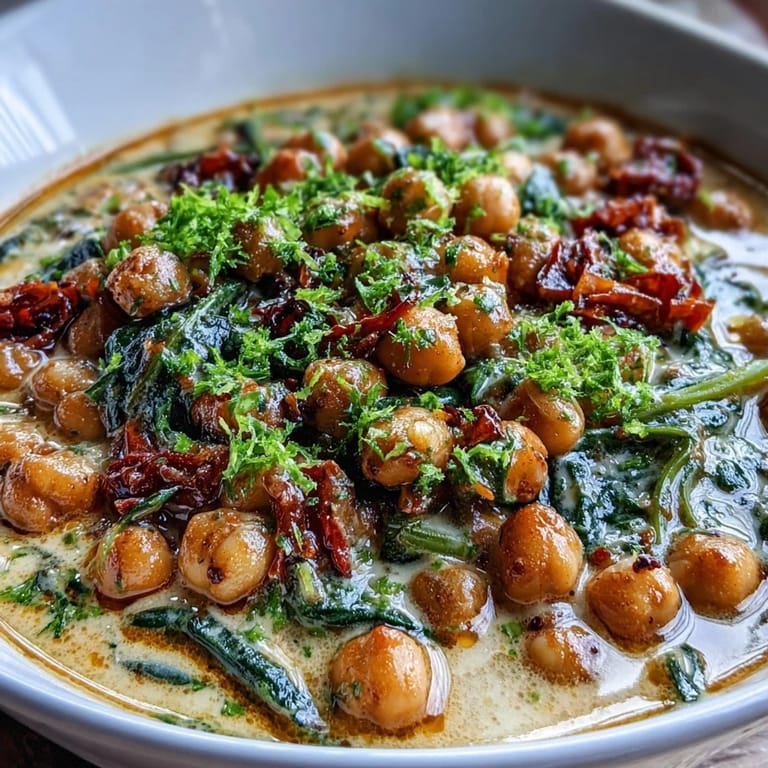
Save My neighbor once knocked on my door asking if something smelled incredible, and I realized my kitchen was wafting with the most intoxicating blend of cumin, coriander, and turmeric. I had been experimenting with chickpea curry that afternoon, and honestly, I wasn't expecting much—just a quick weeknight dinner. What emerged was so unexpectedly creamy and deeply spiced that I found myself making it again three days later, and it's been a staple ever since.
I made this for a friend who had just gone vegan, and I was nervous she'd sense that I was experimenting on her. But when she tasted it, her whole face changed—she asked for the recipe before she'd even finished her bowl, and now it's something she makes on nights when she needs comfort food that doesn't feel like a compromise.
Ingredients
- Vegetable oil: Use something neutral that won't compete with the spices; coconut oil works beautifully too if you want a hint of extra flavor.
- Onion, garlic, and ginger: These three form the aromatic base, and taking time to mince them finely means they'll dissolve into the sauce rather than sitting as chunks.
- Ground cumin and coriander: These are the gentle backbone of the dish, grounding everything with warmth without overpowering.
- Ground turmeric: This gives the curry its golden color and earthy depth; it's the reason everything tastes authentically aromatic.
- Garam masala: This is the secret ingredient that makes people ask what you did differently—it's a blend of warming spices that creates complexity.
- Chili powder and paprika: Start cautiously with chili powder since heat preferences vary wildly, but paprika adds sweetness and color without burn.
- Chickpeas: Drain and rinse them thoroughly to remove excess starch, which keeps the sauce from becoming cloudy and starchy.
- Full-fat coconut milk: Don't skimp here; the fat creates the creamy texture that makes this feel indulgent despite being completely vegan.
- Diced tomatoes: Use canned if fresh aren't in season; the acidity balances the richness of the coconut milk beautifully.
- Vegetable broth or water: This adjusts the consistency to your preference, so start with less and add more if you like it brothier.
- Baby spinach: Optional but worth it for a pop of nutrition that wilts into the curry in seconds.
- Lime juice: This brightens everything at the end and prevents the dish from tasting heavy.
- Fresh cilantro and lime wedges: The garnish isn't an afterthought; it's what lifts the whole dish from good to memorable.
Tired of Takeout? 🥡
Get 10 meals you can make faster than delivery arrives. Seriously.
One email. No spam. Unsubscribe anytime.
Instructions
- Start your aromatics:
- Heat the oil in a large skillet over medium heat and add the diced onion, cooking until it becomes completely soft and turns translucent around the edges. This takes about 4-5 minutes, and you'll know it's ready when the onion has lost its sharp bite and smells sweet.
- Wake up the garlic and ginger:
- Stir in the minced garlic and grated ginger, and you'll immediately smell something shift in the kitchen. Cook for just 1 minute—any longer and the garlic will start to brown, turning bitter instead of fragrant.
- Toast your spices:
- Add all the ground spices and stir constantly for 1 full minute; this is where the magic happens, as the dry spices bloom in the warm oil and release their essential oils. You'll notice the smell becomes much more complex and inviting.
- Build the sauce:
- Pour in the chickpeas, canned tomatoes with their juice, coconut milk, and broth, stirring well so everything is evenly coated and there are no spice streaks left in the bottom of the pan. The mixture will look thick and inviting at this point.
- Simmer gently:
- Bring the curry to a gentle simmer, cover it, and let it cook for 15 minutes while you breathe in the aroma and maybe set the table. Stir occasionally to prevent anything from sticking to the bottom.
- Add greens if using:
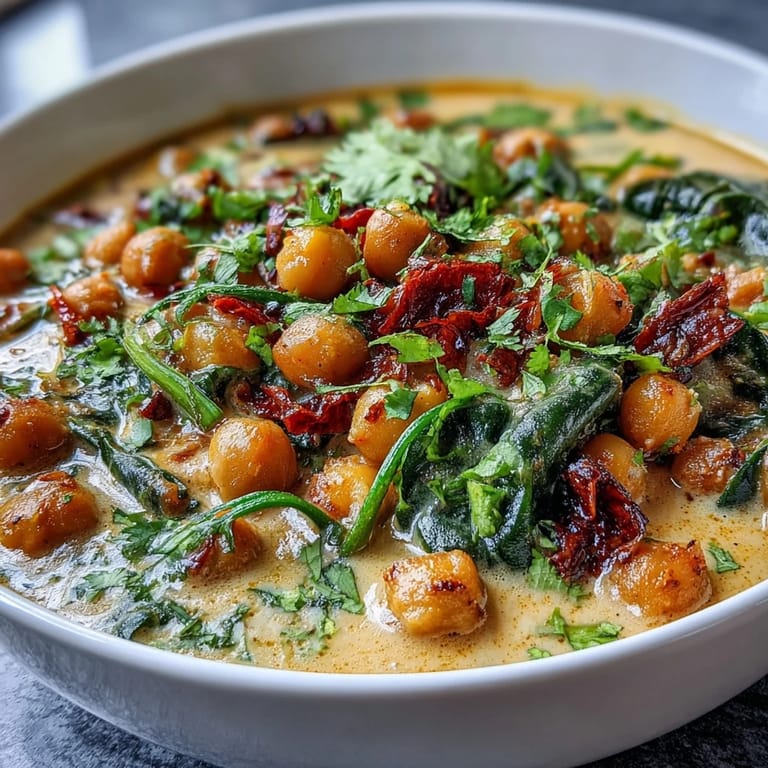
- Uncover the curry and stir in the spinach if you're using it, letting it wilt for 2-3 minutes until it's tender and bright green throughout the creamy sauce.
- Finish with brightness:
- Squeeze in the lime juice and taste the curry, adjusting salt and chili powder until it tastes exactly how you want it. The lime should make everything taste more alive.
- Serve with intention:
- Ladle the hot curry over rice or naan, top with fresh cilantro, and serve with lime wedges for anyone who wants to add more brightness.
 Save
Save There's something about this curry that brings people together in my kitchen in a way other dishes don't—maybe it's the comfort of warm spices, or maybe it's that it's naturally vegan so nobody feels left out. Either way, it's become the meal I make when someone needs feeding, whether that's a friend moving apartments or just a regular Tuesday when we all need something warm and real.
Making It Thicker or Brothier
If your curry feels too soupy after simmering, just remove the cover during the last few minutes and let some of the liquid evaporate; the flavors concentrate as the curry reduces. Conversely, if it's too thick, stir in a splash of broth or water until you reach the consistency you prefer, which is entirely personal.
Building Your Own Vegetable Variations
While spinach is my go-to addition, I've experimented with diced sweet potato (add it with the chickpeas so it has time to soften), bell pepper (add near the end so it stays slightly firm), and even cauliflower florets, which take on the spices beautifully. The base recipe is forgiving enough to handle almost any vegetable you have in your kitchen, so treat it as a starting point rather than a law.
Heat Level and Flavor Adjustments
My version uses just ½ teaspoon of chili powder because I cook for people with varying heat tolerances, but if you love spice, start with 1 teaspoon and go from there. I've also learned that tasting as you go and adjusting salt and lime juice at the end creates a better result than trying to fix flavors midway through cooking.
- Start with less chili powder than you think you need; it's easier to add heat than remove it.
- The lime juice at the end should make you smile—if it doesn't brighten the curry noticeably, add more juice or zest.
- Garam masala varies by brand, so some are spicier than others, which is why tasting and adjusting is non-negotiable.
 Save
Save This chickpea curry has become my answer to the question of what to cook when I want something that feels special but doesn't require special skills or hard-to-find ingredients. It's the kind of meal that reminds you why cooking matters.
Recipe FAQs
- → How do I make this curry thicker?
Simmer uncovered for the last 5-10 minutes to reduce the liquid. You can also mash some chickpeas against the side of the pan to naturally thicken the sauce.
- → Can I make this curry ahead of time?
Absolutely. This dish actually tastes better the next day as flavors meld. Store in an airtight container in the refrigerator for up to 4 days.
- → What should I serve with chickpea curry?
Steamed basmati rice, warm naan bread, or roti are classic pairings. For lighter options, try quinoa or cauliflower rice.
- → How spicy is this curry?
It has a mild to medium heat. Adjust the chili powder to your preference, or add fresh chilies for extra kick.
- → Can I add other vegetables?
Yes. Diced sweet potato, bell peppers, or cauliflower work beautifully. Add hearty vegetables like sweet potato during the simmer stage.
- → Is this curry freezer-friendly?
Yes. Cool completely before transferring to freezer-safe containers. It keeps well for up to 3 months. Thaw overnight in the refrigerator.