 Save
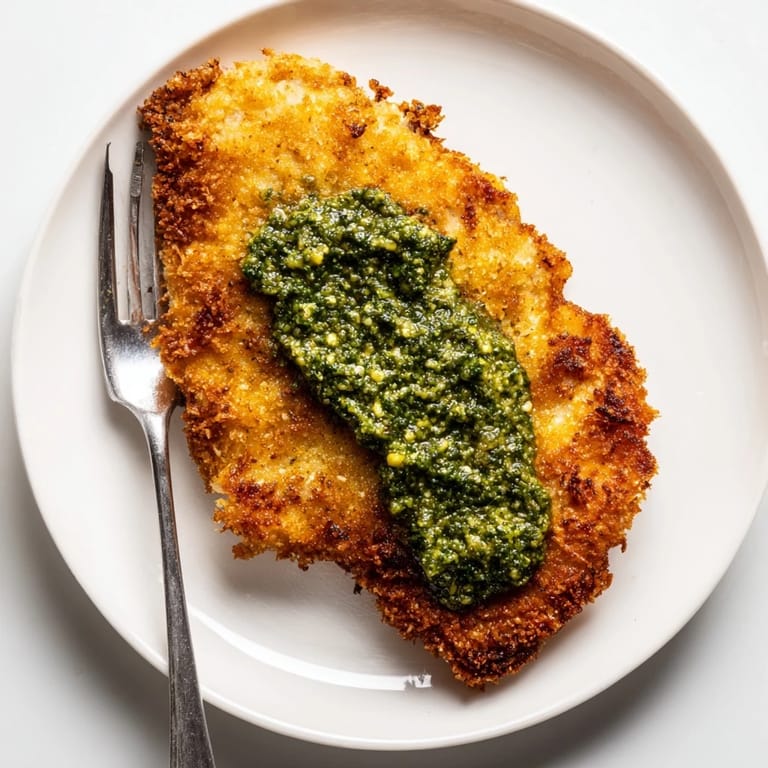
Save The skillet was too hot, and I knew it the second the first cutlet hit the oil and started crackling like a tiny fireworks show. I turned the heat down fast, flipped it early, and somehow it came out perfectly golden with that shatteringly crisp crust. That little panic taught me more about pan-frying chicken than any recipe ever could. Now every time I make these Parmesan-crusted cutlets, I think about that near-miss and how a dollop of bright green pesto can cover a multitude of kitchen sins.
I started making these on weeknights when my sister would drop by unannounced, hungry and impatient. She'd sit at the counter, stealing panko crumbs from the breading station, and by the time I plated the cutlets with a swirl of pesto, she'd already declared it better than anything we could get delivered. It became our unspoken Tuesday tradition, just crispy chicken and whatever was happening in our lives that week.
Ingredients
- Boneless, skinless chicken breasts (about 150 g each): Pounding them to an even half-inch thickness is the secret to quick, uniform cooking and that tender bite.
- Salt and freshly ground black pepper: Season generously before breading so the chicken itself tastes seasoned, not just the crust.
- Large eggs: Whisked with a splash of milk, they create the sticky bridge between flour and breadcrumbs.
- Milk (60 ml): Thins the egg just enough to coat evenly without clumping.
- All-purpose flour (100 g): The first layer that dries the chicken and helps everything else stick.
- Panko breadcrumbs (80 g): These airy Japanese crumbs fry up crunchier than regular breadcrumbs and stay that way longer.
- Grated Parmesan cheese (50 g): Adds a salty, umami punch and helps the crust brown beautifully.
- Dried Italian herbs (1 tsp, optional): A little oregano or basil in the breading echoes the pesto and smells amazing while frying.
- Olive oil (60 ml): Enough to shallow-fry without deep-frying, giving you that golden crust without the mess.
- Basil pesto (100 g): Store-bought works perfectly here, but homemade pesto turns this into something you'd serve to guests.
- Fresh basil leaves (optional): A few torn leaves on top make it look like you tried harder than you did.
- Lemon wedges (optional): A squeeze of lemon cuts through the richness and wakes up every bite.
Tired of Takeout? 🥡
Get 10 meals you can make faster than delivery arrives. Seriously.
One email. No spam. Unsubscribe anytime.
Instructions
- Season the Chicken:
- Pat the chicken breasts dry with paper towels, then sprinkle both sides with salt and freshly ground black pepper. This step matters more than you think because under-seasoned chicken tastes bland no matter how crispy the coating is.
- Set Up Your Breading Station:
- Arrange three shallow bowls in a row: flour in the first, beaten eggs mixed with milk in the second, and panko mixed with Parmesan and Italian herbs in the third. Keep one hand for dry ingredients and one for wet to avoid breading your fingers.
- Coat the Cutlets:
- Dredge each chicken piece in flour, shaking off the excess, then dip it into the egg mixture, letting the extra drip off. Press it firmly into the panko mixture, coating both sides completely and patting gently so the crumbs stick.
- Heat the Oil:
- Pour the olive oil into a large skillet and heat over medium-high until it shimmers but doesn't smoke. Drop in a pinch of panko to test: it should sizzle immediately but not burn.
- Fry the Cutlets:
- Add the breaded chicken in batches, making sure not to crowd the pan, and fry for 3 to 4 minutes per side until deeply golden and cooked through. Transfer each cutlet to a paper towel-lined plate to drain any excess oil.
- Finish and Serve:
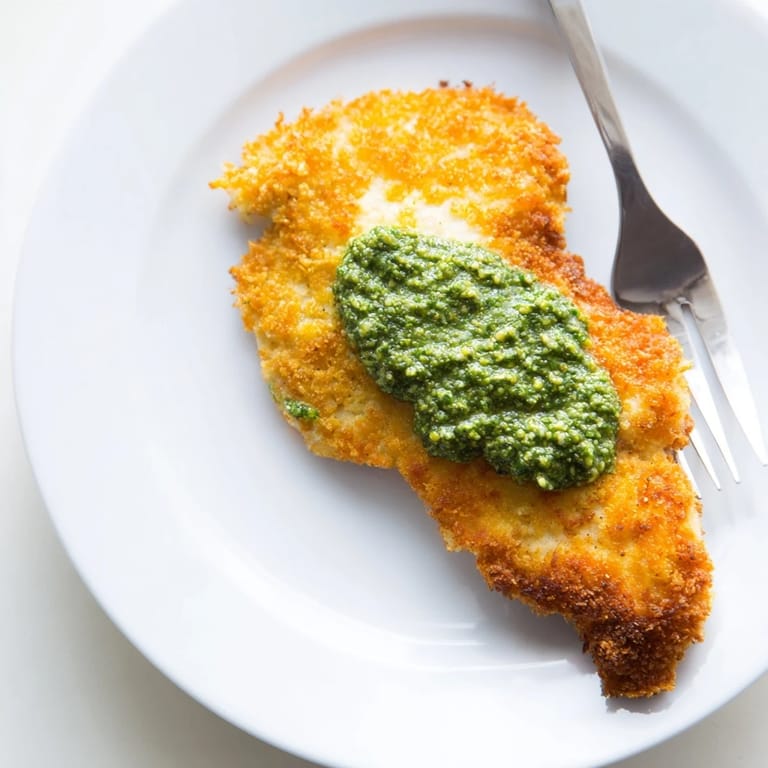
- Arrange the crispy cutlets on a platter and spoon a generous dollop of pesto onto each one while they're still warm. Garnish with fresh basil leaves and serve with lemon wedges on the side for squeezing.
 Save
Save One evening I made these for a friend who swore she didn't like chicken breast because it was always dry. She took one bite, paused mid-chew, and looked at me like I'd been holding out on her. We ended up eating all four cutlets between the two of us, standing at the counter with lemon juice dripping down our wrists.
How to Keep Them Crispy
The key is letting the cutlets rest on a wire rack instead of stacking them on a plate, which traps steam and turns the crust soggy. If you're making a big batch, keep finished cutlets warm in a 200-degree oven on a rack-lined baking sheet. Never cover them with foil unless you want sad, limp breading.
What to Serve Alongside
These cutlets shine next to something light and acidic: a simple arugula salad with lemon vinaigrette, roasted cherry tomatoes, or even just buttered pasta tossed with Parmesan. I've also served them over creamy polenta when I wanted something more substantial, and the pesto ties everything together beautifully. A cold glass of Pinot Grigio or sparkling water with lemon feels just right.
Make It Your Own
If you're out of pesto, try a quick herb butter or even a smear of sun-dried tomato spread. Turkey cutlets work just as well if you prefer lighter meat, and you can swap the Parmesan for Pecorino Romano for a sharper, saltier crust.
- Add a pinch of red pepper flakes to the breadcrumb mixture if you like a little heat.
- Use gluten-free panko and flour if you need to accommodate dietary restrictions.
- Double the batch and freeze the breaded raw cutlets on a tray, then transfer to a bag for quick weeknight frying later.
 Save
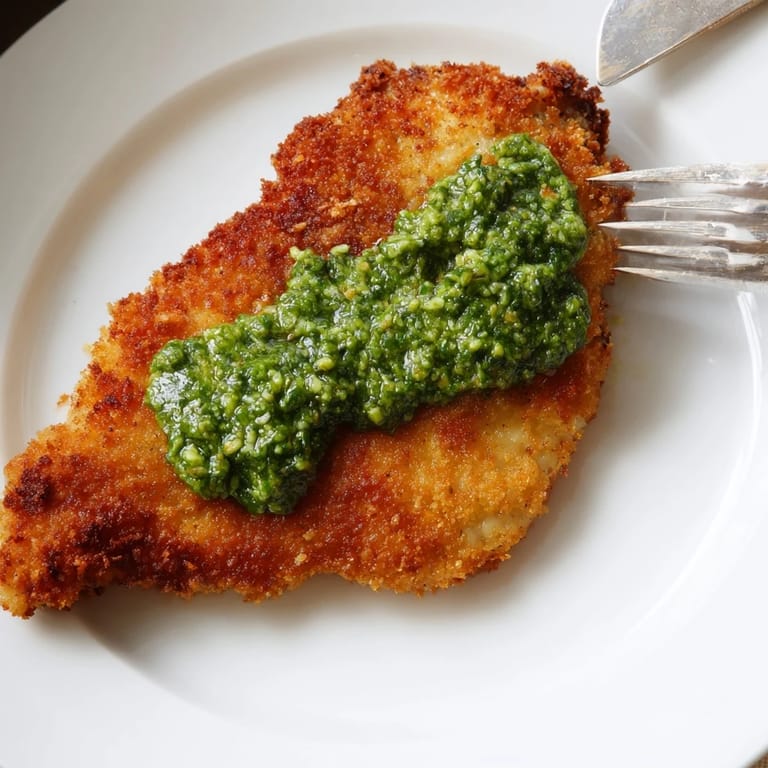
Save There's something satisfying about the sound of that first crunch when you cut into a perfectly fried cutlet, and the way the pesto melts just slightly into the hot crust. Make these once, and they'll end up in your regular rotation before you know it.
Recipe FAQs
- → How do I achieve extra crispiness in the breadcrumb coating?
Use panko breadcrumbs instead of regular breadcrumbs for superior crunch. Panko has larger, fluffier structure that crisps beautifully when fried. Ensure the oil is sufficiently hot before frying to develop that golden, crispy exterior.
- → Can I substitute chicken with other proteins?
Yes, turkey cutlets work wonderfully as a direct substitute. You can also use thin-cut pork cutlets or veal. Maintain the same pounding thickness and cooking time to ensure even cooking.
- → What's the best way to pound chicken breasts evenly?
Place chicken between plastic wrap or in a sealed bag. Use a meat mallet's flat side with firm, even strokes from center outward. Aim for consistent 1/2-inch thickness throughout. A rolling pin works as an alternative tool.
- → Can I prepare the breaded cutlets ahead of time?
Absolutely. After breading, place cutlets on a parchment-lined tray and refrigerate up to 4 hours before frying. This also helps the coating adhere better. Remove from refrigeration 5 minutes before cooking for even texture.
- → What are good side dish pairings?
A simple green salad with lemon vinaigrette complements the richness beautifully. Pasta tossed with olive oil and garlic, roasted vegetables, or polenta are excellent choices. Crisp white wines like Pinot Grigio or Vermentino pair perfectly.
- → How do I know when the chicken is cooked through?
Cook 3-4 minutes per side until the coating turns golden brown. Verify doneness by cutting into the thickest part—juices should run clear and meat should reach 165°F (74°C) internally. The breadcrumb coating will protect the chicken from overcooking.