 Save
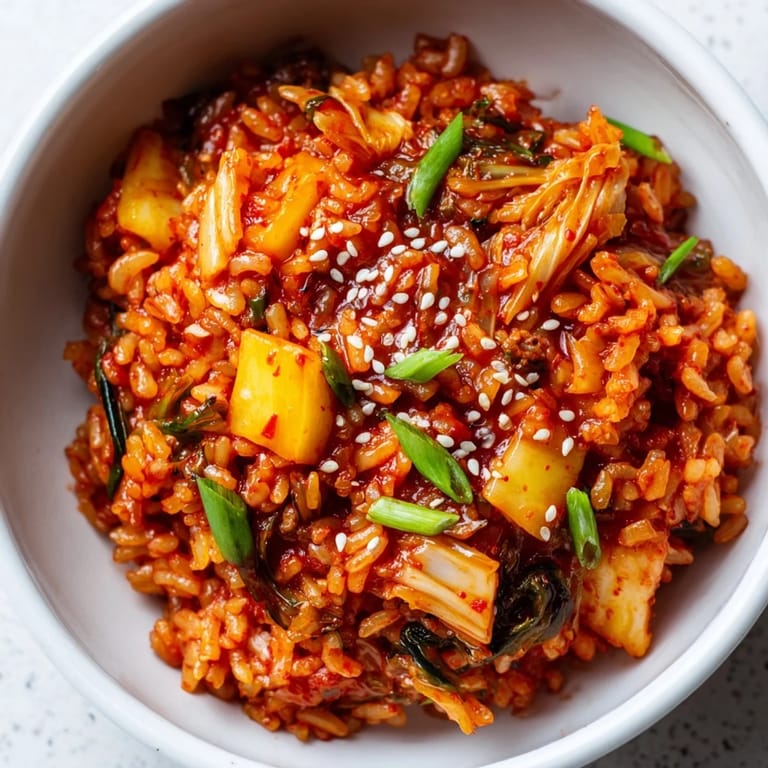
Save The smell hit me before I even opened the fridge—sharp, fermented, unmistakable. My roommate had left a jar of kimchi behind when she moved out, and I had no idea what to do with it. One late night, staring at leftover rice and that mysterious jar, I tossed them into a hot pan with whatever I could find. The kitchen filled with this incredible tangy, spicy aroma, and I realized I'd just stumbled onto something I'd crave for years.
I made this for my sister during one of her study-all-nighters, and she looked up from her textbooks like I'd performed magic. She kept asking what was in it, convinced there had to be some secret ingredient. There wasn't—just kimchi doing what kimchi does best, turning simple rice into something worth remembering. Now she texts me every finals week asking if I can drop some off.
Ingredients
- Cooked short-grain rice (2 cups, preferably day-old): Day-old rice is drier and separates beautifully in the pan instead of clumping into mush, which is exactly what you want for fried rice that has texture.
- Napa cabbage kimchi (1 cup chopped, plus 2 tbsp juice): This is the heart of the dish, bringing tang, funk, and a little heat—don't skip the juice, it adds depth you can't get any other way.
- Yellow onion (½ cup, finely chopped): It softens and sweetens as it cooks, balancing the sharpness of the kimchi with a mellow base note.
- Carrot (½ cup, diced): Adds a touch of sweetness and a pop of color, plus it holds up well to high heat without turning to mush.
- Green onions (2, sliced, white and green parts separated): The white parts cook down with the aromatics, the green parts stay fresh and bright when tossed in at the end.
- Gochujang (1 tbsp): This Korean chili paste is sweet, savory, and spicy all at once—it's what makes the dish unmistakably Korean and utterly addictive.
- Soy sauce (1 tbsp): Adds saltiness and that deep umami backbone that ties everything together.
- Toasted sesame oil (1 tsp): A little goes a long way—drizzle it at the end for a nutty, aromatic finish that makes the whole dish smell incredible.
- Sugar (½ tsp): Just a pinch balances the acidity and heat, rounding out the flavors without making it sweet.
- Black pepper (⅛ tsp, freshly ground): A whisper of warmth that supports the gochujang without competing with it.
- Vegetable oil (2 tbsp): High smoke point and neutral flavor let the kimchi and gochujang shine without interference.
- Toasted sesame seeds (1 tsp): Sprinkle them on top for a little crunch and visual appeal.
- Fried eggs (2, optional): The runny yolk turns into a rich, creamy sauce when you break it over the rice—it's optional, but it's also kind of essential.
Tired of Takeout? 🥡
Get 10 meals you can make faster than delivery arrives. Seriously.
One email. No spam. Unsubscribe anytime.
Instructions
- Soften the aromatics:
- Heat 1 tablespoon of vegetable oil in a large skillet or wok over medium-high heat until it shimmers. Add the chopped onion, carrot, and white parts of the green onion, then sauté for 2 to 3 minutes until they start to soften and the edges turn translucent.
- Caramelize the kimchi:
- Toss in the chopped kimchi and cook for another 2 to 3 minutes, stirring occasionally. You'll know it's ready when it smells deeply tangy and the edges start to brown and crisp up a little.
- Build the sauce:
- Stir in the gochujang, soy sauce, kimchi juice, sugar, and black pepper, then cook for 1 minute while stirring constantly. The paste will loosen and coat the vegetables in a glossy, spicy layer.
- Toss in the rice:
- Add the cooked rice and use your spatula to break up any clumps, pressing gently if needed. Stir-fry for 3 to 4 minutes, tossing frequently, until every grain is coated and the rice is heated all the way through.
- Finish with freshness:
- Drizzle the sesame oil over the rice and add the green parts of the green onion. Give everything a final toss to combine, then pull the pan off the heat.
- Fry the eggs (optional):
- In a separate small pan, heat the remaining tablespoon of oil over medium heat and fry the eggs to your liking—runny yolks are traditional and delicious. Slide one onto each bowl of rice.
- Serve and garnish:
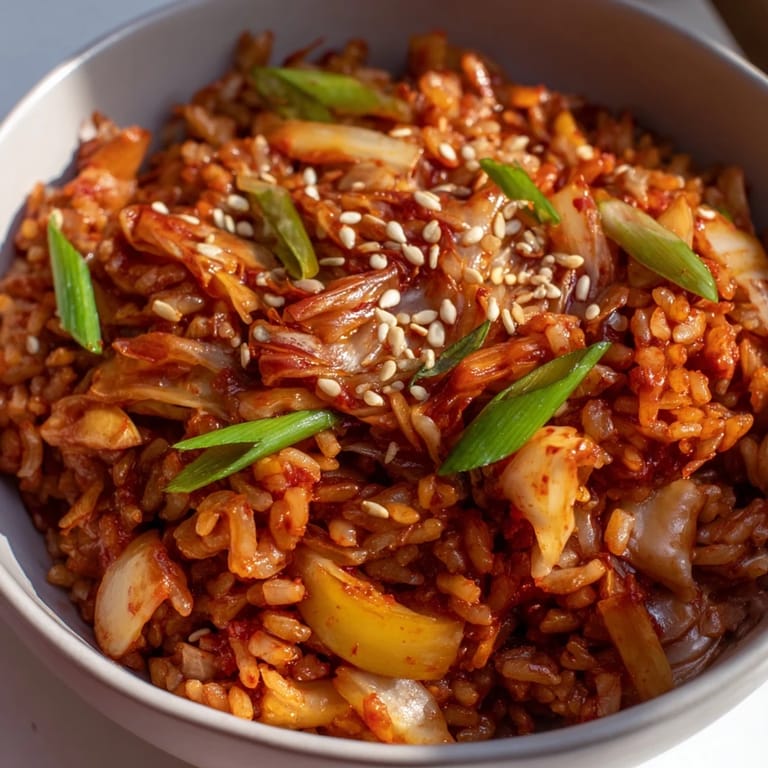
- Divide the kimchi fried rice between two bowls, top each with a fried egg if using, and sprinkle with toasted sesame seeds. Serve immediately while it's hot and fragrant.
 Save
Save I brought this to a potluck once, worried it might be too funky or spicy for the crowd. Within ten minutes, the bowl was empty and three people asked for the recipe. One friend admitted she'd never tried kimchi before but couldn't stop going back for more. That's when I realized this dish has a way of winning people over, even the ones who think they won't like it.
Adjusting the Heat
The first time I made this, I went heavy on the gochujang and learned my lesson fast—my lips were tingling for an hour. Start with the tablespoon called for, taste as you go, and add more if you want. You can also balance the heat by adding a little extra sugar or a squeeze of lime juice at the end. If you're cooking for someone who's spice-sensitive, serve the gochujang on the side so they can control their own heat level.
Making It a Full Meal
This dish is hearty on its own, but I've learned it's even better when you bulk it up a bit. Diced tofu crisped in the pan before you start adds protein and texture. Leftover rotisserie chicken, shrimp, or even a handful of edamame work beautifully. I've also served it alongside a simple cucumber salad dressed with rice vinegar and sesame oil—the cool crunch cuts through the richness and heat in the most satisfying way.
Storage and Leftovers
Kimchi fried rice keeps well in the fridge for up to three days in an airtight container, though the fried egg doesn't reheat as nicely—I usually cook a fresh one when I'm ready to eat. To reheat, use a hot skillet with a tiny splash of oil rather than the microwave so the rice stays crisp and doesn't turn soggy. You can also freeze portions for up to a month, just thaw overnight in the fridge before reheating.
- Reheat in a skillet over medium-high heat with a drizzle of oil for best texture.
- Add a fresh fried egg on top and a sprinkle of sesame seeds to make leftovers feel special again.
- If the rice seems dry after storing, add a teaspoon of kimchi juice or soy sauce while reheating.
 Save
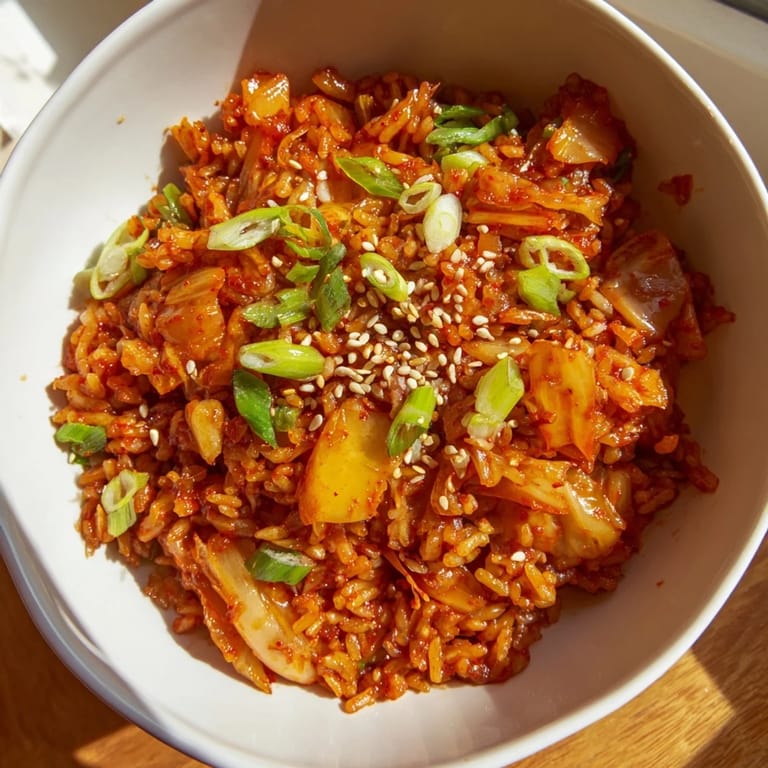
Save There's something deeply comforting about a bowl of this rice, especially on nights when you need something fast but still want it to feel like a real meal. It's become my go-to for using up odds and ends, and somehow it always tastes even better than I remember.
Recipe FAQs
- → Can I use fresh rice instead of day-old rice?
Day-old rice works best because it's drier and won't clump when stir-fried. If using fresh rice, spread it on a plate and refrigerate for at least 30 minutes to help it dry out slightly before cooking.
- → What's the best way to adjust the spice level?
Control heat by adjusting the amount of gochujang and kimchi juice. Start with 1 tablespoon of gochujang and add more gradually to taste. The kimchi juice also contributes spice, so reduce it if you prefer a milder dish.
- → How do I make this completely vegan?
Omit the fried egg topping or substitute with a plant-based egg alternative. Ensure your gochujang and kimchi are vegan-certified, as some brands contain fish products. Use vegetable oil and verify all soy sauce is certified vegan.
- → Can I prepare ingredients ahead of time?
Yes, chop all vegetables and prepare the sauce mixture up to 4 hours in advance. Store them separately in airtight containers in the refrigerator. Assemble and cook just before serving for the best flavor and texture.
- → What proteins pair well with this dish?
Fried or soft-boiled eggs are traditional toppings. You can also add diced tofu, cooked chicken, shrimp, or beef. Stir protein in during the last minute of cooking or place on top before serving.
- → How should I store leftovers?
Store cooled fried rice in an airtight container in the refrigerator for up to 3 days. Reheat in a skillet with a splash of water or sesame oil over medium heat until warmed through, stirring occasionally.