 Save
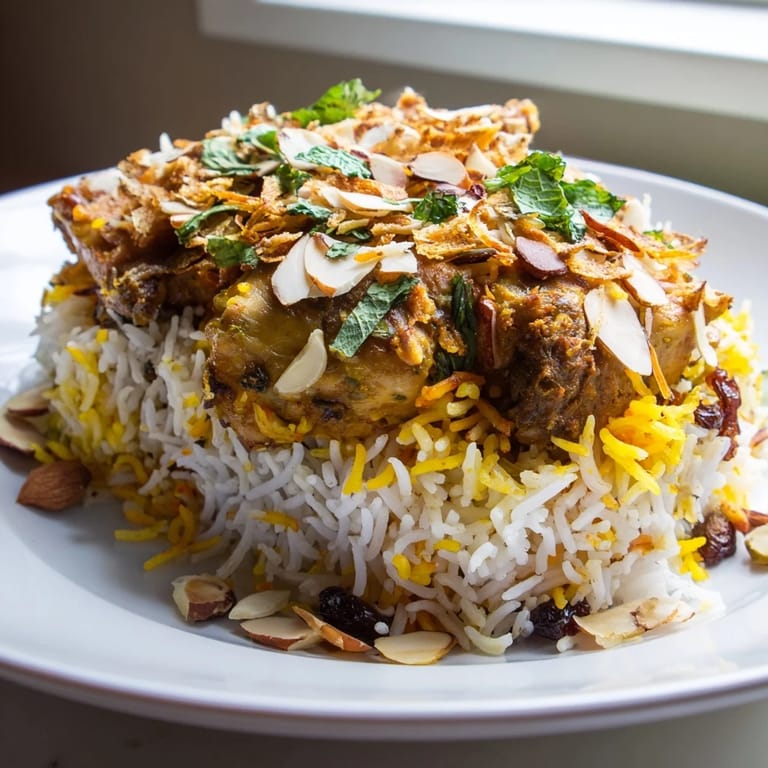
Save My uncle's kitchen in Kuwait would fill with this particular kind of steam on Friday mornings, that golden-scented cloud rising from the Dutch oven that meant biryani was coming. I watched him layer rice and meat with the focus of someone building something sacred, each handful of herbs scattered like he was telling a story through smell alone. The first time I made it myself, I was terrified I'd mess up the balance, but somewhere between the caramelized onions and that saffron-soaked moment, I understood why this dish brings entire families to the table.
I made this for a potluck once and watched three different people go back for seconds while standing in line at the buffet, which is when you know you've nailed it. There's something about biryani that makes people slow down and actually taste their food instead of just eating it.
Ingredients
- Bone-in chicken or lamb (900 g): Use pieces with bone for deeper flavor and better texture—boneless meat tends to dry out.
- Plain yogurt (1 cup): This is your tenderizer and flavor anchor, so full-fat yogurt makes a real difference.
- Ginger-garlic paste (1 tbsp): Fresh is always better than jarred, but the jarred version works in a pinch.
- Ground spices (turmeric, cumin, coriander, chili powder, garam masala): Smell them before you measure—if they don't smell vibrant, replace them.
- Basmati rice (3 cups): The long grains are essential here; they stay separate and won't turn mushy.
- Ghee or butter (2 tbsp for rice, 3 tbsp for assembly): Ghee gives that authentic richness, but butter works if that's what you have.
- Whole spices for rice (cloves, cardamom, cinnamon, bay leaf): These infuse the rice with fragrance without overpowering it.
- Onions (2 large): Thinly slice them and caramelize low and slow—rushing this step means missing half the magic.
- Fresh herbs (coriander and mint): Chop these just before using so they stay bright and alive.
- Saffron (pinch): Soak it in warm milk first to release its color and flavor into the rice.
- Fried onions (1/4 cup for garnish): These add the final textural surprise that makes people wonder what you did differently.
Tired of Takeout? 🥡
Get 10 meals you can make faster than delivery arrives. Seriously.
One email. No spam. Unsubscribe anytime.
Instructions
- Make the marinade and prepare the meat:
- Mix yogurt, lemon juice, ginger-garlic paste, and all your spices together—it should smell like a warm afternoon in the Gulf. Add your meat pieces and coat everything thoroughly, then cover and let it sit for at least an hour (overnight is even better, and you'll taste the difference).
- Prepare the rice:
- Rinse it under cold water until the water runs clear, which takes patience but removes the starch that makes rice gummy. Soak it for 30 minutes, then drain—this helps each grain cook evenly.
- Parboil the rice:
- Bring 5 cups of salted water to a rolling boil, add your rice and whole spices, then cook for just 6 to 7 minutes until the rice is about 70% done and still has a slight firmness. You're aiming for that sweet spot where it's not raw but not fully cooked either.
- Caramelize the onions:
- Heat ghee in your Dutch oven and add sliced onions over medium heat, stirring occasionally until they turn deep golden brown and smell almost sweet (this takes 12 to 15 minutes and is worth every second). Remove half for garnish and keep cooking the other half until it gets even darker.
- Sear and braise the meat:
- Add your marinated meat to the pot with those caramelized onions and let it sear for 5 to 7 minutes until the edges brown. Then cover and let it cook gently on low heat for 20 to 25 minutes if you're using chicken, or 35 to 40 if you're using lamb—you want it just tender, not falling apart.
- Layer the biryani:
- Sprinkle half your fresh herbs, raisins, and nuts over the meat, then layer half the parboiled rice on top, then add the remaining herbs, raisins, and nuts, and finish with the rest of the rice. Think of it like building a fragrant lasagna where every layer matters.
- Add the saffron and seal it:
- Drizzle your saffron milk (the saffron threads soaked in warm milk) evenly across the top of the rice, dot with small pieces of ghee, cover tightly with foil and then your lid. This seals in all the steam and aroma.
- Bake until everything comes together:
- Bake in a 180°C (350°F) oven for 30 to 35 minutes—your kitchen will smell absolutely incredible. Let it rest for 10 minutes after you pull it out of the oven, then gently fluff with a fork and serve with those reserved caramelized onions and fried onions on top.
 Save
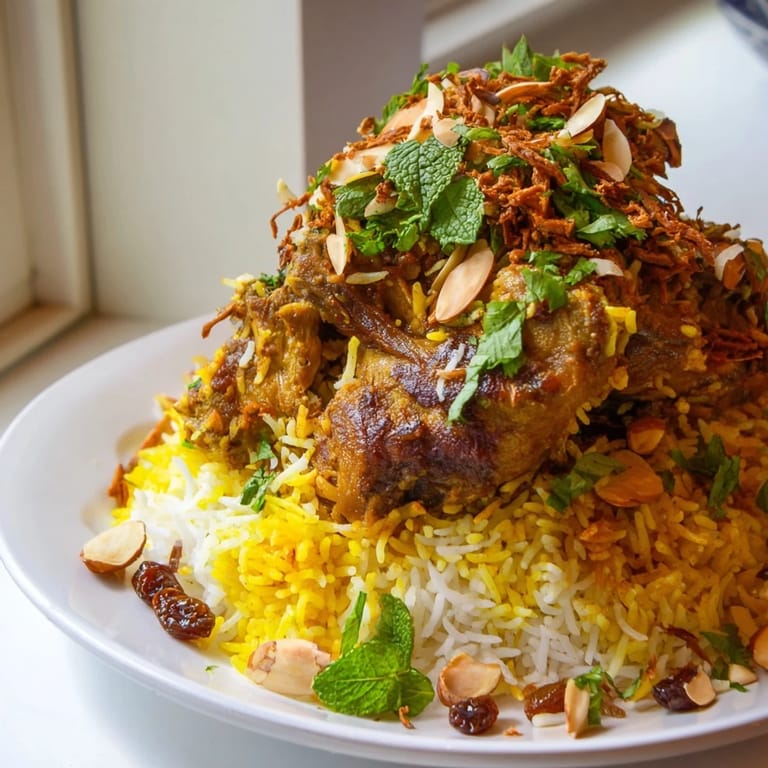
Save I remember my cousin teaching me that biryani isn't about rushing or showing off—it's about patience and layers and knowing that good food changes how people feel. The moment you serve it and watch everyone's face light up, you understand why this dish has survived centuries and traveled across continents.
The Art of Caramelizing Onions
This step is where most biryani either becomes transcendent or just okay, and I learned this the hard way by burning the onions three times before getting it right. Medium heat, patience, and occasional stirring transform onions from sharp and raw into something sweet and almost jammy that becomes the flavor foundation of everything. You'll know you're close when the kitchen starts smelling like caramel instead of raw onion, and that's when you remove half for garnish and let the rest go even darker.
Saffron, The Expensive Secret
Real saffron threads are worth the investment because they add a color and subtle earthiness that nothing else can replicate, though I've made decent biryani with turmeric when saffron wasn't available. Always soak the threads in warm milk before adding them to the rice—this awakens their flavor and distributes that gorgeous golden color evenly. A pinch is honestly enough; more doesn't make it better and just empties your wallet faster.
Serving and Variations
Serve this with a cool cucumber-yogurt raita or a simple salad to cut through the richness, and watch how people's eyes close a little on that first bite. This dish is flexible enough for vegetarians if you swap the meat for paneer marinated in the same spices, or mix in whatever vegetables you have on hand. A few drops of rose water added to the saffron milk brings an almost floral quality that makes people lean in and wonder what you did differently.
- Pair it with raita or a cooling salad on the side—the contrast is essential.
- Vegetarian versions work beautifully with marinated paneer or seasonal vegetables.
- Rose water is optional but becomes a signature move once you try it.
 Save
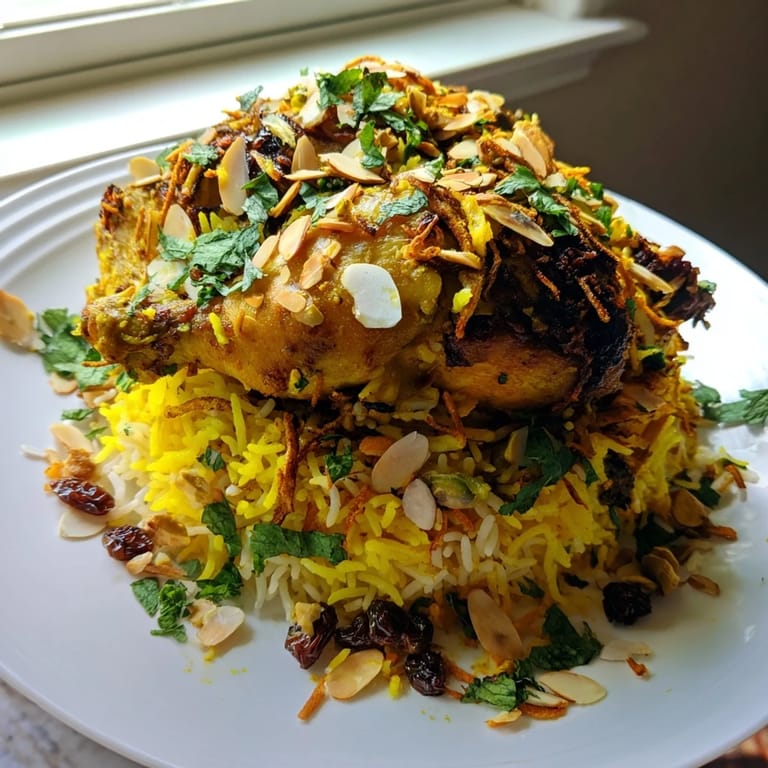
Save Making biryani is an act of presence and care, and every time I do it, I understand a little more why it's considered celebratory food. The smell alone is a gift worth giving.
Recipe FAQs
- → What spices enhance the flavor of Kuwaiti biryani?
Key spices include turmeric, cumin, coriander, chili powder, and garam masala, which create a warm and aromatic profile.
- → How is the meat prepared before cooking?
The meat is marinated in yogurt, lemon juice, and a blend of spices for at least one hour to tenderize and infuse flavor deeply.
- → What type of rice is ideal for this dish?
Basmati rice is preferred for its fragrant aroma and long grains, which hold texture well during layering and baking.
- → How do you achieve the layered effect in this dish?
The partially cooked rice is layered alternately with marinated meat, caramelized onions, fresh herbs, raisins, and nuts before baking.
- → Can saffron be substituted if unavailable?
While saffron adds unique aroma and color, turmeric or a mild yellow food coloring can be used as affordable substitutes.
- → What garnishes complement this layered rice dish?
Crispy fried onions, toasted nuts, and fresh coriander or mint leaves provide texture and fresh notes as garnishes.