 Save
Save The first time I made mjadra, my neighbor—a woman from Beirut—sat at my kitchen counter with a cup of coffee, watching me slice onions. She didn't give me a recipe; she just talked me through it, pausing now and then to say, "No, slower with the onions. You want them to give up everything." That dish taught me that some foods aren't about speed or precision. They're about patience, about letting flavors build into something warm and honest.
I served this to a group of friends on a cold Tuesday night, and someone asked for seconds before finishing their first bowl. That's when I realized mjadra wasn't just sustenance—it was the kind of dish that makes people linger at the table, that turns an ordinary dinner into something worth remembering.
Ingredients
- Brown or green lentils: These hold their shape beautifully, unlike red lentils which can get mushy. Rinsing them first removes any dust and prevents a gritty texture.
- Long-grain rice: Basmati works best because it stays fluffy and separate instead of clumping together.
- Water or vegetable broth: Broth adds a gentle savory depth, but water works just fine if that's what you have.
- Olive oil: Use a good quality oil—you're not cooking it into oblivion, so you'll actually taste it.
- Cumin, allspice, and cinnamon: This spice trio is the soul of the dish. They warm everything without overpowering, almost like a hug in spice form.
- Yellow onions: They caramelize beautifully and turn golden and sweet after patience does its work.
- Salt: Add it in stages so you can taste as you go rather than being stuck with something too salty.
Tired of Takeout? 🥡
Get 10 meals you can make faster than delivery arrives. Seriously.
One email. No spam. Unsubscribe anytime.
Instructions
- Toast the lentils:
- Heat olive oil in a large saucepan, then add your rinsed lentils and bay leaf. Stir them for about 2 minutes—you'll notice they become slightly fragrant and start to catch just a bit in the oil. This toasting step deepens their flavor in ways you might not expect.
- Begin simmering:
- Pour in your water or broth and bring everything to a boil. Once it's bubbling, turn the heat down and let it simmer uncovered for 15 minutes. The lentils will start to soften but won't be fully tender yet.
- Caramelize the onions:
- While the lentils cook, slice your onions thinly and place them in a separate large skillet with olive oil and a pinch of salt over medium-low heat. This is where patience becomes your secret weapon—stir them often, and let them cook for 25 to 30 minutes. Watch them transform from raw and sharp to deep golden and impossibly sweet.
- Add rice and spices:
- When the lentils have had their 15 minutes, add your rinsed rice, cumin, allspice, cinnamon, salt, and pepper. Stir everything well so the spices coat each grain and distribute evenly throughout the pot.
- Cover and finish cooking:
- Turn the heat to low, cover the saucepan, and let it simmer for 20 to 25 minutes. The rice and lentils will absorb the liquid and become tender. If things seem dry before the rice is fully cooked, add a splash of water.
- Fluff and taste:
- Fish out the bay leaf, then use a fork to fluff the mjadra gently. Taste it and adjust salt and pepper if needed—sometimes you'll want just a touch more cumin too.
- Serve with the crown of onions:
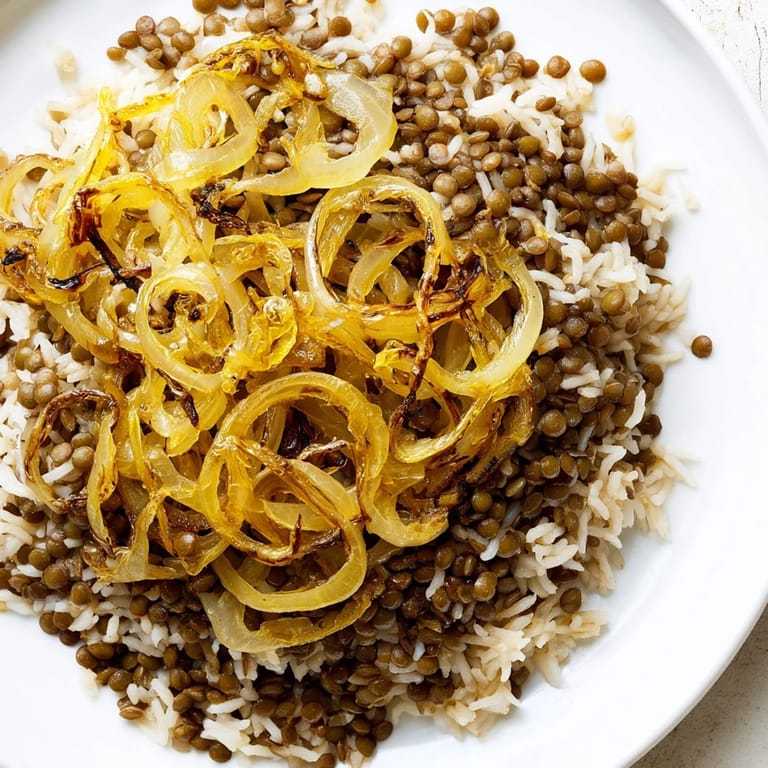
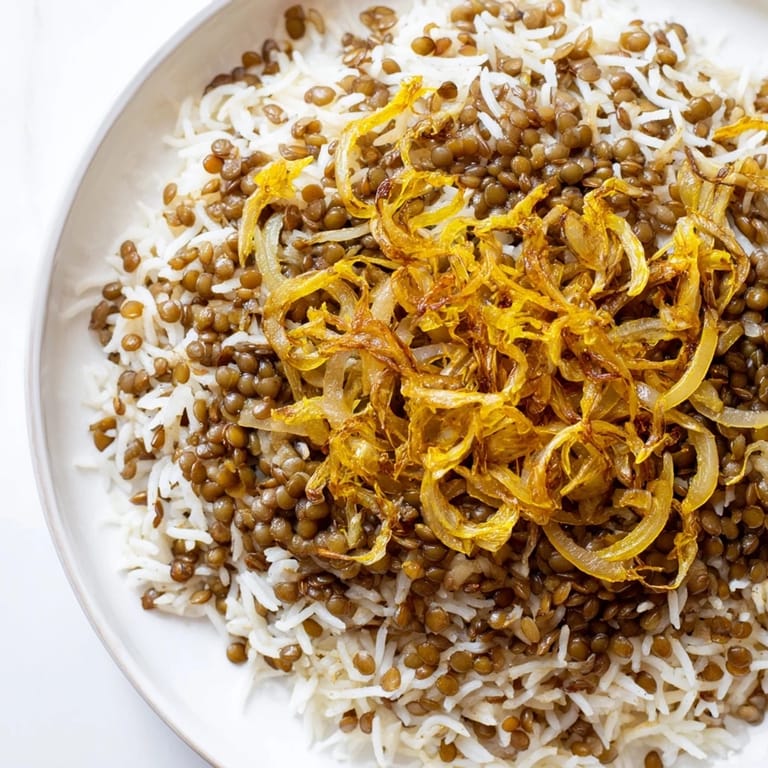
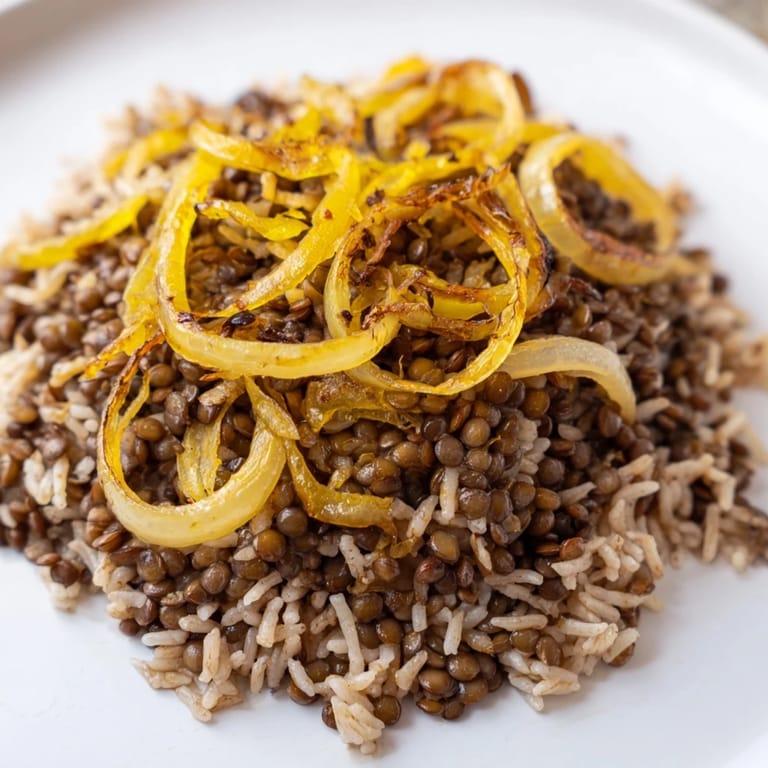
- Transfer the mjadra to bowls and generously top each serving with those caramelized onions. You can serve it hot or let it cool to room temperature.
 Save
Save There's a moment, usually about halfway through cooking, when the kitchen fills with the smell of caramelizing onions mixed with warm spices, and you realize this simple dish is becoming something special. That's when I know everything is working as it should.
Why This Dish Works
Mjadra succeeds because it balances textures and flavors so naturally. The tender lentils and fluffy rice provide the hearty base, while the warm spices keep things interesting without being overwhelming. The caramelized onions are the final touch—they add sweetness, depth, and a luxurious richness that makes you forget how humble the other ingredients are.
Serving Suggestions
On its own, mjadra is completely satisfying, but it also plays well with others. A crisp tomato and cucumber salad brightens it up, or a dollop of plain yogurt adds coolness and tang. Pickles on the side give you that sour contrast that makes the whole plate sing. I also love serving it at room temperature the next day for lunch, wrapped in flatbread if you have it.
Storage and Flexibility
Mjadra is one of those dishes that actually tastes better the next day once the flavors have settled in together. Store it in an airtight container in the refrigerator for up to 4 days. You can reheat it gently with a splash of water if it's dried out. If you prefer a softer, creamier texture, substitute red lentils for the brown or green ones, though you'll need to reduce the simmering time for the lentils to about 10 minutes.
- Leftovers can be stirred into a bowl with yogurt for breakfast, or reheated as is for an easy dinner.
- The caramelized onions can be made a day ahead and stored separately, then warmed briefly before serving.
- If you don't have all three spices, cumin alone carries the dish beautifully, though you'll miss the subtle warmth.
 Save
Save Mjadra is the kind of dish that reminds you why simple food, made with attention and care, is often the most nourishing. It's proof that you don't need fancy ingredients to create something memorable.
Recipe FAQs
- → What type of lentils work best for this dish?
Brown or green lentils are ideal as they hold their shape and provide a hearty texture after simmering.
- → Can I use broth instead of water?
Yes, using low-sodium vegetable broth enhances the depth of flavor without overpowering the spices.
- → How do I achieve perfectly caramelized onions?
Cook sliced onions slowly over medium-low heat with a pinch of salt, stirring often until deep golden and tender, about 25-30 minutes.
- → What spice blend is used in the simmering process?
A combination of cumin, allspice, and cinnamon infuses warm, aromatic notes throughout the lentils and rice.
- → Is this dish suitable for special diets?
Yes, it's naturally vegan and gluten-free, making it a great option for various dietary needs.