 Save
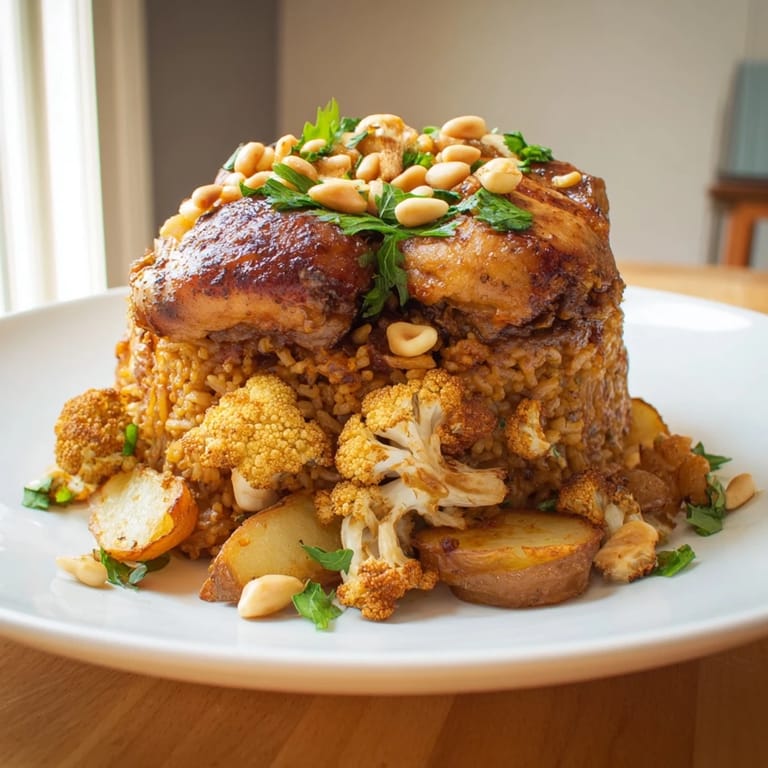
Save The first time I watched maklouba come together, I was captivated by the ritual of it all—the careful layering, the patient simmering, and that breathless moment when the pot gets flipped. A friend's mother had invited me into her kitchen, and as the aroma of cumin and cinnamon filled the room, she explained that maklouba means "upside down" in Arabic, which felt like a metaphor for how this dish transforms chaos into something beautiful. What struck me most wasn't just the flavors, but the confidence with which she inverted that steaming pot onto a platter, trusting completely that the layers would hold.
I made this for my roommates during a particularly cold November, and watching their faces light up as I brought that golden-crusted tower to the table reminded me why I love cooking. One of them grew up eating maklouba but had never learned to make it, and seeing her nearly tear up while tasting it made the whole hour and forty-five minutes worth it. That night, we ate without talking much, just the sounds of forks and satisfied sighs.
Ingredients
- Bone-in chicken pieces (1.2 kg): The bones release so much flavor into the broth that you'll wonder why you ever used boneless chicken—use legs and thighs if you can, they stay juicier than breasts.
- Basmati rice (2 cups): The long grains stay separate and won't get mushy, which matters when you're inverting this dish; rinsing it removes excess starch so the layers don't stick.
- Cauliflower florets (1 large head): Frying them first gives them a golden crust that won't disappear into the rice—this is where the dish gets its textural magic.
- Potatoes (2 medium, sliced 1 cm thick): The bottom layer should be thin enough to crisp but thick enough to hold the weight above; I learned this after one deflated attempt.
- Onion (1 large, sliced): This becomes the flavor base and adds sweetness that balances all those warm spices.
- Spice blend (cumin, coriander, cinnamon, turmeric, allspice, cardamom): Toast these with the onions so they bloom and release their full personality—this step is non-negotiable.
- Chicken stock or water (5 cups): Stock makes a difference, but I've made this with salted water when I was out and it was still delicious.
- Pine nuts or slivered almonds (¼ cup, toasted): A handful scattered on top catches the light and adds a nutty richness that feels special.
Tired of Takeout? 🥡
Get 10 meals you can make faster than delivery arrives. Seriously.
One email. No spam. Unsubscribe anytime.
Instructions
- Prepare and soak the rice:
- Rinse the rice under cold water until the water runs clear, then soak it with salt for 30 minutes—this helps the grains stay distinct rather than clumping together. While it soaks, you've got time to prep everything else.
- Brown the chicken:
- Heat olive oil in your heavy pot and season the chicken generously with salt and pepper, then let it sit undisturbed for a few minutes before flipping so you get a proper golden crust. Don't rush this step; good browning means better flavor.
- Build the broth base:
- Sauté the onions until soft, then add all your spices and stir until the kitchen smells like a spice market—usually about a minute. Return the chicken, pour in your stock, and let it simmer for 20 minutes so the chicken cooks partway and flavors marry together.
- Fry the vegetables:
- While the chicken simmers, heat oil in a separate pan and fry the cauliflower and potatoes in batches until they're golden and crispy on the outside. This is textural insurance—you want them firm enough to hold up during the inversion.
- Layer with intention:
- In your large pot, start with potatoes on the bottom as your foundation, then chicken, then cauliflower, and finally your drained rice packed in gently. Press down lightly so everything nestles together without squashing.
- Cook covered and undisturbed:
- Pour in just enough broth to cover the rice, bring to a bubble over medium heat, then lower the heat, cover tightly, and walk away for 35 to 40 minutes. The worst thing you can do is peek—the steam is doing all the work.
- Rest and reset:
- Turn off the heat and let everything sit undisturbed for 10 to 15 minutes so the layers can set and the steam settles. This pause is what gives you confidence for the flip.
- The dramatic inversion:
- Place your serving platter over the pot, then with a quick motion and steady hands, flip the whole thing over and gently lift away the pot. If your heart races a little during this moment, that's completely normal.
- Finish and serve:
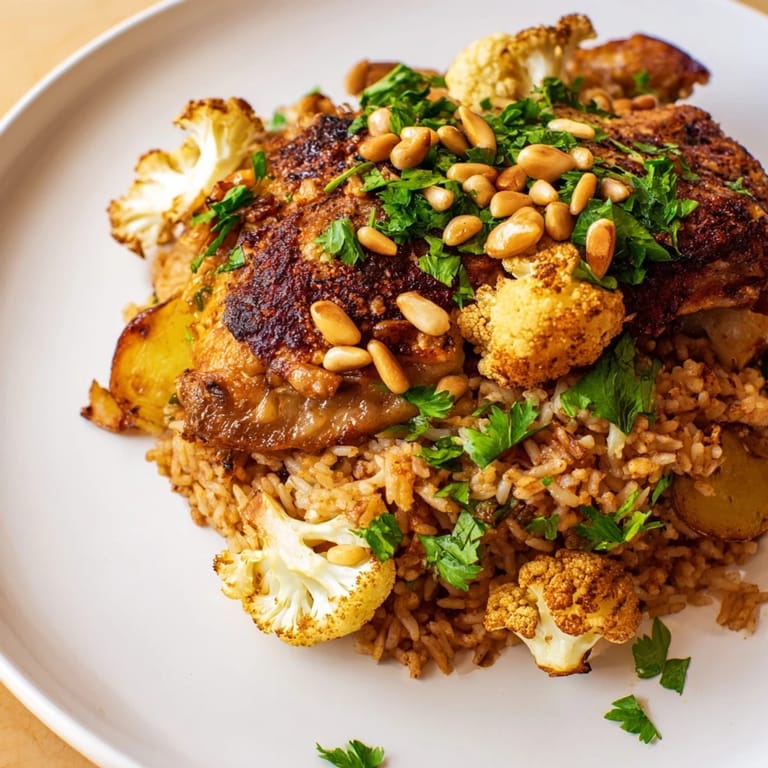
- Scatter toasted nuts and fresh parsley over the top and bring it to the table while it's still steaming. Serve with yogurt or a crisp salad on the side.
 Save
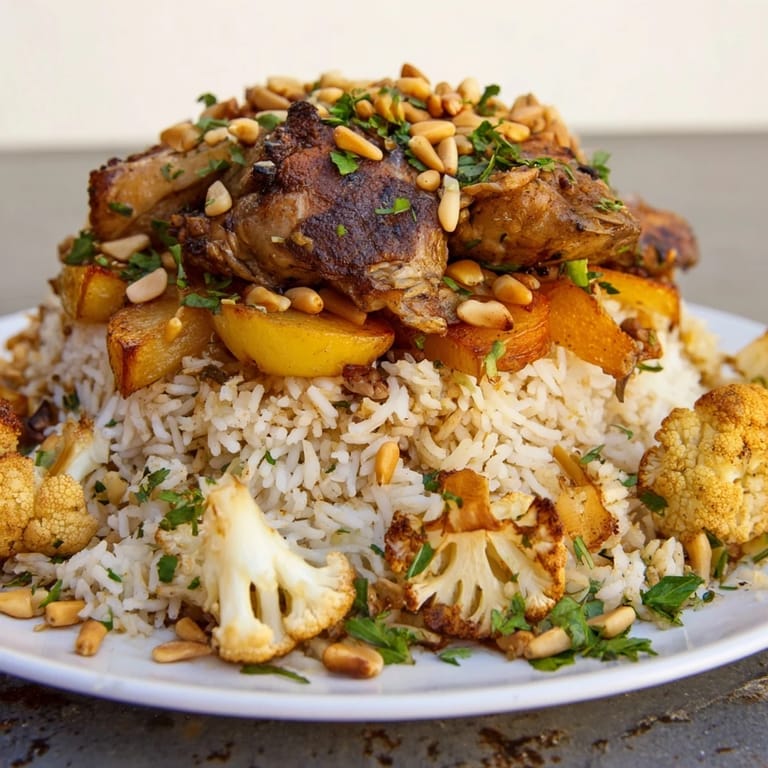
Save The moment when everyone at the table realized they could taste each individual spice but they all blended into something greater than the sum of its parts—that's when I understood why this dish has survived centuries and crossed continents. It wasn't just feeding people; it was giving them something to remember.
The Spice Symphony
What makes maklouba distinct isn't any single spice but how they play together—the warmth of cinnamon, the earthiness of cumin, the floral notes of cardamom. I once made this with store-bought spice mixes and it tasted flat, so now I always grind or buy whole spices and bloom them in the hot oil. The difference is not subtle; it's the difference between a good meal and one that lingers in your thoughts for weeks.
The Inversion Technique
The beauty of maklouba is that the inversion is both practical and ceremonial—it's how you serve it, but it's also the moment that transforms cooking from a private activity into a performance. I've learned that confidence matters here; hesitation leads to a slide instead of a clean unmold. Practice the motion in your head beforehand, use both hands, and move with purpose.
Variations and Flexibility
I've made vegetarian versions by skipping the chicken and using vegetable broth, and honestly, it's equally satisfying—the vegetables caramelize beautifully and create their own depth. Some cooks add layers of eggplant or carrots, and a pinch of saffron steeped in the broth adds a subtle luxury that no one can quite name but everyone notices. Each time you make this, it's a chance to personalize it while honoring the bones of the dish.
- Saffron is worth the splurge if you want to serve this for someone special.
- Eggplant adds a silky texture layer that complements the cauliflower beautifully.
- Don't overthink the garnish—nuts and parsley are traditional for a reason.
 Save
Save Maklouba is more than a recipe—it's an invitation to slow down and trust the process, knowing that something beautiful is happening beneath the lid. When you set it on the table and watch people taste it, you'll understand why it's been made the same way for generations.
Recipe FAQs
- → What type of rice is best for Maklouba?
Basmati rice is preferred for its fragrance and ability to stay fluffy, complementing the layered textures of Maklouba.
- → Can I substitute the chicken with another protein?
Yes, lamb or beef can be used, or you can omit meat entirely for a vegetarian version using vegetable broth.
- → How do I achieve the perfect inversion without breaking the layers?
Using a heavy-bottomed pot and letting the dish rest after cooking allows the layers to set firmly, making the inversion smooth and intact.
- → What vegetables work well in this dish besides cauliflower and potatoes?
Eggplant slices and carrots are excellent additions that layer nicely and add variety to the dish.
- → How are the spices used to flavor the dish?
The spices including cumin, coriander, cinnamon, turmeric, allspice, and cardamom are sautéed with onions to release their aroma before combining with the broth and other ingredients.