 Save
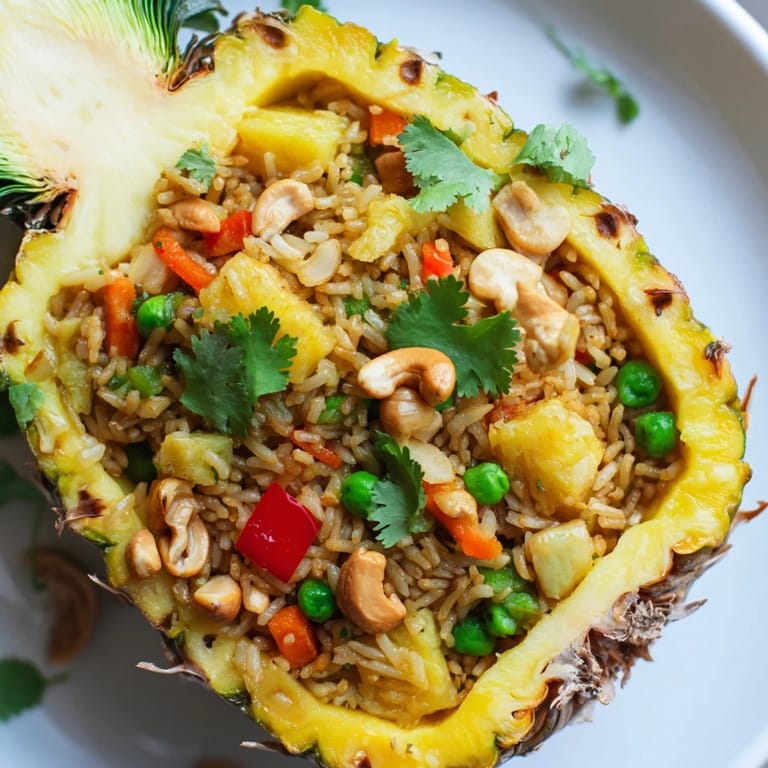
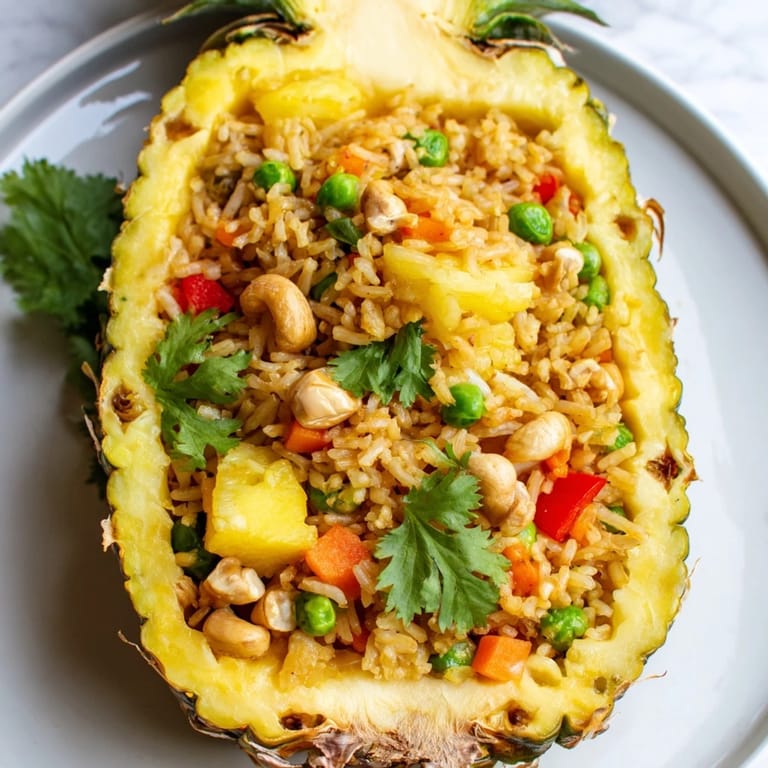
Save My neighbor knocked on my door one Saturday holding a pineapple she didn't know what to do with, and I blurted out we could make fried rice in it. We spent that afternoon laughing as juice dripped down our elbows, the kitchen smelling like caramelized garlic and sweet fruit. The curry powder hit the hot wok and filled the room with this toasty warmth that made us both pause mid-stir. When we finally spooned the rice back into those golden shells, it felt less like dinner and more like we'd made something worth showing off.
I made this for a potluck once and watched people hover around the table, uncertain if they were supposed to eat the pineapple itself. One friend finally grabbed a spoon and dug in, and within minutes both halves were nearly empty. Someone asked if I'd taken a cooking class in Thailand, and I had to admit I just got tired of plain fried rice on Tuesdays. That night I learned that presentation really does make people taste food differently.
Ingredients
- Ripe pineapple: Look for one that smells sweet at the base and has leaves that pull out easily, the flesh should be firm enough to hold its shape as a bowl but juicy enough to flavor the rice.
- Day-old jasmine rice: Freshly cooked rice turns gummy in the wok, but rice that has dried out in the fridge for a day fries up with distinct, chewy grains that don't clump.
- Vegetable oil: A neutral oil with a high smoke point lets you get the wok screaming hot without burning, which is essential for that slightly charred, restaurant-style flavor.
- Onion and garlic: These create the aromatic base that makes the whole dish smell like you know what you are doing, even if you are winging it.
- Carrot and red bell pepper: They add crunch and color, plus they hold up to high heat without turning to mush if you keep them moving in the pan.
- Eggs: Scrambling them right in the wok adds richness and little golden ribbons throughout the rice, but you can skip them entirely and the dish still shines.
- Frozen peas: They go straight from freezer to wok and stay bright green, adding pops of sweetness without any prep work.
- Roasted cashews: They bring a buttery crunch that contrasts perfectly with the soft rice, just make sure they are unsalted or the whole dish can tip too salty.
- Diced pineapple flesh: Use the fruit you carve out of the shell so nothing goes to waste, and it adds bursts of tangy sweetness in every other bite.
- Scallions: Toss them in at the very end so they stay bright and sharp, cutting through the richness of the oil and eggs.
- Raisins or golden sultanas: Optional but wonderful, they plump up in the heat and add little chewy-sweet surprises that make kids especially happy.
- Soy sauce: This is your salt and umami in one, use tamari if you need it gluten-free and it works exactly the same way.
- Fish sauce: Just a tablespoon adds a deep savory funk that you can't quite name but will miss if you leave it out, though the dish is still delicious without it for vegetarians.
- Curry powder: The secret ingredient that makes this taste like it came from a Thai street cart, toasting it in the hot oil wakes up all the spices inside.
- White pepper: It has a sharper, more floral heat than black pepper and is traditional in Asian fried rice, though black pepper works in a pinch.
- Sugar: Just a teaspoon balances the salty soy sauce and brings out the natural sweetness of the pineapple without making it taste like dessert.
- Fresh cilantro and lime wedges: The cilantro adds a bright herbal note and the lime juice squeezed over the top at the table wakes up every flavor on the plate.
Tired of Takeout? 🥡
Get 10 meals you can make faster than delivery arrives. Seriously.
One email. No spam. Unsubscribe anytime.
Instructions
- Carve the pineapple bowls:
- Slice the pineapple in half lengthwise through the leaves, then use a sharp knife to trace around the inside edge, leaving a half-inch shell. Scoop out the flesh with a large spoon, dice half a cup of it for the rice, and save the rest for snacking or smoothies.
- Start the aromatics:
- Heat the oil in your wok over medium-high until it shimmers, then add the onion and garlic, stirring constantly so the garlic turns golden and fragrant without burning. This takes about a minute and the smell will tell you when it is ready.
- Cook the vegetables:
- Toss in the carrot and bell pepper, keeping everything moving in the pan so they soften slightly but still have a bit of snap. Two to three minutes is all they need.
- Scramble the eggs:
- Push all the vegetables to one side of the wok, pour the beaten eggs into the empty space, and let them sit for a few seconds before scrambling them into soft curds. Once they are just set, mix them back in with the vegetables.
- Add the rice and mix-ins:
- Break up any clumps of cold rice with your hands before adding it to the wok, then stir in the peas, diced pineapple, cashews, and raisins if using. Keep tossing everything together so the rice gets evenly coated and starts to toast slightly on the edges.
- Season and fry:
- Drizzle in the soy sauce, fish sauce, curry powder, white pepper, sugar, and a pinch of salt, then stir-fry for another two to three minutes. You want the rice to smell toasty and look glossy, with every grain separate and lightly golden.
- Finish with scallions:
- Toss in the sliced scallions and stir just until they wilt and turn bright green. Remove the wok from the heat immediately so they stay fresh and sharp.
- Serve in the pineapple shells:
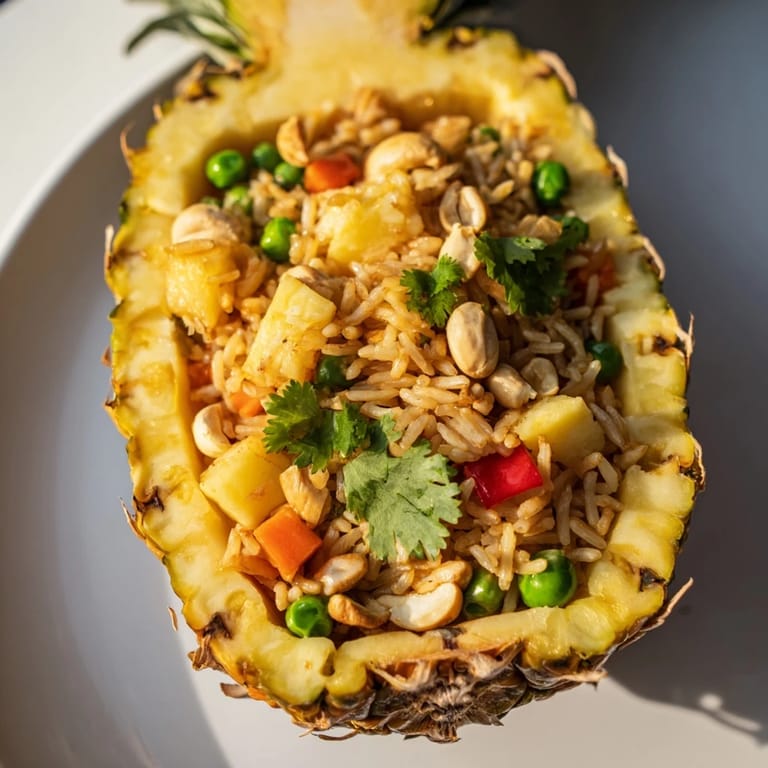
- Spoon the hot fried rice into the hollowed pineapple halves, packing it in gently and mounding it up. Scatter fresh cilantro over the top and tuck lime wedges around the edges for everyone to squeeze over their portions.
 Save
Save The first time I brought this to a family dinner, my uncle, who usually just grunts and eats, looked up and said it tasted like vacation. My aunt took a picture of the pineapple boat before anyone could dig in, and now she requests it every summer when pineapples go on sale. It stopped being just a recipe and started being the thing people ask for by name.
Choosing and Preparing Your Pineapple
A ripe pineapple should feel heavy for its size and give off a sweet, tropical smell near the base, not sour or fermented. The leaves should pull out with a gentle tug, and the skin should have a slight give when you press it but not feel mushy. When you carve out the flesh, work slowly and use a thin, flexible knife to follow the curve of the shell so you don't accidentally poke through. I learned this after creating a slow leak that dripped pineapple juice all over my counter halfway through dinner.
Making It Your Own
This recipe is incredibly forgiving and practically begs you to improvise based on what is in your fridge. I have thrown in leftover rotisserie chicken, grilled shrimp, cubed tofu, and even crumbled breakfast sausage, and every version worked. If you want more vegetables, try snap peas, corn, edamame, or diced zucchini. You can swap the cashews for peanuts or almonds, and if you don't have curry powder, a pinch of turmeric and cumin will give you a different but still delicious flavor.
Storing and Reheating
Leftover fried rice keeps in an airtight container in the fridge for up to three days, though it is best reheated in a hot skillet with a tiny splash of oil rather than the microwave. The microwave makes the rice gummy, but a quick toss in a pan brings back that just-fried texture and toasty flavor. If you made extra and want to freeze it, let it cool completely, then freeze it flat in a zip-top bag so it thaws quickly and evenly.
- Reheat in a skillet over medium-high heat, stirring frequently, until heated through and slightly crispy again.
- Add a splash of soy sauce or a beaten egg while reheating to refresh the flavors and add moisture.
- Do not store the rice inside the pineapple shells overnight, as the fruit will make the rice soggy and overly sweet.
 Save
Save This dish has a way of making any dinner feel a little special, even if it is just a Wednesday. I hope your kitchen smells as good as mine does when the curry powder hits the pan, and that someone asks you where you learned to cook like this.
Recipe FAQs
- → Can I use fresh rice instead of day-old rice?
Day-old rice works best because it's drier and prevents the fried rice from becoming mushy. If using fresh rice, spread it on a baking sheet and refrigerate for a few hours before cooking.
- → How do I hollow out the pineapple without damaging the shell?
Cut the pineapple in half lengthwise, keeping the crown intact. Use a sharp knife to carefully carve around the flesh in a circular motion, then scoop out the flesh with a large spoon, leaving about a 1/2-inch shell for structural integrity.
- → What are good protein additions for this dish?
Cooked shrimp, diced chicken breast, or crumbled tofu all work wonderfully. Add protein in step 5 after stir-frying the vegetables. Use about 1 cup of protein per batch for balanced flavor and nutrition.
- → Is fish sauce essential for authentic flavor?
Fish sauce adds traditional umami depth, but it's completely optional. For vegetarian or vegan versions, simply omit it and increase soy sauce by 1 tablespoon to maintain savory complexity.
- → How can I make this vegan-friendly?
Omit the eggs and fish sauce, and use tamari instead of regular soy sauce for gluten-free options. All other ingredients are naturally plant-based, making this adaptable for vegan diets without compromising flavor.
- → Can I prepare components ahead of time?
Yes! Dice vegetables, cook rice, and hollow the pineapple shells up to 24 hours in advance. Store vegetables in airtight containers and rice in the refrigerator. Final stir-frying takes just 10-15 minutes.