 Save
Save The first time I tasted muhammara, I was standing in a cramped Damascus kitchen with my friend Layla, watching her grandmother work with an intensity that made the whole room feel alive. She didn't measure anything—just moved between the charred peppers and the toasted walnuts with this quiet certainty, as if her hands already knew the recipe by heart. I remember the smell of burnt pepper skin mixed with pomegranate molasses, something both smoky and bright, and thinking this was the kind of dip that held entire conversations in a single spoonful. Now whenever I make it, I chase that same feeling—that balance of heat and tang, that moment when someone tastes it and their eyes widen just a little.
I brought this to a potluck once when I was still figuring out the proportions, and someone asked if I'd made it at a restaurant. I hadn't even told them it was muhammara—they just knew it tasted like somewhere far away. That was the moment I understood it wasn't really about following a recipe perfectly; it was about understanding why each element mattered. The roasted peppers give you sweetness, the walnuts bring earthiness, and the pomegranate molasses? That's the voice that makes everything sing.
Ingredients
- Red bell peppers (3 large): These are the foundation—the char is what gives muhammara its smoky depth. Choose peppers that are firm and glossy, and don't rush the roasting step.
- Walnuts (1 cup, lightly toasted): They add body and a subtle bitter warmth that anchors the sweetness of the peppers. Toasting them yourself makes all the difference in flavor.
- Garlic cloves (2): Just enough to add sharpness without overpowering the delicate balance of the dip.
- Breadcrumbs (2 tbsp): These create the texture you're after—that slightly grainy, almost creamy consistency that feels luxurious on the tongue.
- Ground cumin (1 tsp): Earthy and warm, it ties the whole dip together and whispers of the Middle East in every bite.
- Smoked paprika (1/2 tsp): This is your secret weapon for deepening the smoke flavor without needing to char everything to oblivion.
- Aleppo pepper (1/2 tsp): If you can find it, use it—it's fruity and complex. Red chili flakes work, but they're fiercer and lack the nuance.
- Pomegranate molasses (2 tbsp): This is the soul of the dish, that tangy-tart element that makes people pause and say, "What is that?"
- Extra virgin olive oil (2 tbsp, plus more for drizzling): It should taste peppery and alive, not neutral—this is what finishes the dip and makes it feel intentional.
- Lemon juice (1–2 tbsp): Taste as you go; some pomegranate molasses is more sour than others, so you might need more or less.
- Toasted sesame seeds (1 tbsp, optional): A tiny garnish that adds nuttiness and a pleasant crunch on top.
Tired of Takeout? 🥡
Get 10 meals you can make faster than delivery arrives. Seriously.
One email. No spam. Unsubscribe anytime.
Instructions
- Char the peppers until the skins blister:
- Heat your oven to 220°C (425°F) and lay the whole red peppers on a baking tray. Roast for 20–25 minutes, turning them every few minutes so they char evenly all over. You want the skin almost blackened in places—that's where the smoke flavor lives.
- Steam and peel them gently:
- Transfer the hot peppers to a bowl and cover it tightly with plastic wrap or a plate. This steam will loosen the skin, making it peel away almost effortlessly after about 10 minutes. Be patient here; rushing it means you'll lose some of the flesh.
- Build the base in the processor:
- Add the cooled peppers, toasted walnuts, garlic, breadcrumbs, cumin, smoked paprika, Aleppo pepper, salt, and black pepper to your food processor. Pulse until the mixture is coarse and broken down but still has some texture—you're not going for baby food.
- Bring it together with the finishing flavors:
- Add the pomegranate molasses, olive oil, and lemon juice, then process until smooth but still slightly rustic. Taste constantly as you go; this is where you adjust the balance to suit your palate.
- Present it like you mean it:
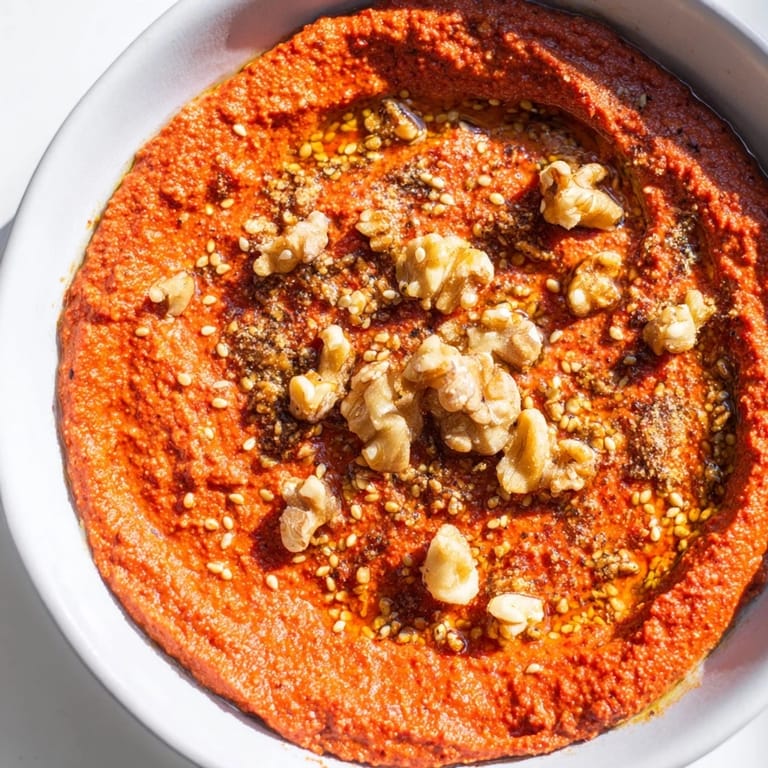
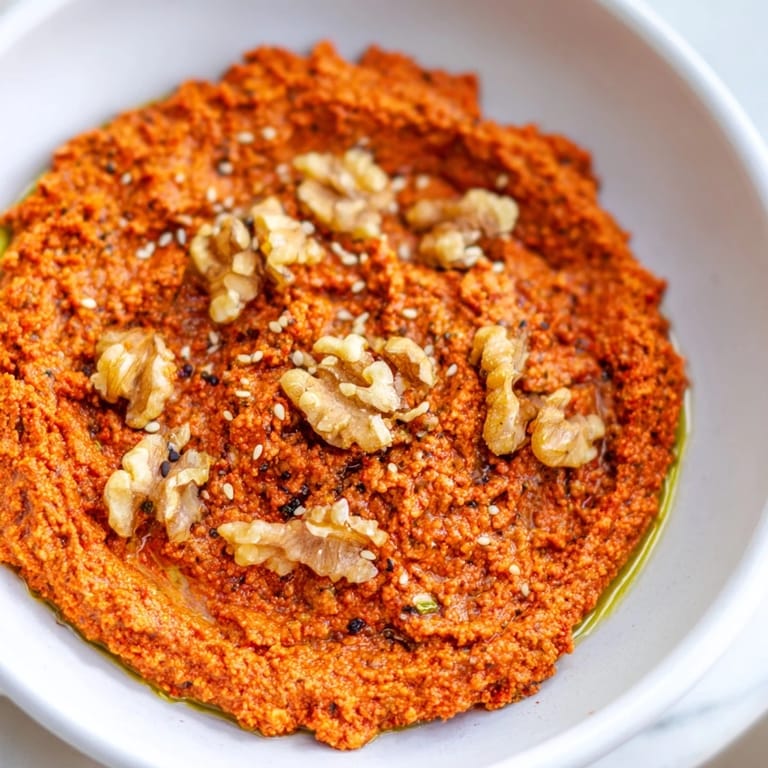
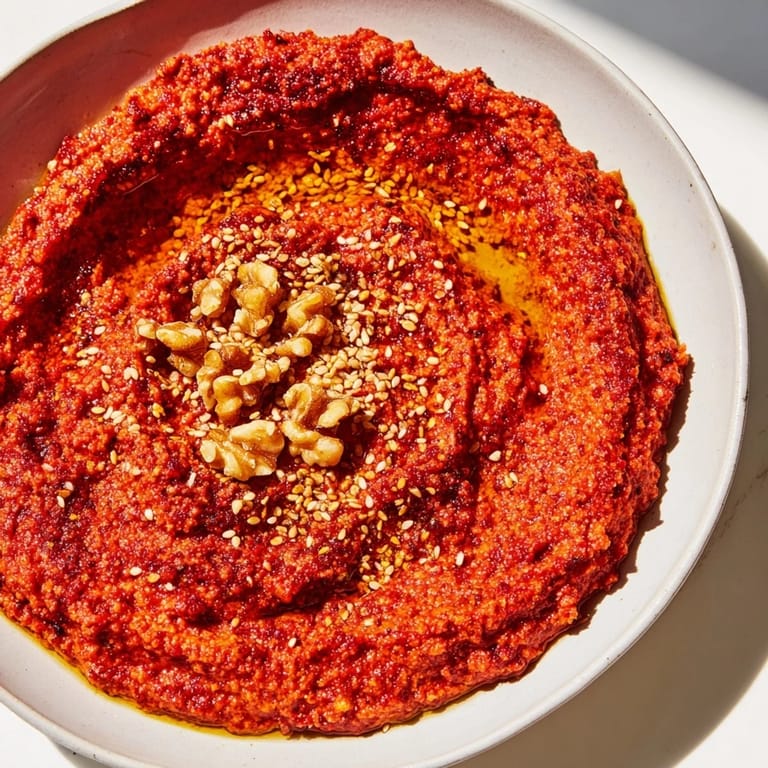
- Spoon the muhammara into a shallow bowl and make a little well in the center. Drizzle generously with more olive oil and scatter sesame seeds across the top if you're using them. Serve with warm pita, crackers, or whatever you want to dip into it.
 Save
Save There's something about serving muhammara that turns an ordinary afternoon into something that feels special. My neighbor once took one bite, closed her eyes, and asked where I learned to cook like that—and I realized it wasn't about technique, it was about understanding that food is a kind of translation, carrying someone else's memory right into your kitchen and onto someone else's table.
The Smoke Is Everything
I spent my first few attempts trying to get muhammara smooth and refined, but I was missing the point entirely. The magic isn't in the silky texture—it's in that burnt-sweet pepper flavor that sits at the back of your throat. If you're not getting that smoky depth, it usually means your peppers didn't char enough, or you're blending it into submission instead of leaving it rustic. Some people swear by grilling the peppers over an open flame for even more intensity, and honestly, that's not a shortcut, that's an upgrade.
The Balance Game
This dip is all about tension—sweet peppers against tangy pomegranate molasses, earthiness of walnuts against sharp garlic, smoke against brightness. If it tastes flat, it's usually because you need more pomegranate molasses or lemon juice to wake it up. If it tastes too sour, a pinch more salt or a drizzle of olive oil can smooth it out. I've learned that tasting constantly isn't obsessive, it's just respectful to the dish and to whoever you're feeding.
Serving and Keeping
Muhammara is best served at room temperature, which is actually liberating because you can make it hours ahead and just let it sit, flavors deepening. It keeps refrigerated for up to five days in an airtight container, though honestly it rarely lasts that long in my house. When you're ready to serve it again, let it come back to room temperature and refresh the olive oil on top—that's the difference between good and memorable.
- Serve it as the centerpiece of a mezze platter alongside hummus, baba ghanoush, olives, and fresh vegetables.
- Use it as a spread for sandwiches or a base for grain bowls if you want something different.
- A tiny spoonful on top of grilled fish or roasted chicken transforms simple proteins into something unforgettable.
 Save
Save There's something deeply satisfying about making muhammara, knowing you're holding a recipe that's traveled centuries and somehow landed on your counter. It's the kind of dish that reminds you why people cook for each other.
Recipe FAQs
- → What gives the dip its smoky flavor?
Roasting the red bell peppers until the skins are charred imparts a deep smoky aroma that defines the spread's character.
- → Can I make the spread spicier?
Yes, adjust the amount of Aleppo pepper or substitute with red chili flakes to increase heat according to your taste.
- → Is it necessary to use pomegranate molasses?
Pomegranate molasses adds a unique tangy sweetness essential for balance, but it can be substituted with a mix of lemon juice and a touch of honey or molasses.
- → How should I store leftovers?
Keep the spread refrigerated in an airtight container for up to five days to preserve freshness and flavor.
- → What are good serving suggestions?
Serve as a spread with pita bread, crackers, or alongside vegetable sticks as part of a mezze platter for a flavorful starter.