 Save
Save My cousin's daughter was turning seven, and her mother asked me to bake something special for her First Communion celebration. I'd never piped flowers before, but standing in my kitchen at dawn with a fresh cup of coffee, I decided this vanilla sheet cake would be the one to finally try. There's something about baking for a milestone that makes you want to get it just right—the way the vanilla fills your kitchen, the soft crumb that practically melts on your tongue, the buttercream that's almost too pretty to eat.
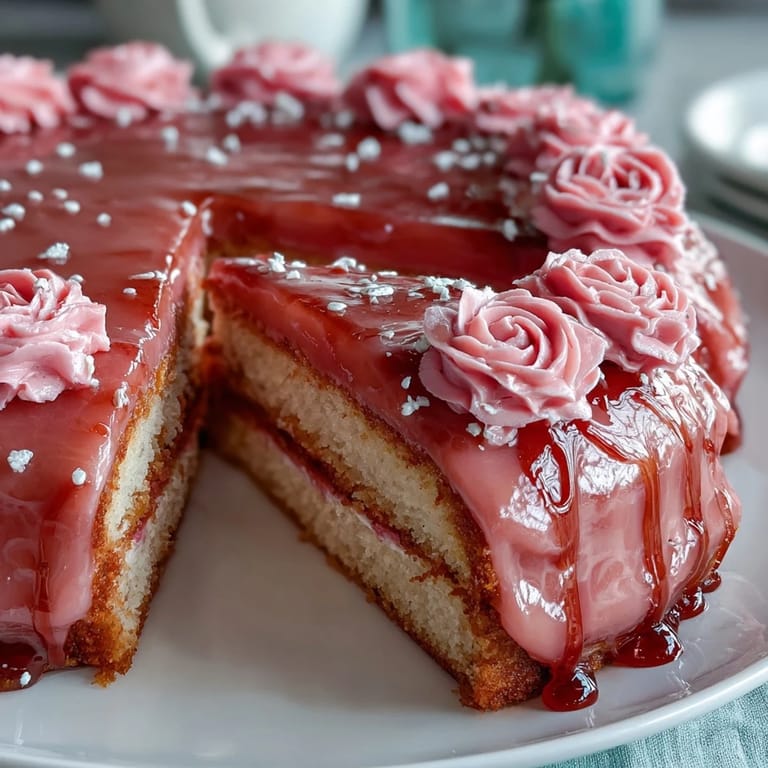
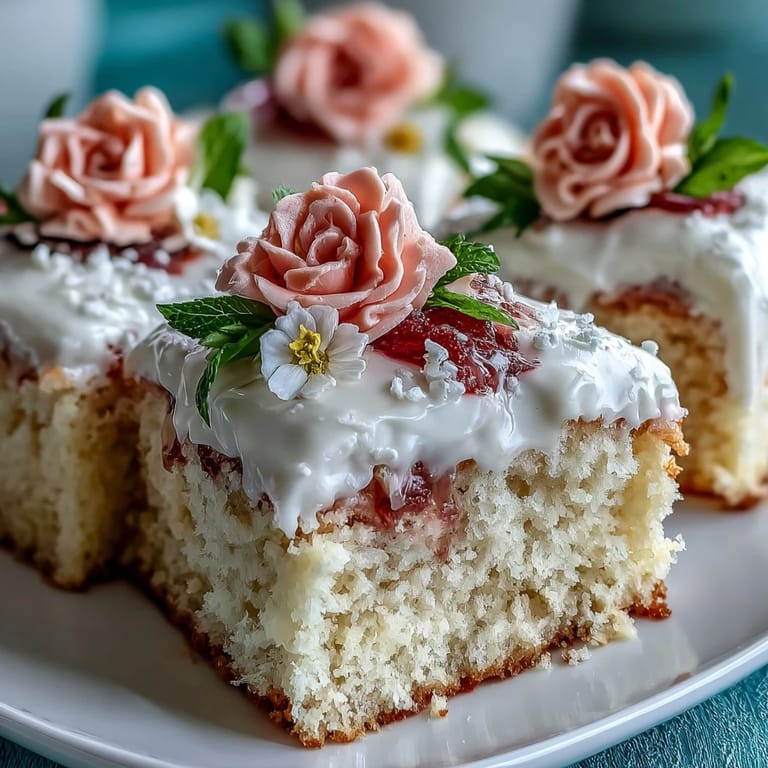
I'll never forget watching my hands shake slightly as I piped those first pink roses onto the white base—my aunt stood nearby offering encouragement, and somehow that made all the difference. When the cake came out to the table and all those kids' faces lit up, I realized the imperfect flowers looked even more charming than store-bought perfection ever could. That cake wasn't just dessert; it was proof that showing up and trying matters more than being flawless.
Ingredients
- All-purpose flour (2 ½ cups): Room-temperature eggs and milk mixed with this create a tender crumb, so don't skip sifting it with the baking powder and salt.
- Baking powder (2 ½ tsp): This gives the cake its gentle lift and keeps it from being dense—too much makes it taste metallic, so measure precisely.
- Salt (½ tsp): Just a pinch that you'll barely taste but that somehow makes the vanilla sing louder.
- Unsalted butter (1 cup for cake): Softened butter creams with sugar to trap tiny air pockets, which is where all the tenderness comes from.
- Granulated sugar (2 cups): The creaming step with butter is non-negotiable—it takes about three minutes and transforms everything.
- Eggs (4 large, room temperature): Cold eggs won't incorporate smoothly, so pull them out while you're prepping other ingredients.
- Pure vanilla extract (1 tbsp for cake): Real vanilla makes a noticeable difference here since vanilla is the star, not a supporting player.
- Whole milk (1 cup, room temperature): Alternating flour and milk keeps the batter balanced and prevents overdeveloping the gluten.
- Unsalted butter (1 ½ cups for buttercream): This needs to be soft enough to leave a fingerprint but not melting at the edges.
- Powdered sugar (6 cups, sifted): Sifting removes lumps that would create gritty buttercream and make piping messy.
- Whole milk (¼ cup for buttercream): This loosens the buttercream to piping consistency without making it greasy.
- Pure vanilla extract (2 tsp for buttercream): A touch more than the cake itself because buttercream can handle bold flavor.
- Food coloring: Gel coloring gives you vibrant hues without watering down your buttercream like liquid coloring does.
Tired of Takeout? 🥡
Get 10 meals you can make faster than delivery arrives. Seriously.
One email. No spam. Unsubscribe anytime.
Instructions
- Prepare your stage:
- Heat your oven to 350°F and grease that 9x13-inch pan well, then line it with parchment so the cake releases like a dream. This step feels small, but it saves heartbreak later.
- Mix the dry team:
- Whisk flour, baking powder, and salt together in a medium bowl, breaking up any hidden lumps. Set it aside and try not to peek at it every thirty seconds like I do.
- Cream butter and sugar into clouds:
- In your large bowl, beat the softened butter and sugar with an electric mixer for about three minutes until the mixture looks pale, fluffy, and almost mousse-like. This is where the magic happens—those air bubbles are going to make your cake light.
- Welcome the eggs one by one:
- Add each egg individually, mixing well after each one joins the party, then stir in the vanilla extract. The mixture might look slightly broken after each egg, but it comes together as you mix.
- Alternate flour and milk like you're dancing:
- Add one-third of the flour mixture, then half the milk, then another third of flour, then the remaining milk, then the last of the flour. Mix just until combined each time—overmixing at this stage is the enemy of tenderness.
- Pour and smooth:
- Transfer the batter to your prepared pan and use a spatula to smooth the top gently. The batter should be thick but spreadable, not runny.
- Bake until golden and set:
- Bake for 28 to 32 minutes, checking with a toothpick around the 28-minute mark—it should come out clean or with just a few moist crumbs clinging to it. The kitchen will smell absolutely incredible.
- Cool with patience:
- Let the cake rest in the pan for ten minutes so it sets slightly, then turn it out onto a wire rack to cool completely. This prevents it from cracking or breaking apart.
- Build the buttercream base:
- Beat the softened butter until it's creamy and pale, then gradually add the sifted powdered sugar, alternating with the milk, until you reach a smooth, fluffy consistency. Mix in the vanilla and taste it—yes, really, a tiny taste tells you if you need more vanilla.
- Paint with color:
- Divide your buttercream into small bowls and tint each portion with gel food coloring, stirring until the color is even. Start with a tiny drop and add more if needed.
- Frost the canvas:
- Spread a generous, even layer of plain (or very lightly tinted) buttercream across the cooled cake as your base. This is your blank canvas for flowers.
- Pipe flowers and leaves with intention:
- Fill piping bags with the colored buttercream and fitted with flower and leaf tips, then pipe flowers in clusters across the cake, especially along edges and corners where they frame the design beautifully. Step back between each flower to see how it's coming together.
- Add final touches:
- If you'd like, pipe a cross or add text like the child's name or a blessing using a small round tip and white or light buttercream. This is your moment to personalize it.
 Save
Save Days later, my cousin texted me a photo of her daughter in her white dress, holding a tiny slice of cake on a fancy plate, beaming at the camera. That image reminded me why we bake for people—it's not about perfection, it's about showing up with your hands and your heart and saying, 'I made this for you because you matter.' The buttercream flowers were delightfully imperfect, and somehow that made them exactly right.
Why Temperature Matters So Much
I learned this lesson the hard way when I once tried to speed things up by pulling cold eggs straight from the fridge. The batter looked curdled and separated, and I nearly threw it out before an older baker friend assured me it would still bake fine—it did, but the texture wasn't quite as delicate as when I took five minutes to let everything warm up. Room temperature ingredients blend together smoothly because they're closer in density, creating that silky, homogeneous batter that bakes into tender cake. This isn't fussy baking advice; it's chemistry that actually changes your outcome.
The Secret of Buttercream Piping
The first time I piped flowers, I was convinced I'd ruin them, so I held the piping bag with white knuckles and jerked it around like I was wrestling it. A more experienced friend gently took my hand and showed me that piping is less about control and more about confidence and small, deliberate movements. She also taught me that slightly cooler buttercream (you can even chill the piping bag in the freezer for a few minutes) holds its shape better and gives you cleaner, more defined petals. The flowers don't need to be perfect; they need to be intentional.
Storage and Timing Tips
This cake is forgiving enough to bake a full day ahead, which takes pressure off your celebration day—just wrap it well at room temperature and it stays moist. I once decorated a cake in the morning for an afternoon party, and the buttercream flowers held their shape beautifully because I worked in a cool kitchen. You can even prepare the buttercream several hours ahead and keep it covered on the counter, but if your kitchen is warm, chill it briefly before piping.
- If your buttercream becomes too soft while piping, pop the piping bag in the freezer for five minutes to firm it back up.
- For extra flavor depth, add just half a teaspoon of almond extract to the cake batter—it whispers rather than shouts, but it makes people pause and ask what that lovely flavor is.
- Pair this cake with something light like Moscato for adults or cold lemonade for kids, letting the vanilla star without competition.
 Save
Save This cake has become my go-to for any celebration that calls for something special but not fussy. It's the kind of recipe that lets you shine without requiring culinary school.
Recipe FAQs
- → What type of flour is best for this sheet?
All-purpose flour provides the ideal texture and structure without making the cake too dense.
- → How do I achieve smooth buttercream frosting?
Beat softened unsalted butter until creamy, then gradually add sifted powdered sugar alternating with milk, blending until light and fluffy.
- → Can I add flavors to the batter?
Yes, a hint of almond extract enhances the vanilla base without overpowering the delicate flavor.
- → What’s the best way to pipe decorative flowers?
Use piping bags fitted with flower and leaf tips, tint buttercream with gel colors for vibrant, clean details.
- → How should I store the cake after decorating?
Cover the cake and keep it at room temperature for up to one day to maintain freshness and texture.