 Save
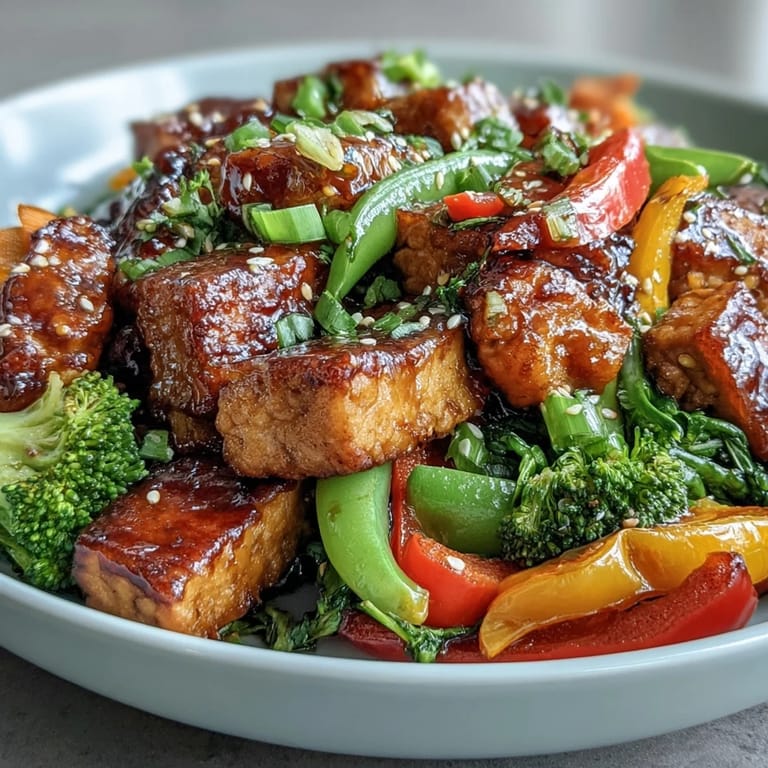
Save There's something about the sound of tempeh hitting a hot wok that makes me feel like I'm actually cooking something worthwhile. I discovered this stir-fry on an ordinary Tuesday when my fridge was looking sparse but my craving for something vibrant and satisfying was not. What started as a way to use up bell peppers became the weeknight dinner I keep coming back to, the kind that tastes restaurant-quality but takes barely longer than ordering takeout.
I made this for my partner one night when they were skeptical about tempeh, convinced it would be weird and rubbery. Watching them go back for seconds without any hesitation was quietly satisfying, one of those small kitchen victories that doesn't get celebrated enough. They've asked me to make it at least twice a month since.
Ingredients
- Tempeh, 250 g: Cut into cubes about the size of dice and you'll notice how much surface area you're creating for that golden crust; don't skip this step or the texture suffers.
- Red and yellow bell peppers: Slice them into strips roughly the same thickness so everything cooks evenly and catches the heat the same way.
- Carrot, 1 medium: Julienne it thin enough that it stays crisp but thick enough that it doesn't disappear into the sauce.
- Sugar snap peas and broccoli florets: These are your crunch anchors, the things that keep the whole dish from turning soft and muddy.
- Spring onions and fresh ginger: The ginger especially wakes everything up; fresh is absolutely worth the five seconds it takes to peel and mince it.
- Soy sauce or tamari: Tamari is the gluten-free friend who always shows up, but regular soy sauce has a depth that's hard to replicate.
- Rice vinegar, maple syrup, and sesame oil: These three are the rhythm section of your sauce, balancing salty and sweet and nutty in ways that somehow feel inevitable once you taste them together.
- Cornstarch: Just a teaspoon acts like a thickening whisper, coating everything without making it heavy.
- Vegetable oil: High heat demands an oil that can handle it without smoking your kitchen.
Tired of Takeout? 🥡
Get 10 meals you can make faster than delivery arrives. Seriously.
One email. No spam. Unsubscribe anytime.
Instructions
- Whisk your sauce first:
- Mix the soy sauce, water, rice vinegar, maple syrup, sesame oil, and cornstarch in a small bowl and set it nearby. You'll thank yourself for this prep work when you're in the middle of the chaos.
- Brown the tempeh:
- Heat one tablespoon of oil in your wok until it shimmers, then add the tempeh cubes and let them sit undisturbed for a minute before stirring. This creates that golden, slightly crispy exterior that makes tempeh actually appealing.
- Infuse the oil with aromatics:
- After the tempeh comes out, add the remaining oil and quickly stir the garlic and ginger for just 30 seconds. You'll smell when it's ready, that sharp, warm, almost peppery moment.
- Stir-fry the vegetables:
- Add the peppers, carrot, snap peas, and broccoli in quick succession, stirring constantly for 4 to 5 minutes. They should still have a slight resistance when you bite one, that snap that means they're cooked through but not defeated.
- Bring it all together:
- Return the tempeh to the wok, give your sauce a final stir to wake up the cornstarch, then pour it over everything. Toss for about a minute until you see the sauce thicken and cling to the vegetables like it belongs there.
- Finish with freshness:
- Stir in the spring onions off the heat so they stay bright and barely wilted, then scatter sesame seeds and cilantro on top if you're feeling generous.
 Save
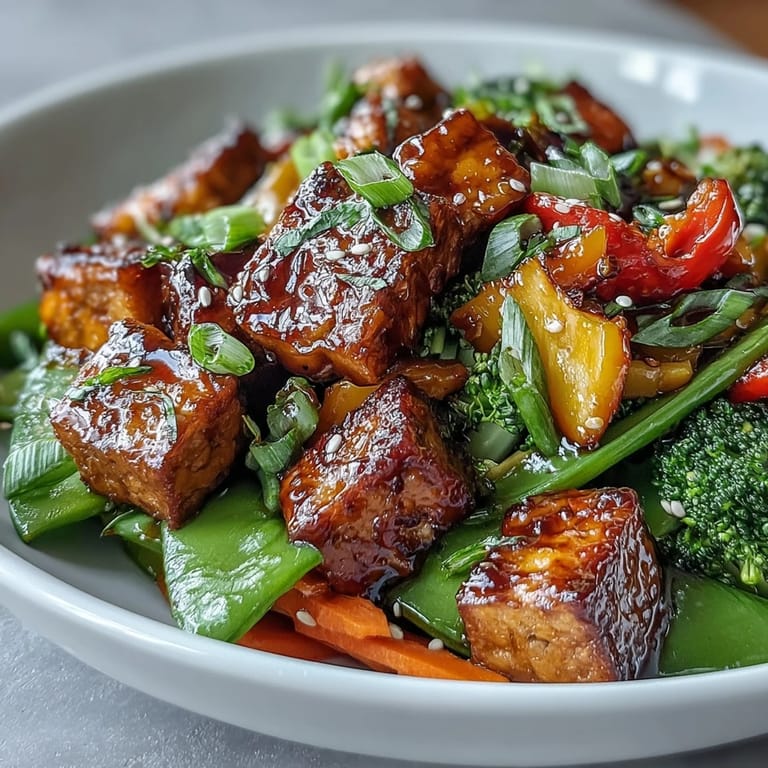
Save There's a particular moment in this recipe where everything shifts, right when you pour that glossy sauce over the wok and toss it all together. It becomes more than just assembled ingredients; it becomes something warm and intentional. That's when I know why I keep making it.
What to Serve Alongside
Jasmine rice is the obvious choice, and for good reason; it soaks up the sauce without being assertive about it. Soba noodles work beautifully too, bringing an earthiness that complements the tempeh. I've even made it with cauliflower rice on nights when I wanted something lighter, and the sauce transforms that into something completely satisfying.
Customizing Your Stir-Fry
Once you understand the framework here, you can play with almost any vegetable that makes sense for the season. Winter calls for bok choy and mushrooms, spring wants snap peas and asparagus, and summer is all about zucchini and snap peas together. The sauce stays the same, a steady hand guiding whatever you decide to toss in.
Making It Your Own
I've added chili flakes on nights when I wanted heat, a splash of sriracha when I wanted something sharper, and even a tablespoon of peanut butter when I was craving something richer. The beauty is that this dish is forgiving enough to handle your mood swings.
- If you like it spicy, add chili flakes or sriracha to the sauce before tossing everything together.
- For extra depth, swap half the soy sauce for a dark soy sauce or a splash of dark sesame oil.
- Cook it in batches if you're serving more than four people, because a crowded wok steams rather than fries.
 Save
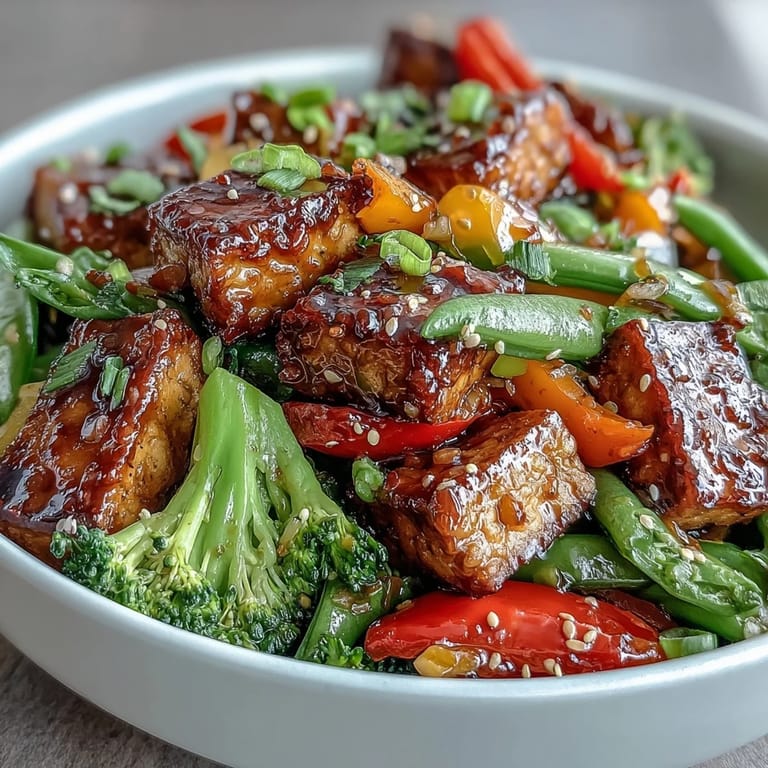
Save This stir-fry lives in my regular rotation because it feels fancy without demanding anything fancy from me, and it tastes like care without tasting like fuss. Make it for yourself on a regular Tuesday and you'll understand why.
Recipe FAQs
- → What is tempeh and how does it taste?
Tempeh is a fermented soy product originating from Indonesia. It has a firm, chewy texture and a nutty, earthy flavor that's milder than tofu. The fermentation process also makes it easier to digest and adds probiotics to your meal.
- → Can I make this gluten-free?
Absolutely! Simply substitute regular soy sauce with tamari, which is naturally gluten-free. All other ingredients in this dish are naturally gluten-free, making it an easy swap.
- → How do I store leftovers?
Store leftover stir-fry in an airtight container in the refrigerator for up to 3-4 days. Reheat gently in a skillet over medium heat, adding a splash of water if needed to loosen the sauce. The vegetables may soften slightly but will still taste delicious.
- → Can I meal prep this dish?
Yes! You can chop all vegetables up to 2 days in advance and store them separately in the refrigerator. The sauce can also be whisked together and stored in a jar. Cook everything fresh for the best texture, though the cooked dish reheats well for lunches.
- → What other vegetables work in this stir-fry?
Feel free to customize based on what you have available. Mushrooms, baby corn, zucchini, bok choy, snow peas, or green beans all work beautifully. Just aim for about 400g total vegetables and adjust cooking times slightly for harder varieties.
- → How can I add more protein?
While tempeh provides 15g of protein per serving, you can add edamame, cashews, or peanuts for extra protein and crunch. Serving over quinoa instead of rice also boosts the protein content.