 Save
Save The first time I tasted saltah, I was sitting on a low cushioned bench in a small kitchen in Sana'a, watching my friend's mother work with the kind of practiced ease that comes from making the same dish a hundred times. She moved between the stove and her prep station without hesitation, her hands knowing exactly when to add each ingredient, and I realized this wasn't just dinner—it was a conversation between her and the food itself. What struck me most wasn't the flavors at first, but the ritual of it: the way she whisked that fenugreek foam with almost meditative focus, how she layered everything with such intention. I've been chasing that feeling ever since, and this is my version of her story.
I made this for a small group of friends one winter evening when the kitchen felt too quiet and I needed something to do with my hands. As the stew simmered, the whole apartment filled with this warm, spiced smell that made everyone pause mid-conversation—you could feel the moment they understood what was about to happen. One friend actually teared up a little when she tasted it, not because it was fancy, but because it felt like being taken care of.
Ingredients
- Beef or lamb (500 g, cut into 2 cm cubes): This is your anchor—use what's best at your market, and don't worry about being perfect with the size; slightly irregular pieces add texture.
- Vegetable oil (2 tbsp): The neutral base that lets your spices shine without competing.
- Onion (1 large, finely chopped): This becomes almost translucent and sweet; that golden stage is when you know you're ready for the meat.
- Garlic (3 cloves, minced): Three is just enough to be present without overwhelming; fresh is always better.
- Tomatoes (2 medium, chopped): Use whatever you have—fresh, canned, or even sun-dried if you're improvising.
- Green chili (1, finely chopped, optional): This is your heat, but saltah doesn't need to be spicy; include it only if you want that kick.
- Potato (1 medium, cubed): It softens and thickens the broth just enough; don't skip this.
- Carrot (1 medium, diced): A touch of sweetness that balances the spices beautifully.
- Water or beef broth (4 cups): Homemade broth is lovely here, but water works just fine—let the spices do their job.
- Ground cumin, coriander, black pepper, turmeric (1/2 tsp, 1/2 tsp, 1/2 tsp, 1 tsp): These four are the soul of the dish; toast them lightly in your mind as you add them, and don't rush past this step.
- Ground fenugreek (1/2 tsp for the stew): A subtle hint in the broth that deepens everything, like a secret ingredient.
- Salt (1 tsp, adjusted to taste): Taste as you go; you might need more depending on your broth.
- Ground fenugreek seeds (2 tbsp for hulbah): This is different from the powder—it's what you whip into that cloud-like foam, and it's absolutely essential.
- Water (1/3 cup plus more for soaking): For the hulbah base; cold water is better for soaking.
- Small tomato (finely diced for hulbah): Fresh and bright against the creamy foam.
- Cilantro (1 small bunch, chopped): The final touch that makes everything feel alive.
- Green chili (1 minced, for hulbah, optional): A second chance to add heat, only if you want it.
- Lemon juice (from 1/2 lemon): This cuts through the richness and wakes up your palate.
- Salt (a pinch for hulbah): Just enough to season the foam without overshadowing the fenugreek.
- Yemeni flatbreads (2 large, malawah or lahoh): These are the foundation—they hold everything together, literally and emotionally; pita or naan are fine backups.
Tired of Takeout? 🥡
Get 10 meals you can make faster than delivery arrives. Seriously.
One email. No spam. Unsubscribe anytime.
Instructions
- Get the Base Right:
- Heat your oil in a large pot over medium heat and let the onions turn golden—this takes about 5 minutes and is worth waiting for because it's when you build your flavor foundation. Add the garlic, chili, and meat cubes, then let everything brown on all sides, which tells you that the meat is sealing in its juices.
- Bloom Your Spices:
- Once the meat has color, stir in the tomatoes, potato, carrot, and all your spices (cumin, coriander, pepper, turmeric, fenugreek, salt). Cook for 5 minutes, stirring gently, and this is when your kitchen should smell absolutely incredible—that's how you know the spices are waking up.
- Build the Broth:
- Pour in your water or broth, bring everything to a boil, then drop the heat to low, cover, and let it simmer for 1 to 1.5 hours. You're not rushing this; the meat should be tender enough to almost dissolve, and the broth should taste deep and layered.
- Prepare the Hulbah Foam:
- While the stew is working, soak your ground fenugreek seeds in cold water for an hour—yes, the full hour matters because it softens the seeds. After soaking, drain the excess water and whisk or beat it vigorously (a regular fork works fine) until you have a light, fluffy foam that looks almost like a cloud.
- Finish the Foam:
- Fold your diced tomato, cilantro, chili if using, lemon juice, and a pinch of salt into the hulbah foam gently—you want to keep that airiness you just created. Set it aside until you're ready to serve.
- Tear and Layer:
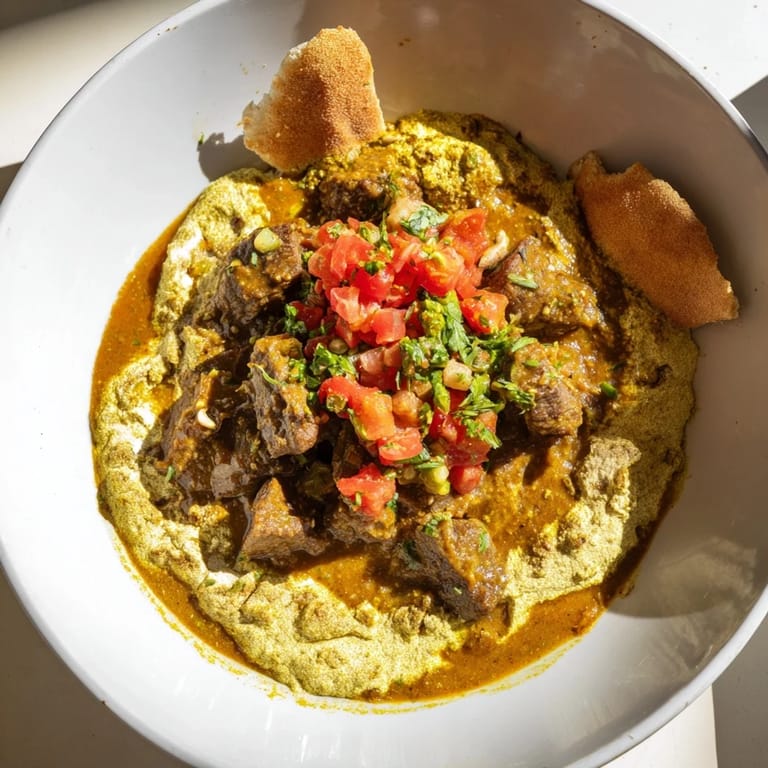
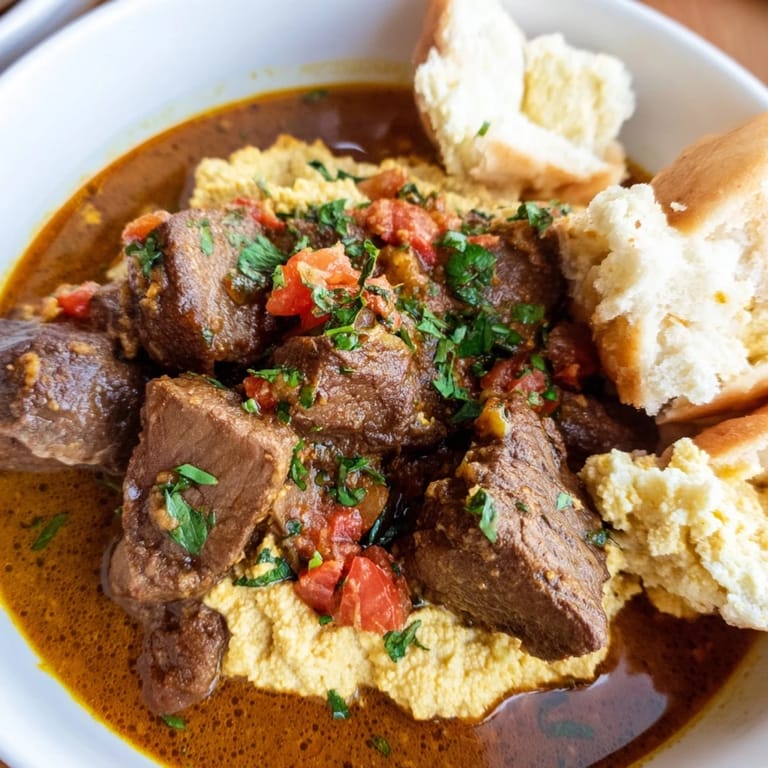
- Tear your flatbread into bite-sized pieces and spread them across the bottom of serving bowls—don't worry about being neat; rustic is better here. Ladle the hot stew over the bread, aiming for that sweet spot where the bread is soaked but still has some structure.
- Crown and Serve:
- Top each bowl with a generous spoonful of that hulbah foam, letting it sit proudly on top like the finale it deserves. Serve immediately while everything is hot, and let people mix the layers together as they eat, discovering the flavors in their own order.
 Save
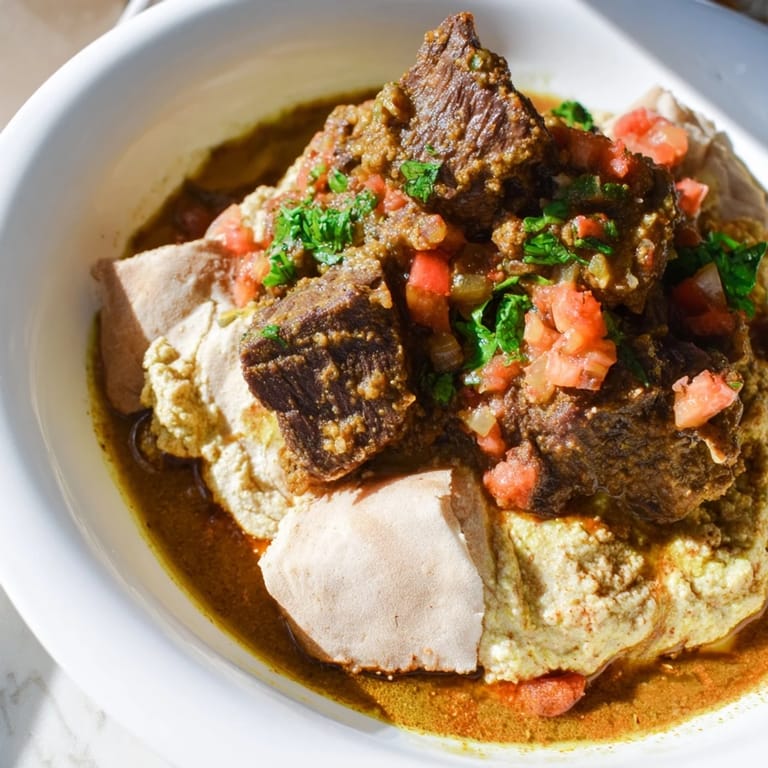
Save The real moment of magic happened when my friend picked up her spoon and that first bite combined all three layers at once—the soft bread, the warm spiced meat, the cool, silky foam on top. She closed her eyes, and I knew exactly what she was tasting: comfort, care, and something that felt like home, even though she'd never eaten it before.
The Art of the Fenugreek Foam
The hulbah is the soul of saltah, and learning to make it changed how I think about cooking in general. It's not complicated—just fenugreek and water—but it requires patience and a little faith. The soaking softens the seeds enough that whisking can turn them into something entirely different, something that sits between soup and cloud. I've learned that the best kitchen discoveries happen when you understand why each step exists, not just follow it blindly.
Building Flavor Layers
Saltah is a lesson in layering: the spiced broth, the soft vegetables, the bread acting as both structure and vehicle for flavor, and then that unexpected foam on top that changes everything. Each element matters because together they create something that tastes like more than the sum of its parts. I used to think cooking was about precision, but watching my friend make this taught me it's really about understanding how flavors talk to each other.
When You're Ready to Sit Down
There's something about eating saltah that demands presence—you can't rush through it or multitask. The bread softens, the foam melts slightly into the broth, the spices continue revealing themselves as you eat. This is a dish that asks you to slow down and actually taste what's in front of you.
- Make sure your broth is truly hot when you ladle it; that heat is part of the experience.
- Serve with extra lemon wedges on the side so people can adjust the brightness if they want.
- If you can't find traditional Yemeni flatbread, thick pita or even hearty naan will honor the dish just fine.
 Save
Save Saltah is one of those dishes that does what food is supposed to do: it brings people together and makes them feel seen. Every time I make it, I think of that kitchen in Sana'a and all the people who've been making this exact dish for generations, and it reminds me why I love cooking in the first place.
Recipe FAQs
- → What is the role of fenugreek foam in this dish?
Fenugreek foam adds a unique, slightly bitter and aromatic layer that complements the rich meat stew, enhancing its traditional flavor profile.
- → Can other meats be used instead of beef or lamb?
Yes, beef and lamb work best for texture and flavor, but you can try other sturdy meats that hold up well during slow cooking.
- → How is the flatbread used in the preparation?
Flatbread is torn into pieces and placed at the bottom of the serving bowl, soaking up the spiced broth and adding a soft, layered texture.
- → Is it necessary to soak fenugreek seeds for the foam?
Yes, soaking fenugreek seeds is essential to soften them and allow whipping into a light, fluffy foam for an authentic topping.
- → How long should the stew simmer for optimal tenderness?
Simmering for about 1 to 1.5 hours on low heat helps tenderize the meat and meld flavors thoroughly.