 Save
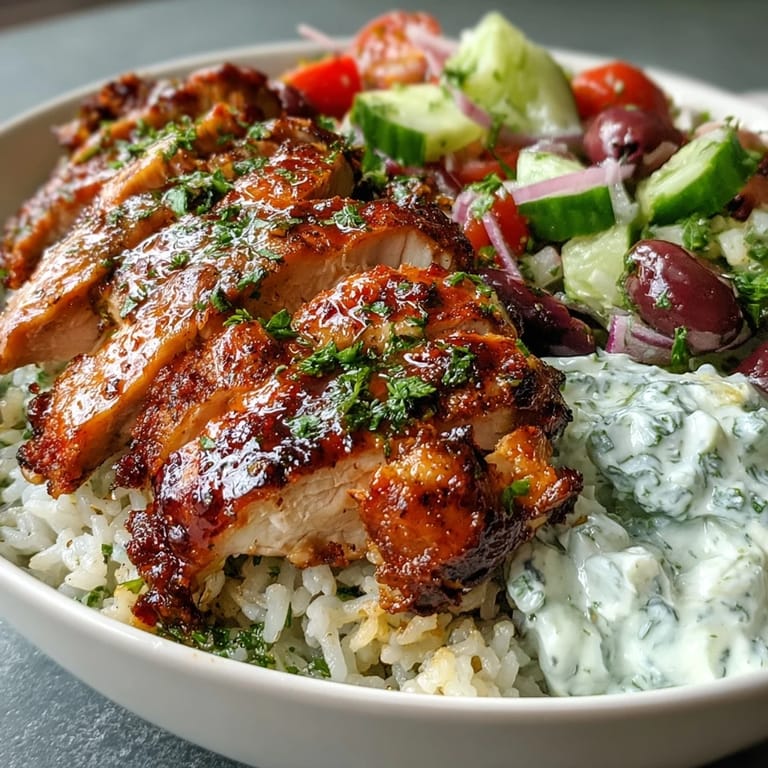
Save There's something about assembling a Greek bowl that feels less like cooking and more like creating a moment of pure simplicity. I discovered this particular combination on a summer afternoon when my fridge held chicken, leftover rice, and an abundance of farmers market vegetables, and I realized I didn't need a complicated recipe—just the right flavors arranged thoughtfully. The smell of oregano hitting hot oil became my signal that something genuinely good was about to happen, and watching the chicken develop that golden crust made me understand why Greek cooking relies so heavily on a few trusted ingredients done really well.
I made this for friends on a weeknight that turned into an impromptu dinner party, and what struck me was how everyone gravitated toward the same bowl format, customizing their toppings and then just sitting together talking for hours. There's something disarming about a meal served in a bowl—it feels casual enough to relax into, but the flavors are sophisticated enough that it never feels like you're cutting corners. That night, someone asked for the recipe before dessert even came out, which told me everything I needed to know about its power.
Ingredients
- Long-grain white rice: Rinsing it first prevents stickiness and gives you separate, fluffy grains that won't clump under the weight of toppings.
- Chicken breasts or thighs: Thighs stay juicier if you're nervous about dry chicken, but breasts work beautifully when marinated properly.
- Olive oil: Use something you actually enjoy the taste of here, since it's not being cooked away into submission.
- Lemon juice: Fresh is genuinely worth the squeeze—bottled just doesn't sing the same way.
- Garlic, dried oregano, cumin, and smoked paprika: This combination is your flavor backbone, and measuring matters more than usual since they're building on each other.
- Cherry tomatoes and cucumber: Cut the tomatoes in half so they release their juices into the salad without turning it into soup.
- Red wine vinegar: It's bright and slightly sharp, cutting through the richness of the olive oil in a way that keeps the bowl from feeling heavy.
- Fresh dill: If you can only choose one fresh herb, make it this—the flavor is unmistakably Greek and nearly impossible to replicate with dried.
- Kalamata olives: The brine matters, so taste them before adding if you're worried about salt levels in the final dish.
- Tzatziki sauce: Homemade is genuinely better, but a quality store version saves time and still delivers that creamy, cool contrast.
Tired of Takeout? 🥡
Get 10 meals you can make faster than delivery arrives. Seriously.
One email. No spam. Unsubscribe anytime.
Instructions
- Rinse and toast your rice:
- Cold water rinsed rice is your first step toward grain separation—don't skip it just because you're in a hurry. Toast it in oil for a minute so it absorbs flavors instead of just sitting there neutral.
- Season and simmer the rice:
- Watch it bubble once before lowering the heat, and don't be tempted to peek constantly—steam does the real work under that lid. The five-minute rest after cooking might seem unnecessary, but it finishes the cooking perfectly and gives you time to handle the chicken.
- Build your marinade boldly:
- Whisk all the seasonings together so the garlic and spices are distributed evenly, then coat the chicken thoroughly—this isn't the time for timid tossing. Fifteen minutes is the bare minimum, but if you have time, letting it sit longer (even overnight) deepens everything.
- Cook chicken until it's genuinely golden:
- Medium-high heat gives you a nice crust without drying out the inside, and you'll know it's ready when the edges look slightly caramelized. Slicing against the grain ensures each bite stays tender instead of becoming stringy.
- Assemble your salad loosely:
- Toss everything together gently so you're not breaking down the vegetables into mush, and taste it before serving—a pinch more salt often makes all the difference. The vinegar and oil should balance so neither one dominates.
- Build your bowls like you're composing a painting:
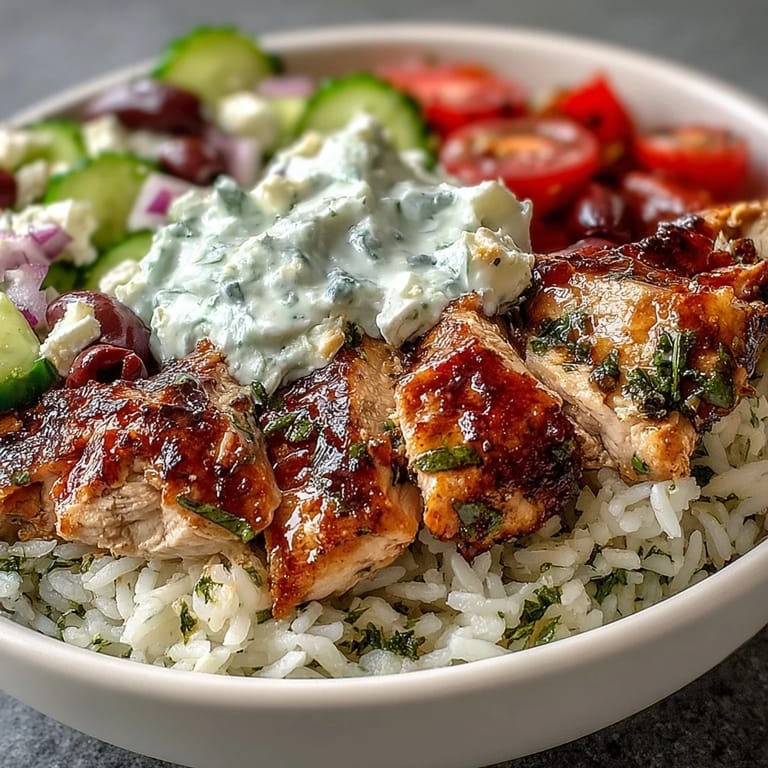
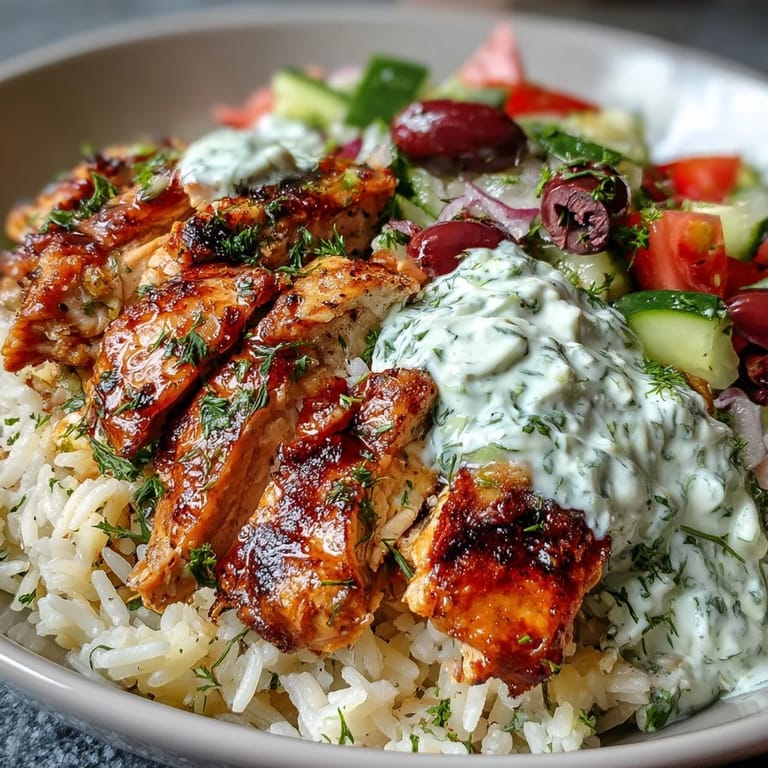
- Rice as your base, then distribute chicken, salad, and olives so each spoonful hits multiple flavors and textures. A dollop of tzatziki on top stays cool and creamy right until the last bite.
 Save
Save This bowl became my answer to "what should we eat tonight" on countless occasions, not because I'm lazy, but because it's the kind of meal that tastes like care without requiring stress. There's something deeply satisfying about knowing you can feed yourself and others something this delicious in under an hour.
The Magic of Marinating
The marinade is where this dish truly happens, and I learned this the hard way by once cooking unmarinated chicken and wondering why it tasted so flat. Even fifteen minutes makes a visible difference, but if you can plan ahead, overnight marinating transforms the chicken into something so flavorful that people always assume you've done something far more complicated than simply letting time do the work. The lemon juice and garlic are doing two things at once—they're flavoring and they're starting to tenderize, which means your chicken stays juicy instead of turning tough.
Why the Salad Comes Last
Building the salad right before serving keeps the vegetables crisp and the vinaigrette from becoming too diluted, which means you're tasting distinct vegetables and herbs instead of a soggy mess. I used to make it ahead out of time-saving habit, and then I noticed how much better it tasted when assembled at the last moment—it was such a small shift that completely changed the eating experience. The red onion stays crisp and slightly sharp, the cucumber doesn't turn rubbery, and the tomatoes release their juice into the dressing instead of weeping it away.
Customization Without Losing Identity
This bowl invites substitution and play without ever losing its essential Greek character, which is one of the reasons I keep coming back to it. Grilled shrimp replaces chicken beautifully if you want something lighter, and chickpeas make it vegetarian while keeping that satisfying substance to the bowl. Crumbled feta adds richness and saltiness, fresh mint introduces a completely different flavor register, and roasted red peppers add sweetness that plays against the sharp vinegar and olives.
- Experiment with different herbs—basil, mint, and cilantro all work but each one shifts the flavor profile in interesting ways.
- Don't skip the tzatziki no matter what protein you choose, since that cool, creamy element is what ties everything together.
- Taste as you go and adjust salt and acid at the end since every vegetable batch is slightly different.
 Save
Save Every time I make this bowl, I'm reminded that real cooking joy doesn't require complexity—it requires paying attention to a few things done really well. This is the meal I turn to when I want to feel nourished without feeling stressed.
Recipe FAQs
- → Can I make the chicken ahead of time?
Yes, marinate the chicken up to 2 hours in advance or overnight for deeper flavor. Cooked chicken stays fresh in the refrigerator for 3-4 days.
- → What can I substitute for tzatziki sauce?
Greek yogurt mixed with minced garlic, lemon juice, and chopped dill works beautifully. Hummus or a lemon-herb yogurt sauce are also excellent alternatives.
- → Is this bowl gluten-free?
Yes, all components are naturally gluten-free. Just double-check your tzatziki brand and seasonings to ensure no hidden gluten-containing ingredients.
- → Can I use brown rice instead?
Absolutely. Brown rice will take longer to cook, about 40-45 minutes total. Adjust the water ratio to 2.5 cups and extend the simmering time accordingly.
- → How do I store leftovers?
Keep components separate in airtight containers. The chicken, rice, and salad each last 3-4 days refrigerated. Assemble fresh bowls when ready to eat for the best texture.
- → What vegetables work well in this bowl?
Roasted red peppers, grilled zucchini, shredded lettuce, or thinly sliced red onion add great crunch and flavor. Sauteed spinach is another nutritious addition.