 Save
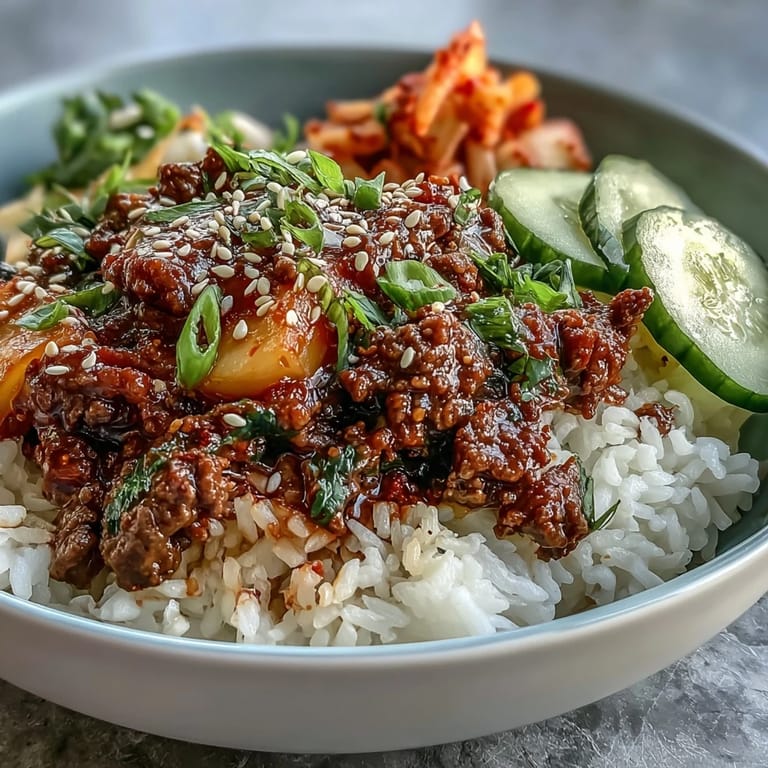
Save My coworker brought one of these Korean beef bowls to lunch last Tuesday, and the whole office smelled like ginger and gochujang for hours afterward—in the best way possible. I watched her eat it with this satisfied expression, the way the pickled vegetables brightened up each bite, and I knew I had to figure out how to make it at home. What struck me most wasn't just the flavors layering together, but how quickly she assembled it, like she'd done this a hundred times before. That same evening, I had everything sizzling on the stove, and within 35 minutes, I understood why she looked so happy at her desk.
I made this for my partner on a random Wednesday night when we were both tired and hungry, and something shifted in that moment. Instead of reheating leftovers or calling somewhere for food, we actually sat down together over these bowls, and somehow the meal felt like an accomplishment. The cucumber stayed crisp, the beef was still steaming, and we talked about nothing important while eating. That's when I realized this bowl isn't just efficient—it's genuinely nourishing in ways beyond nutrition.
Ingredients
- Lean ground beef (1 lb): This cut cooks quickly and absorbs the gochujang sauce beautifully without becoming greasy, though don't skip draining excess fat midway through cooking.
- Gochujang (3 tbsp): The soul of this dish—find it in any Asian market or online, and keep a jar in your pantry because you'll make this again soon.
- Fresh ginger and garlic: Mince these fine so they dissolve into the sauce rather than sitting as chunks; the flavor becomes more cohesive that way.
- Soy sauce (2 tbsp): Use full sodium if you can; it carries the savory depth that makes everything taste intentional.
- Rice vinegar (1 tbsp for beef, 1/2 cup for pickling): The acid cuts through richness and wakes up your palate between bites—crucial for balance.
- Brown sugar (1 tbsp): Just enough to gentle the heat and add roundness without making this a dessert bowl.
- Toasted sesame oil (1 tsp): A small amount goes far; drizzle it at the end so the heat doesn't burn away the precious aroma.
- Green onions (2, sliced): Split them between cooking and garnish so you get fresh brightness on top of cooked depth.
- Pickled vegetables (carrot and daikon): These start pickling while you cook the beef, so they're ready exactly when you need them.
- Cucumber and radish for serving: Keep these raw and thin-sliced to provide textural contrast against the warm, soft beef.
- Kimchi (1 cup, chopped): Adds fermented funk that anchors the whole bowl; choose one with a good bite to it.
- Toasted sesame seeds: The final flourish that makes this feel intentional rather than thrown together.
Tired of Takeout? 🥡
Get 10 meals you can make faster than delivery arrives. Seriously.
One email. No spam. Unsubscribe anytime.
Instructions
- Quick-pickle your vegetables first:
- Combine rice vinegar, sugar, and salt in a small bowl and stir until dissolved, then add julienned carrots and daikon radish. This gentle task takes two minutes but rewards you with vegetables that taste bright and purposeful by the time you need them.
- Bloom your aromatics:
- Heat oil in a large skillet over medium-high heat, then add minced garlic and ginger, letting them sizzle for about one minute until the smell makes you pause and breathe it in. This brief moment builds the flavor foundation everything else will rest on.
- Brown the beef thoroughly:
- Crumble the ground beef into the hot pan and cook for five to six minutes, breaking it apart with a spoon as it cooks. Don't rush this step; you want the meat to develop a light golden color, which means it's ready to accept the sauce properly.
- Build your sauce:
- Stir in gochujang, soy sauce, brown sugar, rice vinegar, and sesame oil all at once, then let everything simmer together for two to three minutes until the sauce thickens slightly and clings to the beef. Add half the green onions at the end so they stay somewhat fresh.
- Assemble with intention:
- Divide warm rice among four bowls, then top each with a generous scoop of the beef mixture. Arrange pickled vegetables, fresh cucumber, radish, and kimchi around the beef like you're creating something worth looking at, then finish with remaining green onions and sesame seeds.
 Save
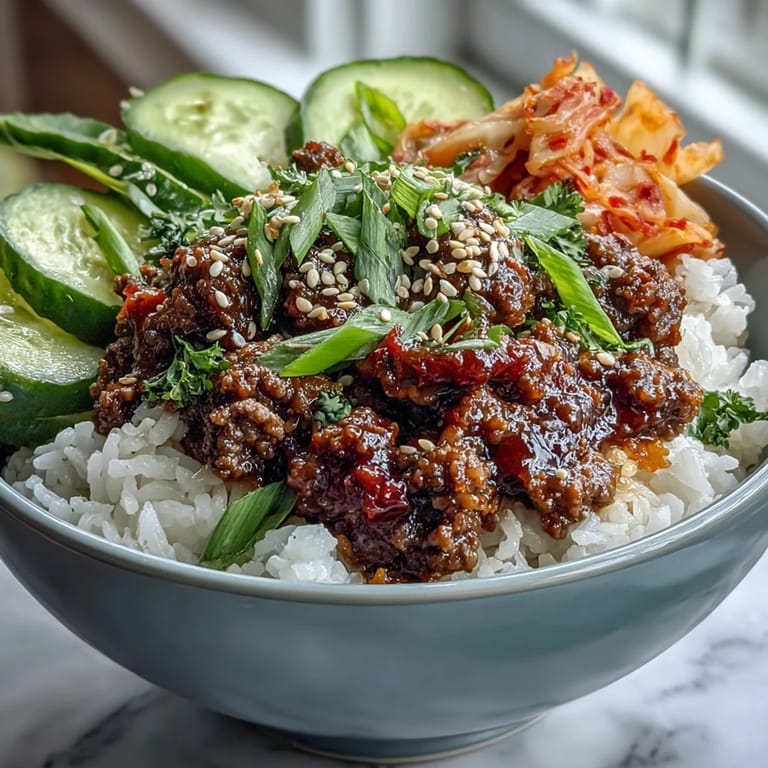
Save There was a moment last month when my friend's kid tried this bowl for the first time, eyes wide at the colors and textures, asking why everything tasted different depending on which ingredients were on their spoon. That question stuck with me—this dish is really about building harmony between warm and cool, spicy and tangy, soft and crisp. Watching someone experience that balance for the first time reminded me why cooking matters.
Why the Flavors Work Together
The beauty of this bowl is that it's never one single experience—it shifts as you eat. The gochujang beef provides warmth and umami depth, while the pickled vegetables cut through that richness with their sharp acidity and crunch. The cucumber and radish stay cool and refreshing, and the kimchi adds a funky, fermented complexity that ties everything into something larger than its parts. It's like building layers of a song where every element gets its moment but they all sound better together.
When to Serve This
This bowl works for weeknight dinners when you want something that feels special without spending hours in the kitchen, but it's also casual enough for meal prep if you keep the components separate and assemble fresh when you're ready to eat. I've made it on busy Thursdays and lazy Saturday afternoons alike, and the speed never gets old. The recipe scales beautifully too—I've doubled it for small dinner parties without any real difficulty, just needing a larger skillet and more time.
Simple Ways to Make It Your Own
Once you understand the basic structure, you can play with this bowl endlessly. Some nights I add a fried egg on top because the runny yolk becomes an extra sauce, other times I use ground turkey instead of beef and the dish feels lighter but no less satisfying. The acid-heat-umami balance stays consistent no matter what you swap, so don't be afraid to adapt based on what's in your fridge.
- Add a fried or soft-boiled egg on top for richness, or sriracha for anyone who wants extra heat.
- Try ground chicken, turkey, or even crumbled tofu if you want to shift the protein without losing the soul of the dish.
- Make double batches of the pickled vegetables and keep them in the fridge for snacking throughout the week.
 Save
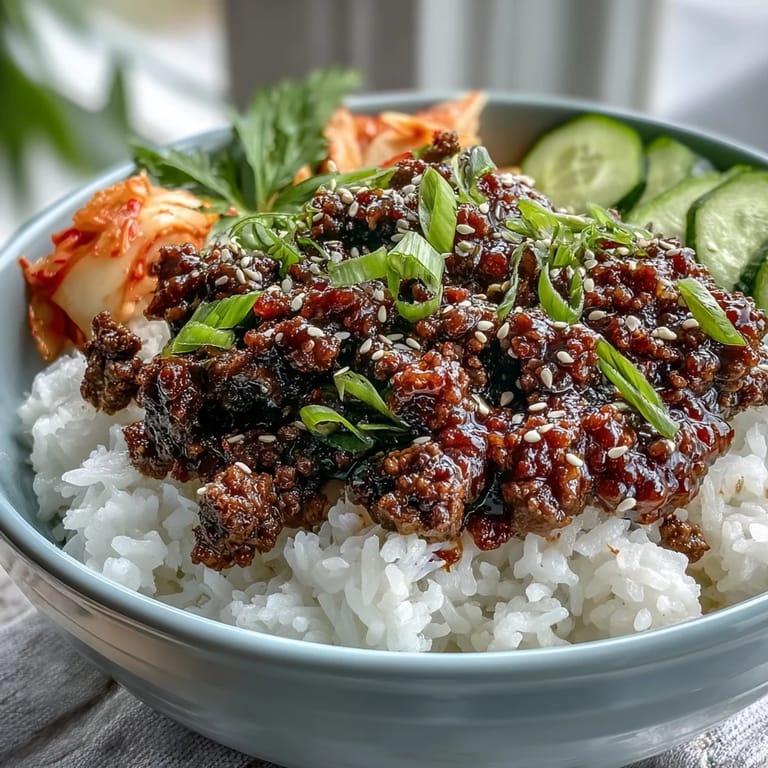
Save This bowl has become my go-to when I want to feel like I've cooked something worthwhile in minimal time. It's the kind of recipe that reminds you why homemade food matters.
Recipe FAQs
- → Can I make the beef less spicy?
Reduce the gochujang to 1-2 tablespoons and add extra brown sugar to balance the flavors. You can also add a splash more rice vinegar to temper the heat while maintaining the tangy profile.
- → What can I substitute for gochujang?
Mix equal parts tomato paste and gochukaru (Korean chili flakes) with a teaspoon of miso paste. Alternatively, use sriracha mixed with a small amount of miso for similar fermented depth and heat.
- → How long do the pickled vegetables keep?
The quick pickled vegetables will stay fresh in an airtight container in the refrigerator for up to 1 week. The flavors will continue to develop and become more tangy over time.
- → Can I prepare components ahead of time?
The pickled vegetables can be made 2-3 days ahead. The beef mixture can be cooked and refrigerated for up to 3 days, then reheated gently. Store components separately and assemble just before serving.
- → Is this suitable for meal prep?
Yes, portion the beef, rice, and vegetables into separate containers. The beef reheats beautifully in the microwave or skillet. Keep fresh toppings like cucumber and kimchi separate until ready to eat.
- → What protein alternatives work well?
Ground turkey, chicken, or pork crumbles all work beautifully with the gochujang sauce. For a vegetarian option, use crumbled firm tofu or sautéed mushrooms adjusted with slightly more seasoning.