 Save
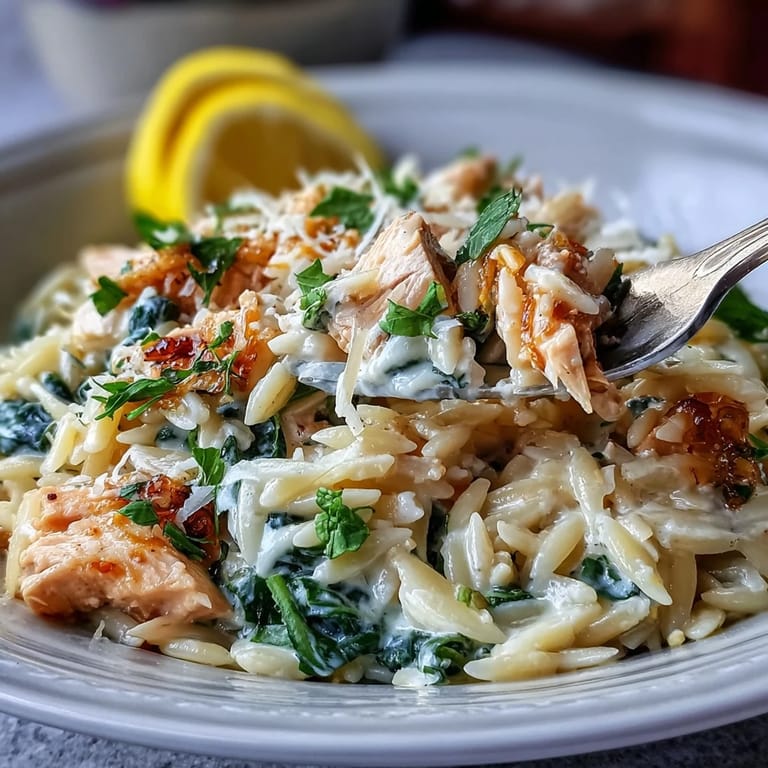
Save There's something about cooking lemon orzo on a Tuesday evening when the kitchen feels quieter than usual that makes you realize how much a single dish can shift the mood of a whole day. My neighbor knocked on the door mid-prep, drawn in by the smell of garlic and chicken sizzling in the pan, and ended up staying for dinner without me planning for it—which somehow made the meal taste even better. This dish came together almost by accident, born from having spinach that needed using and a craving for something bright and creamy at the same time. It's become the recipe I reach for when I want to feel like I've actually cooked something meaningful in under an hour.
I made this for my sister's first week back after moving into her own place, when she admitted her kitchen felt too quiet and she wasn't sure what to cook. Watching her plate it up and taste that first forkful—the way her face softened—reminded me that food is really about creating moments where people feel cared for. She's made it three times since then and tells me it's become her confidence dish.
Ingredients
- Boneless, skinless chicken breasts or thighs (500 g): Thighs stay moister than breasts, but either works—the key is cutting them into bite-sized pieces so they cook evenly and absorb all that lemon goodness.
- Orzo pasta (250 g): This tiny rice-shaped pasta is the heart of the dish; it soaks up the broth and becomes creamy rather than heavy.
- Fresh baby spinach (100 g): It wilts down to almost nothing, so don't be shy with the volume—it adds color, nutrition, and a gentle earthiness.
- Yellow onion (1 medium) and garlic (2 cloves): The aromatic foundation that makes everything smell like you've been cooking all afternoon.
- Low-sodium chicken broth (900 ml): Use good broth—it's the liquid backbone of the dish and you'll taste the difference.
- Whole milk or half-and-half (120 ml): This transforms the broth into something silky without making it feel overly rich or dairy-heavy.
- Lemon zest and juice (1 large lemon): Both matter equally; the zest brings brightness you can see and taste, while the juice threads through everything with an almost invisible tang.
- Parmesan cheese (50 g): Freshly grated is worth the extra thirty seconds—pre-grated tends to clump up and won't melt as smoothly into the sauce.
- Olive oil (2 tbsp): Split between cooking the chicken and sautéing the aromatics so nothing sticks and everything builds flavor gradually.
- Salt, black pepper, and chili flakes: Start conservative and taste as you go; the lemon and Parmesan are salty, so you might need less than you think.
Tired of Takeout? 🥡
Get 10 meals you can make faster than delivery arrives. Seriously.
One email. No spam. Unsubscribe anytime.
Instructions
- Sear the chicken until golden:
- Heat a tablespoon of olive oil in your skillet over medium-high heat—you want it shimmering and almost smoking. The chicken will hit the pan with a satisfying sizzle; that's the Maillard reaction happening, the beginning of real flavor. After 5 to 7 minutes, it should be golden on the outside and cooked through, then set it aside loosely covered with foil so it stays warm.
- Build the aromatic base:
- In the same skillet with the remaining oil, cook the onion until it turns translucent and softens—this takes about 2 to 3 minutes and will fill your kitchen with that unmistakable smell that says something good is happening. Add the garlic and stir for just 30 seconds; any longer and it starts to burn, which tastes bitter.
- Toast the orzo:
- This one-minute step is small but essential—stirring the dry pasta in the oil and aromatics deepens its flavor and keeps it from clumping later. You'll hear it clicking gently against the pan.
- Simmer the orzo in broth:
- Pour in the chicken broth and bring it to a gentle boil, then turn the heat down to medium-low. As it simmers for 8 to 10 minutes, the pasta will absorb the liquid and become tender; stir it occasionally so it cooks evenly and doesn't stick. The moment when most of the liquid is gone but the mixture is still creamy is the moment to move on.
- Bring everything together:
- Return the chicken to the skillet, scatter the spinach over it, and stir until the spinach wilts into those beautiful dark green ribbons. Add the lemon zest, juice, milk, and Parmesan all at once and stir for 2 to 3 minutes until everything is heated through and silky. Taste it now—this is when you adjust the seasoning to your preference.
 Save
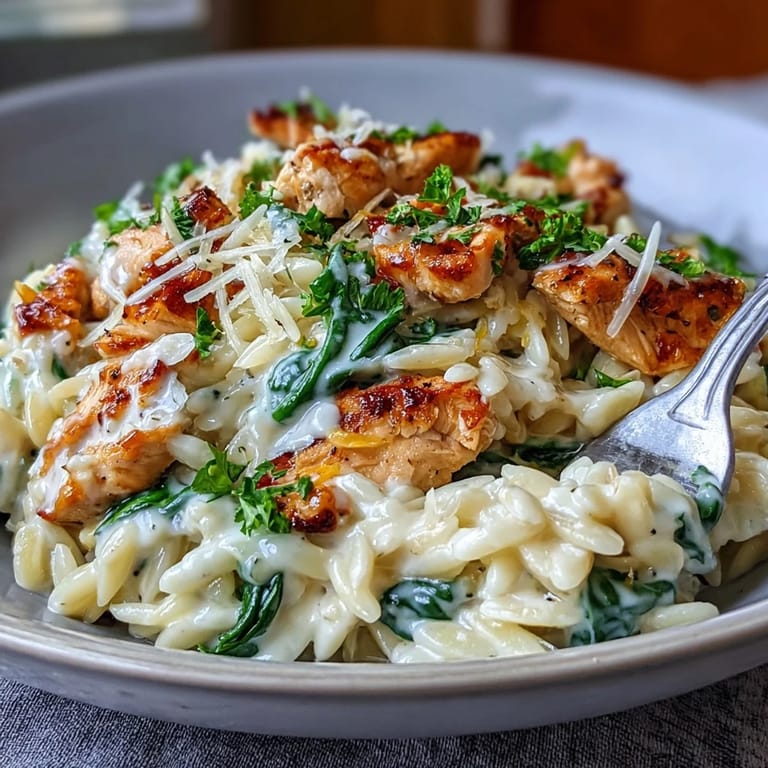
Save There was an evening when I made this dish for a friend who'd been going through a rough patch, and she asked for the recipe before she even finished eating. Something about the brightness of it, the fact that it felt both substantial and fresh at once, seemed to matter to her in a way a heavier dish wouldn't have. That's when I understood that this recipe had become more than just dinner—it was comfort that doesn't weigh you down.
The Magic of Lemon in Savory Cooking
Lemon does something almost invisible in a dish like this—it doesn't make the food taste lemony, it makes everything taste more like itself. The acid brightens the creaminess, makes the chicken taste more chicken-like, and prevents the whole dish from feeling flat or one-note. I used to think I needed wine or vinegar to achieve this, but lemon is more forgiving and gentler, almost like adding sunlight to a plate.
Why This Works as a Spring Dinner
There's a window in spring where you want something that feels warm and comforting but doesn't make you feel sluggish afterward, and this dish nails that balance perfectly. The spinach and lemon anchor it to the season, while the creamy orzo and chicken give it enough substance that it feels complete without side dishes. It's the kind of meal that makes sense whether you're eating alone at your kitchen counter or setting a proper table for guests.
Making It Your Own
The structure of this dish is forgiving enough that you can play with it without losing what makes it special. I've added sun-dried tomatoes, swapped in arugula for some of the spinach, even threw in a handful of fresh peas one time and it only made it better. The foundation—the broth, the lemon, the Parmesan, the cream—is solid enough to hold whatever small variations call to you.
- If dairy isn't in your plan, use plant-based milk and nutritional yeast instead of Parmesan and the dish stays creamy and rich.
- Marinating the chicken in lemon juice and garlic for even 15 minutes beforehand adds a subtle depth that carries through the whole meal.
- This reheats beautifully; store it in the fridge and warm it gently on the stovetop with a splash of broth if it's thickened up too much.
 Save
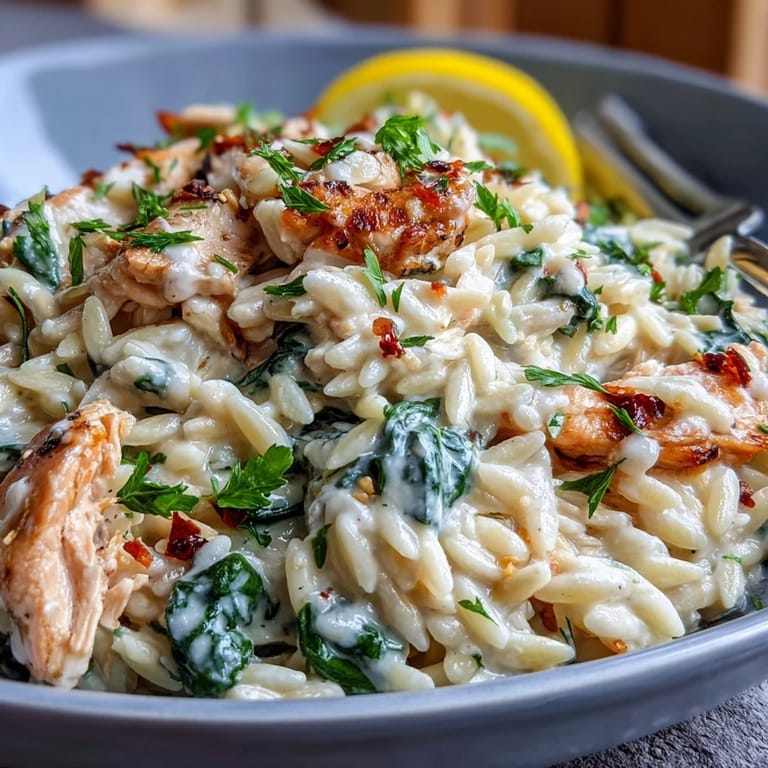
Save This is the kind of recipe that earns a permanent spot in your weeknight rotation not because it's complicated, but because it consistently makes you feel like a good cook. Make it once and you'll understand why it keeps calling you back.
Recipe FAQs
- → What type of chicken works best?
Boneless, skinless chicken breasts or thighs cut into bite-sized pieces cook evenly and remain tender in this dish.
- → Can I substitute the orzo pasta?
Yes, rice-shaped pasta like risoni or small pasta shapes work well as alternatives without compromising texture.
- → How can I make it dairy-free?
Replace milk with plant-based alternatives and omit the Parmesan or use a vegan cheese substitute.
- → What is the best way to enhance lemon flavor?
Marinating chicken briefly in lemon juice and garlic before cooking intensifies the citrus aroma throughout the dish.
- → Which wines pair well with this meal?
Crisp white wines like Sauvignon Blanc or Pinot Grigio complement the fresh lemon and spinach notes elegantly.
- → Can this dish be prepared ahead?
It’s best enjoyed fresh, but you can prepare components separately and combine before reheating gently to preserve flavors and texture.