 Save
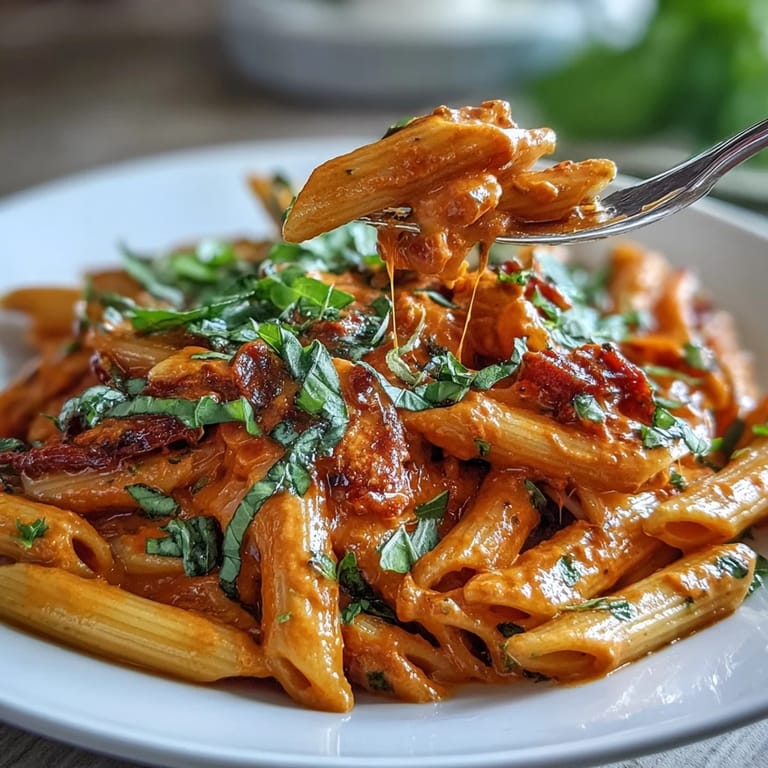
Save There's something almost magical about watching red peppers transform from charred skin to silky sauce, and I discovered this pasta entirely by accident one Tuesday when I had lentils that needed using and a blender that wouldn't stop calling to me. The first time I blended those roasted peppers with the cooked lentils, I expected something chunky and ordinary, but instead got this luxurious, velvety sauce that tasted like it had been simmering all day. My partner took one bite and asked if I'd suddenly learned French cooking, which made me laugh because this is about as straightforward as weeknight dinners get. Now I make it whenever I want to feel like I'm doing something special, even when I'm just standing in my kitchen in old jeans.
I made this for my friend Maya who'd just gone vegan and was nervous about missing "real" comfort food, and watching her eyes light up when she tasted it was worth every minute of prep. She actually asked for the recipe before finishing her plate, which in our house is basically a love letter. Since then, it's become the dish I reach for whenever someone says they don't eat dairy but still wants something that feels indulgent and warming.
Ingredients
- Dried penne or fusilli pasta (340 g / 12 oz): Choose whatever shape you have on hand, though the ridged surfaces of penne or fusilli really catch and hold that silky sauce.
- Roasted red bell peppers (2 large): If you're roasting them yourself, char them over an open flame or under the broiler until blackened, then steam them in a covered bowl before peeling—the steam does half the work for you.
- Yellow onion (1 medium), chopped: Yellow onions have just enough natural sweetness to balance the peppers without any sharp edges.
- Garlic (3 cloves), minced: Fresh garlic makes a real difference here; don't even think about the jarred stuff.
- Cooked brown or green lentils (120 g / 3/4 cup), well-drained: These are the secret weapon that turns sauce into something nutritionally substantial while staying completely invisible in the blend.
- Unsweetened plant-based milk (120 ml / 1/2 cup): Oat milk gives the richest mouthfeel, though almond or soy work just fine if that's what you have.
- Olive oil (2 tbsp, divided): Use decent quality oil here since it's such a major flavor player in the final dish.
- Nutritional yeast (2 tbsp): This provides that subtle savory depth that makes you feel like you're eating something indulgent, even though it's completely plant-based.
- Tomato paste (1 tbsp): A small amount concentrates the umami and prevents the sauce from tasting one-note and peppery.
- Smoked paprika (1 tsp): The smokiness is what makes this taste sophisticated rather than just mushed-up vegetables.
- Dried oregano (1/2 tsp): A dried herb works better here than fresh because the heat activates those oils in a way that adds warmth to every bite.
- Salt (1/2 tsp) and freshly ground black pepper (1/4 tsp): Start conservative and taste as you go; you'll likely want more than you think.
Tired of Takeout? 🥡
Get 10 meals you can make faster than delivery arrives. Seriously.
One email. No spam. Unsubscribe anytime.
Instructions
- Start your pasta water:
- Bring a large pot of salted water to a rolling boil and add your pasta, stirring occasionally so nothing sticks. While it cooks, you'll be building flavor in another pan, so let this work on its own timeline.
- Soften the aromatics:
- Heat 1 tbsp of olive oil in a skillet over medium heat and add your chopped onion, letting it turn translucent and sweet over about 4-5 minutes. Add the minced garlic and let it bloom for just a minute until your kitchen smells incredible.
- Build the sauce foundation:
- Drain your pasta when it's just shy of fully tender (you want it to finish cooking in the sauce), and reserve a full 120 ml of that starchy water before you drain it—this is what brings everything together later. Transfer your sautéed onion and garlic to a blender along with the roasted peppers, lentils, plant milk, nutritional yeast, tomato paste, smoked paprika, oregano, salt, and pepper.
- Blend until silky:
- Let the blender run until you have something completely smooth with no visible flecks of lentil or pepper—this usually takes 60-90 seconds. You're aiming for the texture of heavy cream, not soup.
- Finish the sauce on low heat:
- Pour your blended sauce back into the skillet over low heat and stir in the remaining 1 tbsp of olive oil. Add the reserved pasta water a splash at a time until you reach your ideal consistency; remember that the sauce will thicken slightly as it sits, so err on the side of a little too loose.
- Bring it all together:
- Toss your drained pasta directly into the warm sauce, coating every strand, and let everything warm through for 1-2 minutes. Give it one final taste and adjust the salt or pepper before serving.
 Save
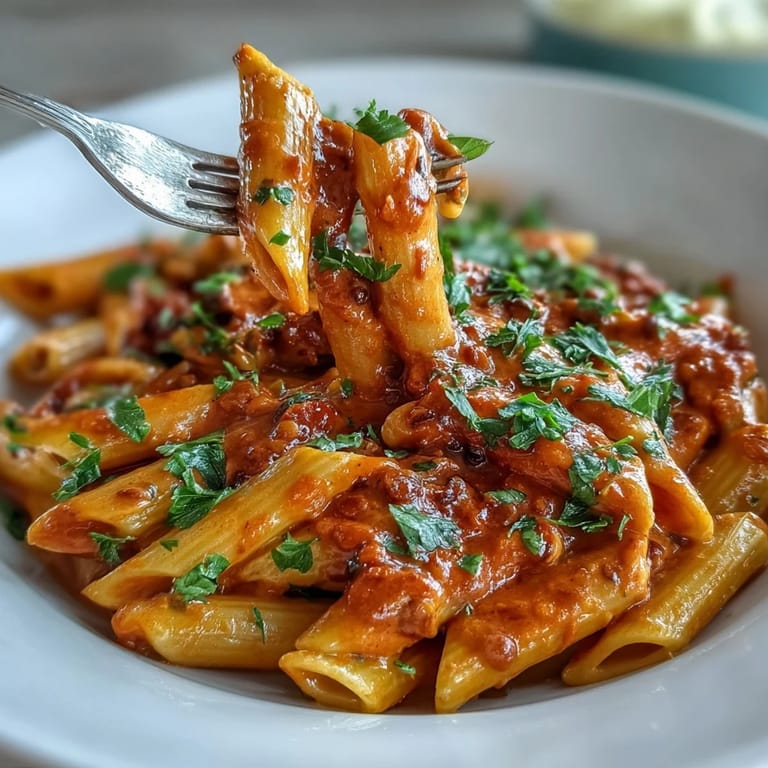
Save There's a moment right when you pour that blended sauce over the hot pasta when everything feels luxurious and a little bit like cheating, because how can something so creamy and restaurant-worthy come from ingredients that are so wholesome and humble? That's the moment this dish stops being dinner and becomes something you want to make again next week.
The Secret of Smoked Paprika
Most people think smoked paprika is just a color, but it's actually doing serious flavor work in this sauce. The smoke comes from peppers that have been actually smoked over oak, which adds a depth that roasted red peppers alone can't give you. I learned this the hard way when I once substituted regular paprika and the whole dish tasted flat and one-dimensional, even though everything else was identical.
Why Lentils Are the Invisible Hero
Most plant-based cream sauces rely entirely on coconut milk or cashew cream, but lentils do something different and honestly better. They add protein and fiber without the heaviness of coconut, and they blend into absolute smoothness while keeping the sauce light enough that you don't feel weighed down after eating. The first time I made this, I didn't tell anyone about the lentils until after they'd finished, and the surprise on their faces made me realize I'd discovered something special.
Making It Your Own
This sauce is genuinely flexible, which is probably why I keep coming back to it. You can adjust the brightness with more lemon juice, swap the oregano for Italian seasoning, or even add a tiny pinch of cayenne if you like some heat building underneath all that creaminess. Just remember that you're building on a foundation that already works, so any changes should feel like additions rather than replacements.
- Stir in a generous handful of fresh spinach right at the end if you want to sneak in extra greens without changing the flavor profile.
- A squeeze of fresh lemon juice at the very end lifts everything and makes the flavors feel brighter and more alive.
- If you have vegan parmesan or nutritional yeast to sprinkle on top, it adds a savory finishing touch that guests always comment on.
 Save
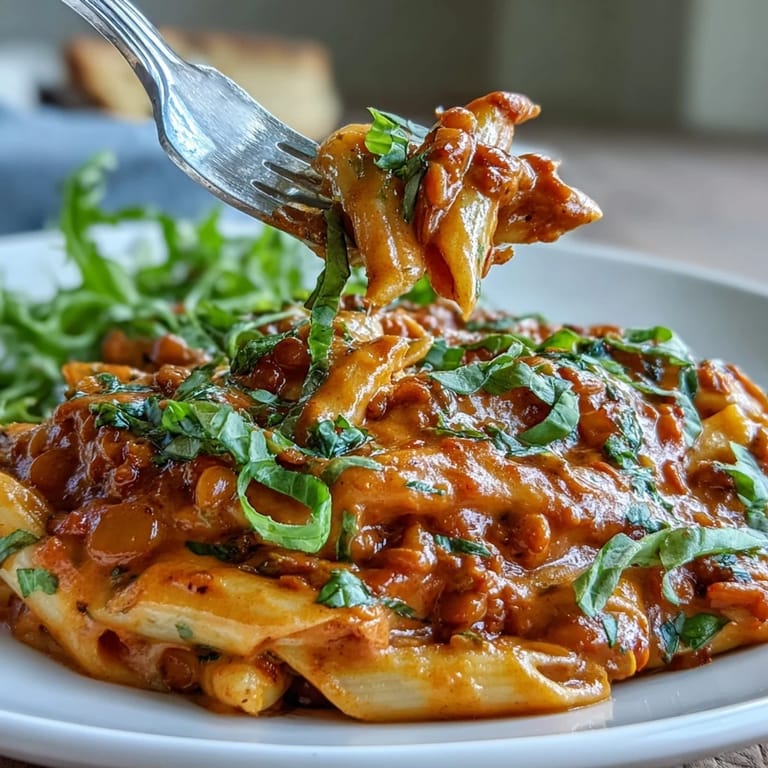
Save This pasta reminds me that the most satisfying meals don't need to be complicated, just thoughtful about their ingredients and patient with their process. Make it once as written, and then make it again however you want.
Recipe FAQs
- → What type of lentils work best in the sauce?
Brown or green lentils are ideal as they provide a mild flavor and hold up well when blended, contributing to the creamy texture without overpowering the dish.
- → Can I use jarred roasted red peppers instead of fresh?
Yes, jarred roasted red peppers can be used for convenience and still deliver the smoky sweetness essential to the sauce’s flavor profile.
- → How do I adjust the sauce thickness?
Add reserved pasta water gradually after blending to reach a smooth, creamy consistency that evenly coats the pasta.
- → What alternatives are there for plant-based milk in the sauce?
Oat, almond, or soy milk are suitable choices, each adding subtle variations in creaminess and flavor.
- → Which herbs and spices enhance the sauce?
Smoked paprika, dried oregano, salt, and black pepper balance the natural sweetness of the peppers and the earthiness of lentils for a well-rounded taste.