 Save
Save I was standing in my kitchen on a sweltering afternoon, craving something that tasted like an adventure without requiring me to leave the house. There on my counter sat fresh mint and cilantro I'd picked up on a whim, and suddenly I thought of those beautiful Vietnamese spring rolls I'd eaten years ago at a tiny restaurant tucked between two storefronts. Why not skip the rice paper wrestling match and just make a salad instead? That day taught me that sometimes the best dishes come from refusing to follow the rulebook.
My cousin texted me asking for something vegan to bring to a family picnic, and I made this salad the night before, dressing and all. When she came back the next week, she didn't say thank you so much as she showed me the empty container and asked for the recipe. That's when I knew it had stopped being just my salad.
Ingredients
- Red cabbage: The crunch here is non-negotiable, and the purple-red color deepens as it sits, making this salad even more stunning the next day.
- Carrots: Shredded carrots bring natural sweetness and stay crisp longer than you'd expect, which matters when you're not eating immediately.
- Cucumber: Slice thin so they stay tender and absorb the dressing without getting waterlogged.
- Rice noodles: Cooked and chilled, these add substance without heaviness, though you can absolutely skip them for something lighter.
- Red bell pepper: The brightness matters here, both visually and in flavor, so don't swap it out for orange or yellow.
- Bean sprouts: Their delicate texture is what makes this feel fresh and alive, not like leftovers you're salvaging.
- Fresh mint, cilantro, and basil: These three together are the whole soul of the dish, so please don't use dried herbs or this becomes something else entirely.
- Avocado: Add this just before serving or it'll brown and lose its silky appeal, no matter how much you want to prep ahead.
- Roasted peanuts: Rough chop them so you get irregular pieces that catch the dressing differently.
- Creamy peanut butter: The kind without added sugar works best because the maple syrup is doing the sweetening work.
- Lime juice: Squeeze it fresh or the whole thing tastes like a memory of something bright instead of the thing itself.
- Soy sauce or tamari: This carries the umami depth that makes people wonder what makes the dressing taste so complete.
- Maple syrup: A touch of it balances the salt and acid without announcing itself.
- Toasted sesame oil: A teaspoon is enough, because this oil speaks loudly and can overpower if you're heavy handed.
- Garlic and ginger: Minced fresh rather than powdered, they give the dressing a living quality that tastes like someone actually made it.
- Warm water: This is how you get the dressing to the right consistency without thinning it with more lime juice and losing balance.
Tired of Takeout? 🥡
Get 10 meals you can make faster than delivery arrives. Seriously.
One email. No spam. Unsubscribe anytime.
Instructions
- Gather and prepare your vegetables:
- Chop everything into pieces that won't feel overwhelming on the fork, keeping things roughly the same size so the salad feels balanced. This is the meditative part where your knife gets sharp and your focus narrows.
- Combine the salad base:
- Toss the cabbage, carrots, cucumber, noodles, pepper, sprouts, and herbs together gently in a large bowl, letting them know each other before the dressing arrives. The mixing itself is part of the magic, making sure the herbs distribute evenly.
- Build your serving:
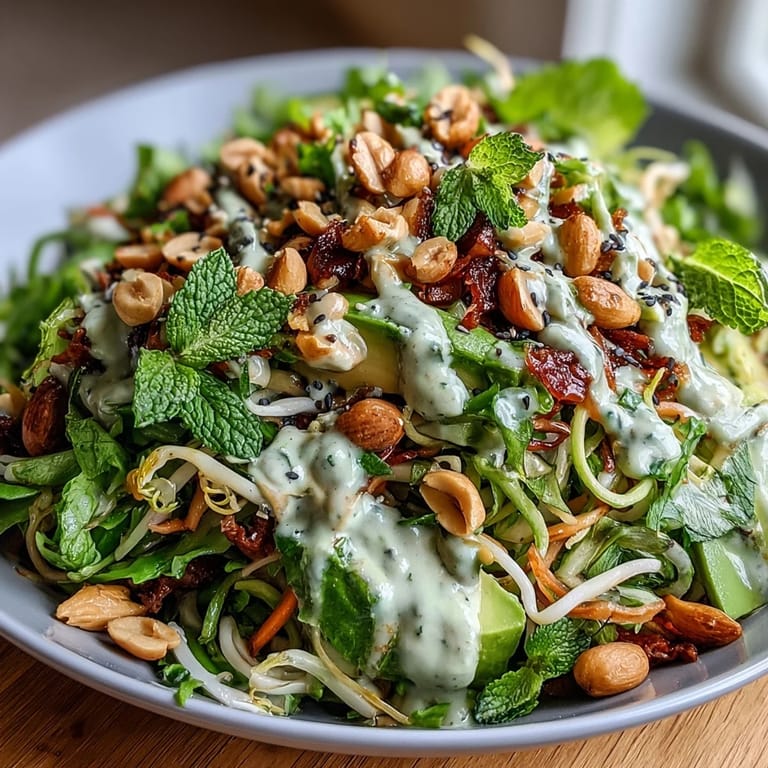
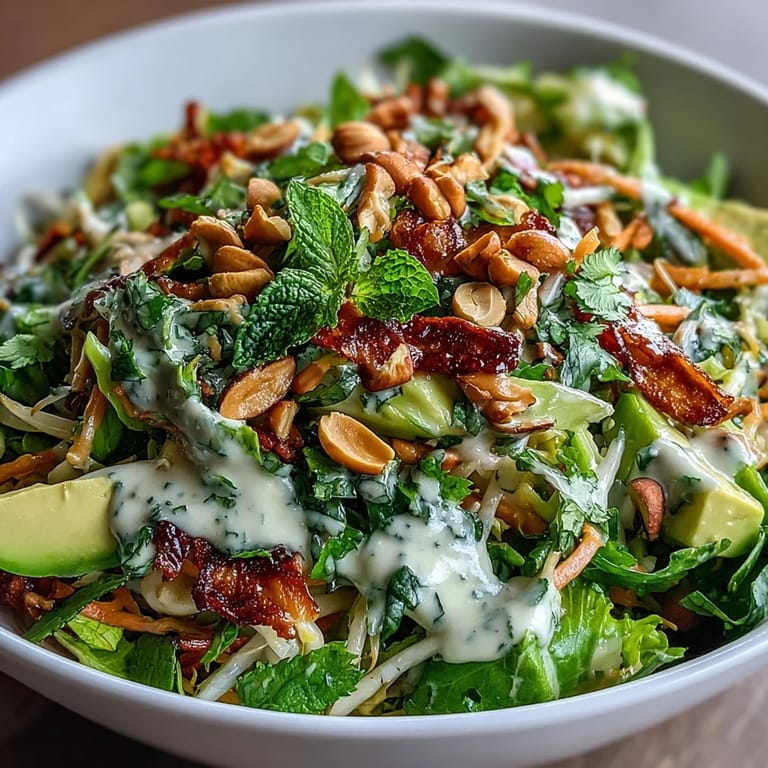
- Spread the mixture on a big platter or divide it into bowls, which changes how the salad feels depending on whether you're feeding people or just yourself. Top with avocado slices and scattered peanuts, keeping them visible and proud.
- Whisk the dressing to life:
- In a small bowl, combine the peanut butter, lime juice, soy sauce, maple syrup, and sesame oil, then add the garlic and ginger, whisking until everything surrenders into a smooth paste. Gradually add warm water a tablespoon at a time, tasting as you go, until it reaches that pourable consistency that clings to vegetables without pooling.
- Finish with intention:
- Drizzle the dressing over the salad just before eating, or serve it alongside so people can control how much they want. Toss gently and eat immediately while everything is still at its crispest and brightest.
 Save
Save My neighbor stopped by one evening when I had this salad assembled on my counter, and she just stood there saying nothing, which made me realize that food that beautiful doesn't need explanation. She asked if she could have some, and we ended up eating on the porch talking until the light turned golden, the kind of meal that transforms an ordinary Tuesday.
The Dressing Philosophy
This peanut dressing works because it understands balance, the way every good sauce should. The acid from the lime juice pushes against the richness of the peanut butter, the heat of the ginger plays with the sweetness of the maple syrup, and the sesame oil adds a whispered complexity that ties it all together. I learned this by making it wrong first, back when I thought more peanut butter meant better, until I realized that restraint makes food taste more interesting, not less.
Variations That Actually Work
The beauty of this salad is that it welcomes substitutions without losing itself. Add julienned radishes or snap peas for extra crunch, swap almond butter or tahini if peanuts aren't in your kitchen, or introduce sriracha if you want heat that builds as you eat. I once made this with sunflower seed butter because that's what I had, and honestly, it was slightly earthier and just as good, which taught me that flexibility isn't compromise.
Serving and Storage Wisdom
This salad is best eaten immediately after assembly, when the vegetables are at their crispest and the herbs haven't started to bruise from their own weight. That said, I've made it in the morning, kept the components separate, and assembled it at lunch with great success, which makes it more flexible than you'd expect for something this delicate. The dressing keeps refrigerated for several days, making it a legitimate pantry staple worth making in double batches.
- Store dressing in a sealed container and shake it well before using, because the peanut butter settles and separates.
- If you're prepping vegetables the night before, keep them in separate containers so they don't trade moisture and flavor.
- The avocado stays bright longer if you squeeze a little lime juice over it right after slicing.
 Save
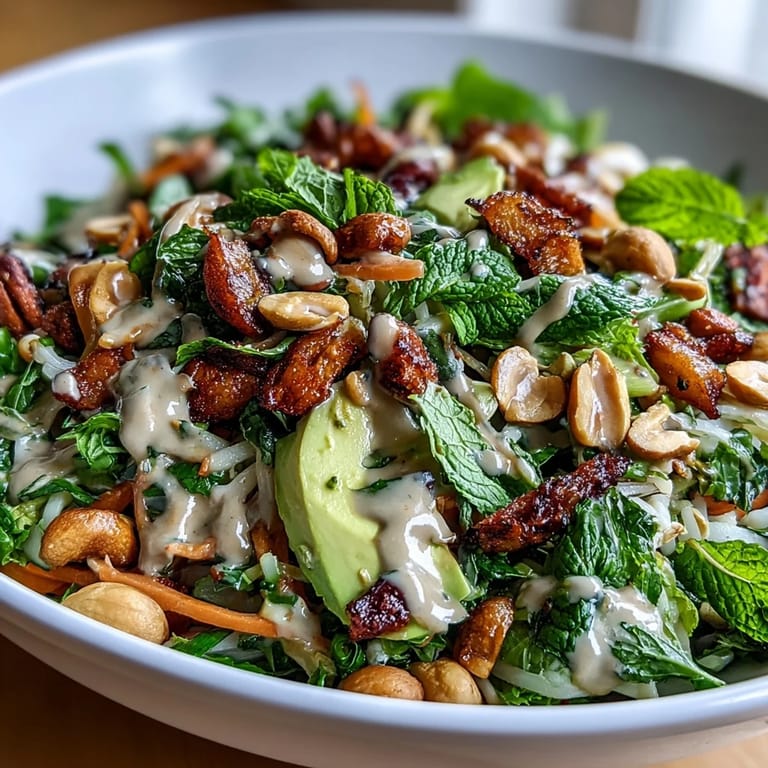
Save This salad became my answer to the question of what to make when you want something that feels like travel but tastes like home. It's proof that you don't need heat or time or complicated technique to make people remember a meal.
Recipe FAQs
- → What ingredients create the peanut dressing?
The peanut dressing is made from creamy peanut butter, fresh lime juice, soy sauce or tamari, maple syrup, toasted sesame oil, garlic, and grated fresh ginger, thinned with warm water as needed.
- → Can rice noodles be omitted from the salad?
Yes, rice noodles are optional and can be left out for a lighter or lower-carb variation without affecting the flavor balance.
- → How can I add extra crunch to the dish?
Adding thinly sliced radishes or julienned snap peas provides additional crunch and complements the salad's fresh vegetables.
- → Are there substitutions for peanut butter in the dressing?
Almond or sunflower seed butter can be used instead of peanut butter to accommodate allergies or taste preferences.
- → How should the salad be served for best flavor?
It is best to drizzle the peanut dressing over the salad just before serving, or serve it on the side to keep the vegetables crisp.
- → What beverages pair well with this salad?
This dish pairs nicely with chilled white wine or jasmine tea, enhancing its fresh and vibrant flavors.