 Save
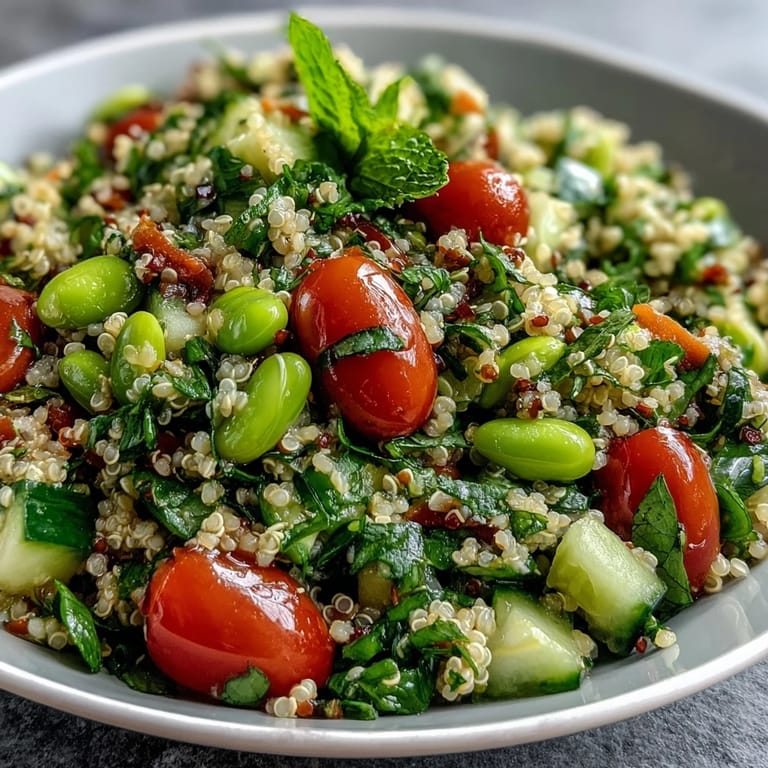
Save My neighbor Sarah stopped by on a sweltering afternoon with a container of this salad, and I remember being skeptical until I tasted it—the brightness of the lemon mixed with those tender little green beans just sang. She'd been on this quiet quest to eat better without sacrificing flavor, and somehow she'd cracked the code. Now whenever I have leftover quinoa in the fridge, I find myself building variations of this exact combination.
I brought this to a potluck last June and watched people who claimed they didn't eat salads actually come back for seconds. There's something about the combination of textures—the slight firmness of the edamame against the fluffy quinoa—that makes it feel substantial rather than like rabbit food. My coworker Marcus asked for the recipe right then and there, and I knew I'd stumbled onto something genuinely good.
Ingredients
- Quinoa, rinsed: This mild grain absorbs flavors beautifully and brings a satisfying, slightly nutty texture that doesn't overpower the other ingredients.
- Edamame: These bright green soybeans stay tender when cooked properly and add a buttery protein punch that makes the salad feel complete.
- Cherry tomatoes: Halving them releases their juices into the dressing, creating little pockets of concentrated flavor throughout.
- Red bell pepper: The diced sweetness balances the sharpness of the dressing and adds visual brightness.
- Cucumber: Keep the seeds if you like extra moisture, or scoop them out for a firmer bite.
- Red onion: A light hand here matters—it's peppery enough that a little goes a long way.
- Fresh parsley and mint: These aren't decorative; they're essential oils that lift the entire salad above ordinary.
- Olive oil: Use something you'd actually drink, because it's the foundation of the dressing and there's nowhere to hide.
- Lemon juice and rice vinegar: Together they create a gentle acidity that doesn't overpower quinoa's delicate nature.
- Dijon mustard: Just enough to emulsify the dressing and add a subtle backbone of flavor.
Tired of Takeout? 🥡
Get 10 meals you can make faster than delivery arrives. Seriously.
One email. No spam. Unsubscribe anytime.
Instructions
- Cook the quinoa with intention:
- Combine rinsed quinoa and water in a medium saucepan, bring to a boil, then reduce to a gentle simmer and cover. Let it steam for 15 minutes until the water disappears and you see those little spirals popping open. Remove from heat and spread it on a plate to cool quickly—warm quinoa will wilt the herbs.
- Give the edamame its moment:
- Boil them for just 3 to 4 minutes in salted water so they stay tender without becoming mushy. Drain and let them cool completely; this matters more than you'd think because warm beans release moisture into the salad.
- Prepare your vegetables with care:
- Dice your peppers and cucumbers, halve the tomatoes, and mince the red onion finely so every bite has balance. Chop your herbs right before mixing so their oils are still volatile and bright.
- Build the dressing together:
- In a small bowl, whisk together olive oil, lemon juice, rice vinegar, and mustard until it becomes slightly creamy and cohesive. Season with salt and pepper, but taste as you go—you're looking for that moment when it stops being sharp and becomes harmonious.
- Combine everything with gentleness:
- Toss the cooled quinoa with all your vegetables and herbs in a large bowl, then pour the dressing over everything. Use a spatula or two spoons and fold rather than stir aggressively, which can break down the delicate grains.
- Let it rest before serving:
- Even 10 minutes of sitting allows the dressing to distribute evenly and the flavors to introduce themselves to each other. Taste and adjust seasoning one final time—this is when you'll discover if it needs more salt or a squeeze of fresh lemon.
 Save
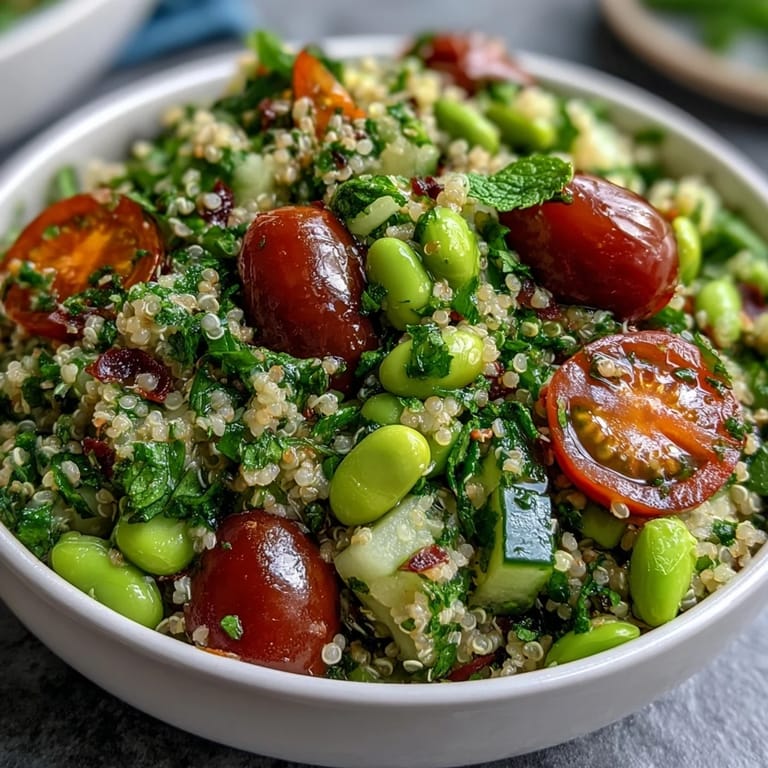
Save Last summer, my daughter declared that she'd made this salad for her volleyball team's potluck, and I felt that quiet pride of watching something you made become something someone else claimed. She'd added her own touch—some toasted seeds—and it became her thing, not mine, which somehow made it taste even better when I tried it.
The Magic of Timing
There's a window between when you drain the quinoa and when you actually mix the salad where everything needs to be cool but still has some life in it. I learned this the hard way by making the salad ahead of time and then watching it become dense and uninviting by evening. Now I cook the components early, keep them separate in the refrigerator, and assemble everything within a couple of hours of eating. It's the difference between a salad that feels fresh and alive versus one that feels like it's been sitting in a deli case.
Dressing That Actually Matters
The dressing here isn't an afterthought—it's the entire reason this salad works instead of just being a collection of healthy things in a bowl. The lemon juice provides brightness while the rice vinegar adds a gentler acidity than white vinegar would. The mustard is barely detectable, but it's what makes the oil actually emulsify instead of separating, and it adds a microscopic depth that guests can't quite identify but definitely notice. When you whisk these together, you're not just mixing ingredients; you're creating something that transforms everything it touches.
Variations and Customizations
I've learned that this salad is wonderfully flexible while still maintaining its essential character. You can add toasted nuts for crunch, swap in lime for lemon if you want something more tropical, or throw in a pinch of chili flakes if you're in the mood for gentle heat. Some people add avocado sliced on top just before serving, and while it's delicious, it does make the salad heavier than its original intention. The most successful variation I've found is stirring in some feta cheese just before serving, which adds a salty creaminess that balances the citrus beautifully.
- Toasted sunflower seeds or sliced almonds provide textural contrast that keeps the salad interesting bite after bite.
- A handful of fresh cilantro can replace or join the parsley if you want something more assertive.
- Serving alongside grilled chicken or crumbled tofu transforms it from a side dish into a complete meal.
 Save
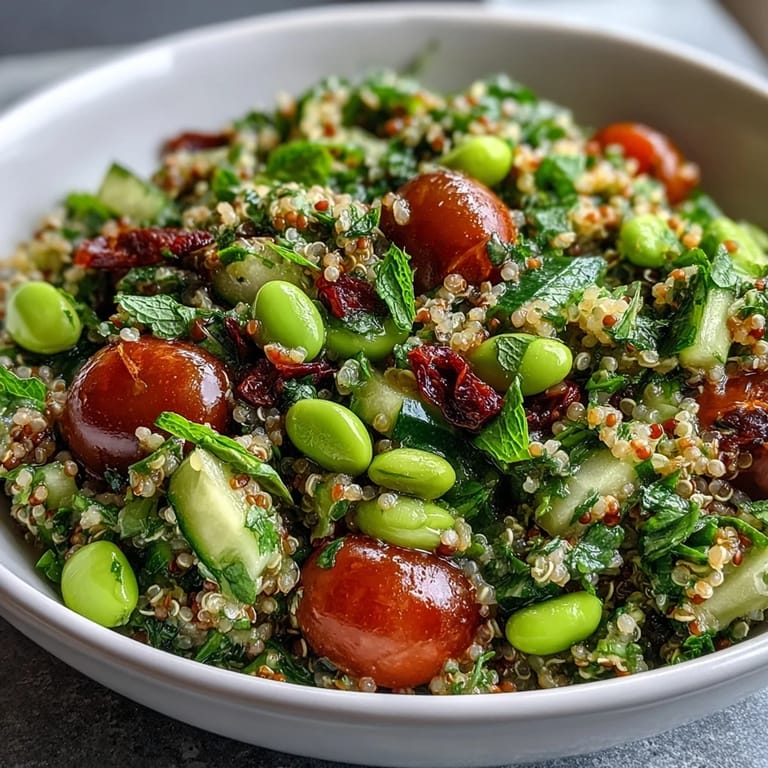
Save This salad has become my go-to proof that healthy eating doesn't require sacrifice or blandness. There's a quiet confidence that comes from serving something that nourishes both your body and your appetite.
Recipe FAQs
- → Can I make this ahead of time?
Yes, this bowl actually improves after a few hours in the refrigerator. The flavors meld together beautifully, and the texture holds up well for 3-4 days when stored properly in an airtight container.
- → What can I substitute for edamame?
Shelled fava beans, chickpeas, or black beans work well as alternatives. For a soy-free version, try green peas or additional vegetables like diced zucchini or shredded carrots.
- → Is this suitable for gluten-free diets?
Absolutely. Quinoa is naturally gluten-free, making this an excellent choice for those avoiding gluten. Just ensure your Dijon mustard and other condiments are certified gluten-free if highly sensitive.
- → How do I prevent quinoa from becoming mushy?
Rinse quinoa thoroughly before cooking to remove bitter saponins. Use the exact 2:1 water-to-quinoa ratio and let it cool completely before tossing with vegetables. This prevents excess moisture from making the mixture soggy.
- → Can I add protein to make it a complete meal?
Grilled chicken, shrimp, or baked tofu pair wonderfully. Feta cheese or goat cheese adds creaminess and extra protein. The bowl already provides 11g per serving from the edamame and quinoa.
- → What other vegetables work well in this?
Shredded carrots, diced zucchini, radishes, or avocado add variety. For heartier versions, try roasted sweet potato cubes or blanched green beans. Adjust quantities based on preference.