 Save
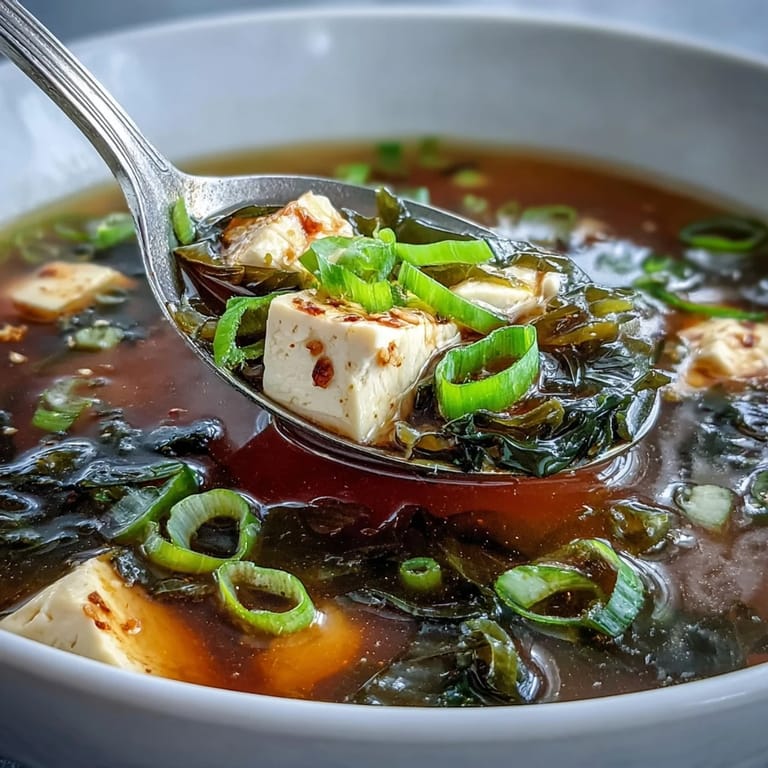
Save My first proper bowl of miso soup arrived on a grey Tokyo morning when I'd wandered into a tiny restaurant near Shibuya Station, exhausted and homesick. The steam rising from the lacquered bowl seemed to carry everything I needed in that moment—warmth, simplicity, care. Years later, I realized I could recreate that quiet comfort in my own kitchen, and somehow it tastes even better when you understand what's happening in the pot.
I made this for my partner on his first night back from traveling, when we both needed something that tasted like home but required almost no thinking. He sat at the counter watching me work, and there was something about the ritualistic nature of whisking miso, the sound of seaweed softening in water, that made us both slow down. We ate in comfortable silence, and I knew I'd nailed it when he asked for seconds before finishing his first bowl.
Ingredients
- Dashi stock (4 cups): This is the soul of the soup—it's a light, umami-rich broth made from kombu seaweed and bonito flakes (or mushrooms and kombu for vegetarian versions). Using quality dashi makes all the difference; it's worth seeking out rather than using bouillon.
- White or yellow miso paste (3 tablespoons): Miso is where the probiotic magic lives, and it creates a rounded, salty depth. White miso is milder and slightly sweet, while yellow sits somewhere between—choose based on your mood and what you have on hand.
- Silken tofu (200 g): Silken tofu has a custard-like texture that dissolves almost on your tongue; firm tofu would be wrong here. Cut it gently and add it late to keep those delicate curds intact.
- Dried wakame seaweed (2 tablespoons): Wakame softens beautifully in warm water and adds a subtle oceanic note that rounds out the entire bowl. Don't skip the soaking step or it'll stay tough.
- Scallions (2, finely sliced): These are your finish line—they bring brightness and a whisper of sharpness that brings everything into focus.
Tired of Takeout? 🥡
Get 10 meals you can make faster than delivery arrives. Seriously.
One email. No spam. Unsubscribe anytime.
Instructions
- Get your broth warming:
- Pour the dashi into a medium saucepan and let it come to a gentle simmer over medium heat. Listen for those first small bubbles breaking the surface—you want warmth, not aggression.
- Wake up the seaweed:
- While the stock warms, place the dried wakame in a small bowl and cover with cold water. Five minutes is all it needs to unfurl and soften; any longer and it becomes slimy.
- Smooth out the miso:
- This is where patience matters. Scoop the miso paste into a small bowl and ladle in some of that hot broth, whisking slowly until you have a smooth, lump-free mixture. Think of it like tempering egg yolks—the gradual heat matters.
- Introduce the delicate additions:
- Drain the wakame and add it to the simmering broth along with the gently cut tofu cubes. Let everything warm through for two to three minutes, moving as little as possible so the tofu stays in one piece.
- Finish without cooking further:
- Pull the pot off the heat and stir in your dissolved miso mixture. Boiling after adding miso destroys the live cultures and flattens the flavor—resist that urge even though it feels like you should keep cooking.
- Serve with intention:
- Ladle the soup into bowls and scatter those bright scallions across the top. The moment you pour it is the moment it's best, so eat soon.
 Save
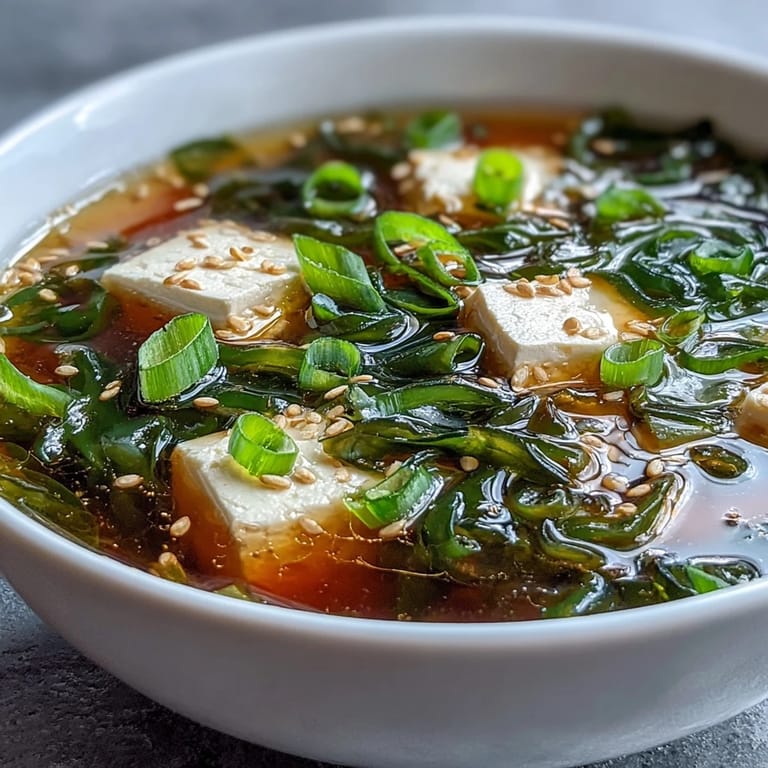
Save There's a moment when you're eating good miso soup where you stop thinking about whether you made it right and just exist in the warmth of it. That's when you know you've understood something true about the dish—it's not complicated, it just asks you to pay attention.
The Gentle Art of Handling Tofu
Silken tofu is fragile by design, and that fragility is its beauty. When you cut it into half-inch cubes, use a sharp knife and let the blade do the work rather than pressing down hard. The pieces will hold together better if you treat them like something precious, which they are—they're the creamy, delicate heart of this entire bowl. I learned this by breaking dozens of cubes before I learned to move slowly.
Why Miso Matters More Than You Might Think
Miso is fermented, which means it's alive with beneficial bacteria that your digestive system actually recognizes and uses. Beyond the health aspect, fermentation creates complexity—salty, umami, slightly sweet, deeply savory all at once—that you simply cannot replicate with salt alone. A good miso paste costs a bit more than you'd expect, but one jar lasts for months because you use just a few tablespoons at a time, making it one of the best investments for your kitchen.
Building Flavor Without Fuss
Miso soup teaches you that restraint can be as flavorful as abundance. You're not layering spices or long cooking times; you're building on the foundation of exceptional dashi and letting each simple ingredient speak. This is why it matters that your dashi is good, your tofu is silken, and your miso is something you'd want to taste on its own.
- If you want more depth, mix white and red miso together—red adds an earthy, fermented note that white alone can't provide.
- Mushrooms, spinach, or a few bamboo shoots turn this into something more substantial without making it feel heavy.
- Serve it as a starter before a larger meal or as a complete light dinner with rice and pickled vegetables on the side.
 Save
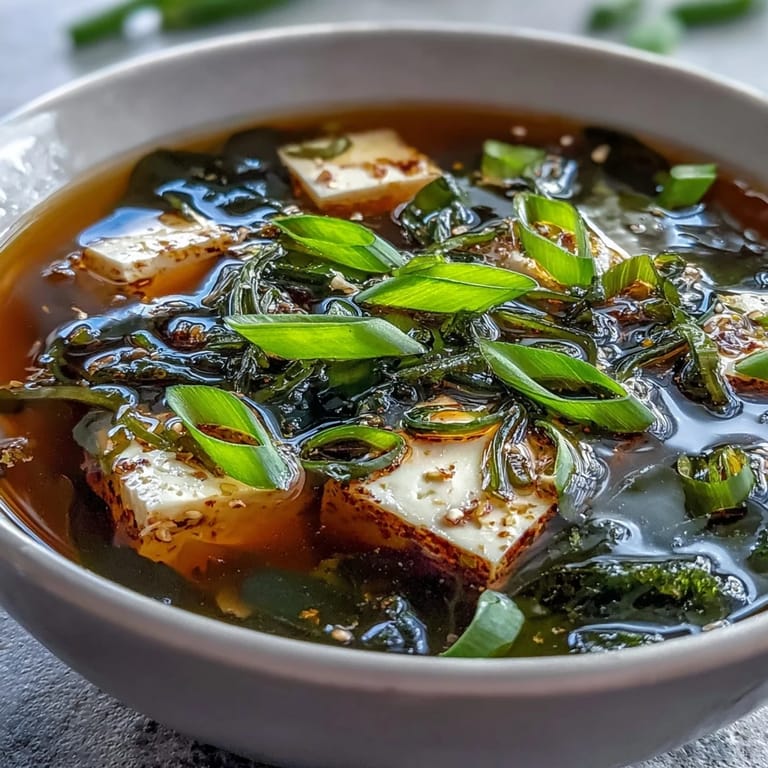
Save This soup is a reminder that sometimes the most nourishing things we can make are the simplest ones. Eat it slowly, and let it do what it's supposed to do.
Recipe FAQs
- → What type of miso works best?
White or yellow miso paste offers a milder, slightly sweet flavor that's perfect for beginners. Red miso provides a deeper, more intense umami taste. You can also blend both varieties for added complexity and depth.
- → Can I make this vegan?
Absolutely. Simply replace traditional dashi with a plant-based version made from kombu seaweed and dried shiitake mushrooms. This creates a rich, flavorful base without any bonito flakes or fish products.
- → Why shouldn't I boil the miso?
Boiling miso paste destroys its beneficial probiotics and can create a bitter, off-flavor. Always dissolve the miso in warm broth separately, then stir it in after removing the soup from direct heat to preserve both nutrients and taste.
- → How do I store leftovers?
Store cooled soup in an airtight container in the refrigerator for up to 2-3 days. Reheat gently over low heat, being careful not to boil. The tofu may soften slightly but will remain delicious. Avoid freezing as it affects the texture.
- → What vegetables can I add?
Thinly sliced shiitake mushrooms, fresh spinach, bok choy, or snap peas all complement the miso broth beautifully. Add delicate greens like spinach in the final minute of cooking to preserve their vibrant color and texture.
- → Is silken tofu necessary?
Silken tofu is traditional for its delicate, custard-like texture that melts in your mouth. However, soft or medium-firm tofu cubes work well too if you prefer something that holds its shape better in the hot broth.