 Save
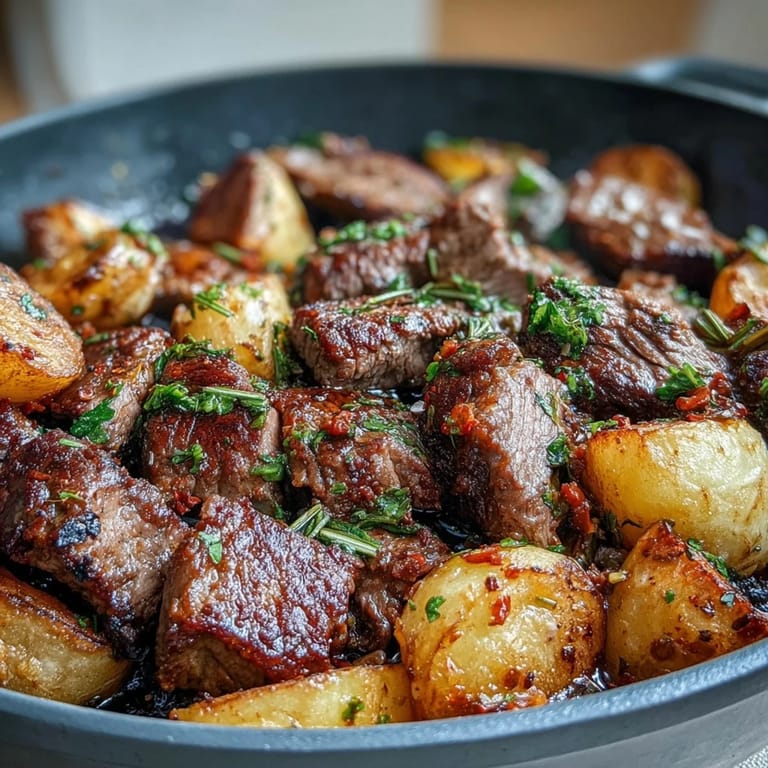
Save There's something about the sound of steak hitting hot cast iron that makes you feel like you're actually cooking something worth your time. I stumbled onto this skillet dinner on a Tuesday when I had fancy ingredients but zero patience for a long braise, and somehow those golden potato chunks and tender beef cubes tossed in garlicky butter became the thing I keep coming back to. It's the kind of meal that tastes like effort without demanding much of you, which honestly feels like winning at dinner.
The first time I made this for friends, I was nervous the potatoes wouldn't crisp up fast enough and the steak would overcook while waiting, but I learned to trust the timing. When I served it, someone asked if I'd been holding out on them all these years, and I realized the secret wasn't technique or fancy equipment—it was just taking the components seriously and not rushing the sear. That moment settled it: this was becoming part of my regular rotation.
Ingredients
- Sirloin steak, cut into 1-inch cubes (1 ½ lbs): Sirloin stays tender when cut into smaller pieces and cooks through quickly without drying out; the 1-inch size is your sweet spot for even cooking on all sides.
- Olive oil (3 tbsp total, split between steak and potatoes): Use a good quality oil you actually like the taste of, since you'll taste it throughout the dish.
- Salt and freshly ground black pepper: Grind your pepper fresh if you can—pre-ground loses its punch and the dish notices.
- Smoked paprika (½ tsp): This gives the steak a subtle depth that makes people ask what you did differently.
- Baby Yukon gold potatoes, quartered (1 ½ lbs): Yukon golds have enough starch to crisp beautifully on the outside while staying creamy inside; don't skip the quartering step for even cooking.
- Dried thyme (½ tsp): Thyme and potatoes are a classic pairing for a reason—it tastes like home cooking.
- Unsalted butter (4 tbsp): Unsalted gives you control over the final salt level and lets the garlic shine without competition.
- Fresh garlic, minced (6 cloves): Six cloves might sound like a lot, but this is where the magic lives; mincing releases more flavor than slicing, so don't be timid.
- Fresh rosemary, finely chopped (1 tbsp): Fresh rosemary smells incredible when it hits hot butter and tastes noticeably brighter than dried.
- Fresh parsley, chopped (1 tbsp plus more for garnish): Parsley keeps the dish from feeling heavy and adds a fresh green note at the end.
- Crushed red pepper flakes (½ tsp, optional): Add these if you like a whisper of heat; they won't overpower but they add complexity.
- Lemon juice (from ½ lemon): The lemon is the final touch that ties everything together and cuts through the richness without making it sour.
Tired of Takeout? 🥡
Get 10 meals you can make faster than delivery arrives. Seriously.
One email. No spam. Unsubscribe anytime.
Instructions
- Season your steak while you prep:
- Toss the cubed sirloin with olive oil, salt, pepper, and smoked paprika in a bowl and let it sit while you work on the potatoes. This isn't a long marinade—it's just enough time for the seasonings to start clinging to the meat.
- Get those potatoes golden and crispy:
- Heat olive oil in your skillet over medium-high heat and add the quartered potatoes with salt, thyme, and pepper. Stir them every few minutes so they brown evenly on all sides; they'll take 15-18 minutes and should be fork-tender with golden, slightly crispy edges. Transfer them to a plate and cover loosely with foil to stay warm while you work on the steak.
- Sear the steak bites hard and fast:
- Turn the skillet heat up to high and add the marinated steak in a single layer. Don't crowd the pan; if your skillet feels tight, work in two batches so each piece gets a proper sear. Cook 2-3 minutes per side until browned on the outside and just cooked through inside. Set the steak aside with the potatoes.
- Build the garlic butter sauce:
- Lower the heat to medium and add the butter to the empty skillet. Once it's melted and foaming, add the minced garlic, rosemary, parsley, and red pepper flakes if you're using them. Let it sauté for about a minute until it smells incredible—you want fragrant, not brown.
- Bring everything home:
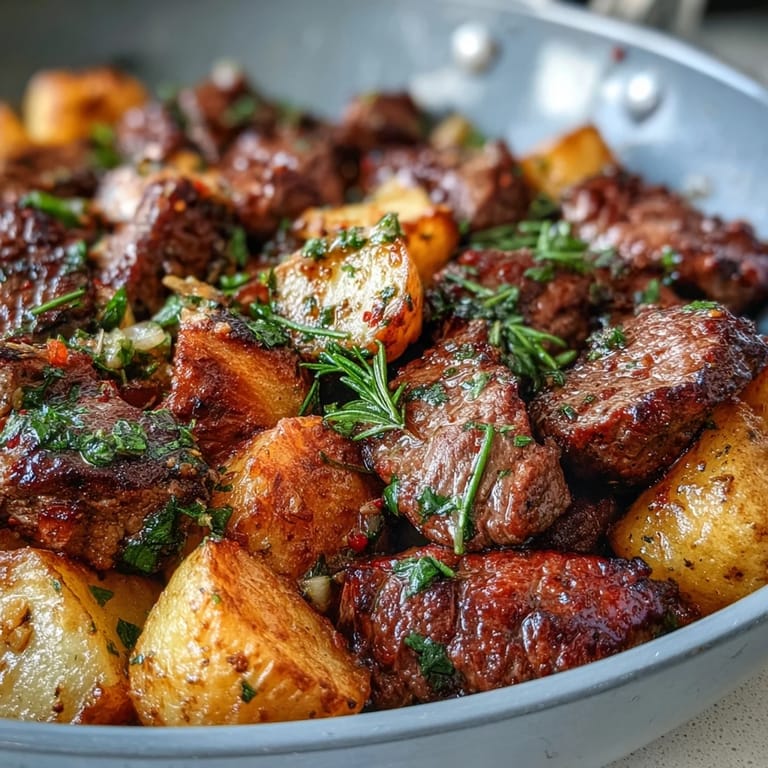
- Return the potatoes and steak to the skillet with the garlic butter sauce and toss everything until well coated. Squeeze the lemon juice over everything, taste it, and adjust salt and pepper if needed. Serve immediately garnished with extra fresh parsley.
 Save
Save This dish has a way of feeling fancier than it is, which is why I make it when I want to impress someone without showing my work. There's something grounding about a cast iron skillet full of butter and garlic and good meat and potatoes that makes you feel like you're taking care of people—even if it's just yourself.
The Cast Iron Advantage
Cast iron isn't necessary here, but it absolutely changes the game if you have one. The even heat distribution means your potatoes crisp up more reliably, the steak develops a better crust, and everything cooks a little faster. If you don't have cast iron, a heavy-bottomed stainless steel skillet works too, though you might need an extra minute or two on the potatoes. The key is using something with real thermal mass that holds onto heat—a thin pan will give you hot spots and uneven cooking.
When You Want to Upgrade This
The basic formula is solid, but there's room to make it your own depending on what you have or what you're craving. A splash of beef broth or dry white wine in the pan after you sear the steak but before you add the butter brings extra depth; fresh mushrooms or green beans stirred in at the end add vegetable substance without changing the vibe. Ribeye or strip steak work beautifully if sirloin isn't what you've got, though they'll cook slightly faster, so watch the timing closely.
Serving and Pairing
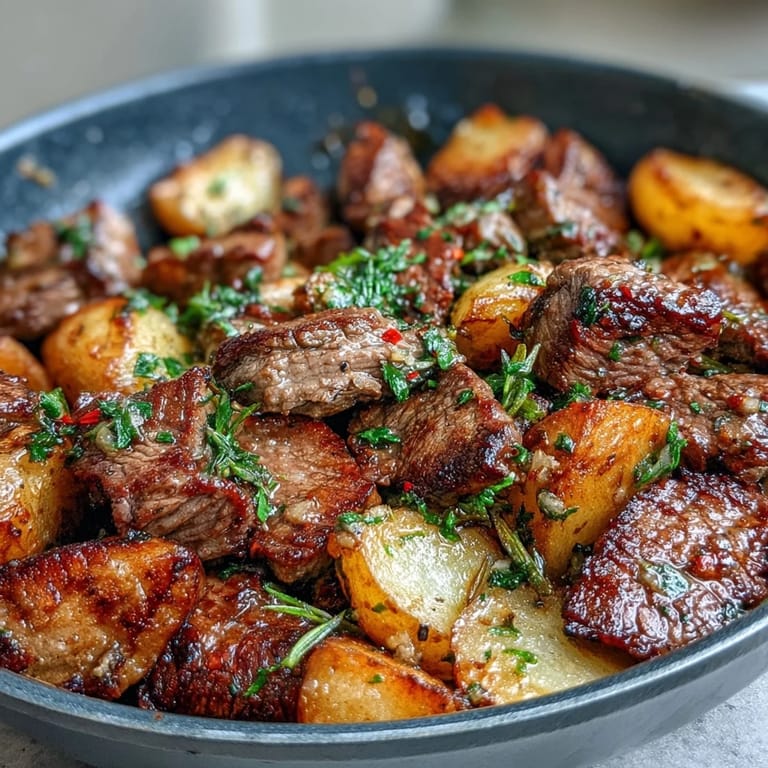
This skillet dinner is substantial enough to be a meal on its own, though a simple green salad or crusty bread on the side never hurts. Wine-wise, a robust red like Cabernet Sauvignon handles the garlic butter and rich meat beautifully; if you're not a red wine person, a full-bodied white like Chardonnay works too. The leftovers (if there are any) reheat gently in a low oven or on the stovetop with a splash of water to keep everything tender.
- Don't let the steak sit too long after searing or it'll toughen as it cools and reheats; move quickly from pan to plate to mouth.
- Taste as you go with salt and lemon juice—both are easy to add but impossible to take back.
- Fresh parsley on top isn't just decoration; it brightens every bite and reminds you this is fresh food, not leftovers.
 Save
Save This is the kind of meal that proves you don't need hours or a long ingredient list to cook something worth remembering. Make it once and you'll find yourself reaching for it on nights when you want to feel like you pulled off something special.
Recipe FAQs
- → What cut of steak works best for this skillet?
Sirloin is ideal for its balance of tenderness and affordability. The cubes stay juicy while developing a nice sear. Ribeye or strip steak are excellent upgrades for extra richness and marbling throughout each bite.
- → How do I get the potatoes crispy and tender?
Quarter the baby Yukon gold potatoes evenly and cook them in hot oil over medium-high heat. Resist stirring too frequently—let them develop a golden crust on one side before flipping. The 15-18 minute cook time ensures fluffy interiors with crispy edges.
- → Can I prepare this ahead of time?
You can cut the steak and potatoes up to a day in advance, storing them separately in the refrigerator. The garlic butter sauce can also be pre-mixed. For best results, cook everything just before serving to maintain the steak's tenderness and potatoes' crispiness.
- → What vegetables can I add to this dish?
Fresh green beans, button mushrooms, or bell peppers complement the flavors beautifully. Add mushrooms during the steak searing step and green beans during the final toss so they cook through without becoming mushy.
- → How do I know when the steak is done?
Sear the cubes for 2-3 minutes per side—they should be browned on the outside and just cooked through to medium. Since they're cut into small pieces, they cook quickly. Avoid overcooking to keep the meat tender and juicy.
- → Is the garlic butter sauce too strong?
The sauce delivers a balanced garlicky flavor that enhances without overwhelming. Six cloves may sound generous, but the butter, lemon juice, and fresh herbs mellow the sharpness. Reduce to four cloves if you're sensitive to garlic.