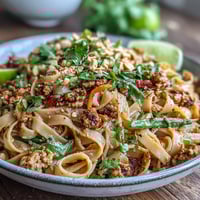
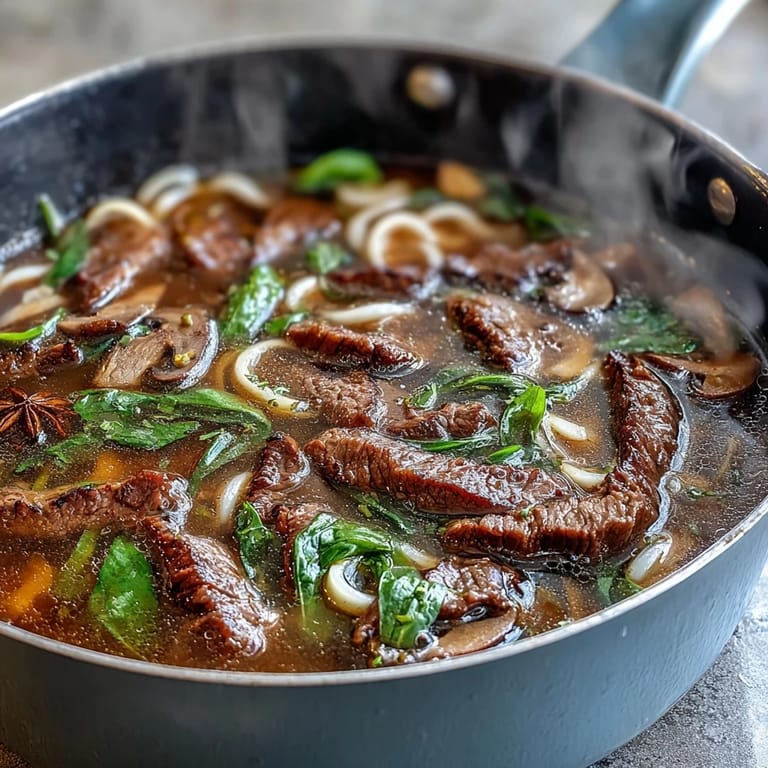
 Save
Save My friend Sarah showed up at my door with a portable hot pot burner and a mission: to recreate the interactive dining experience from a trendy restaurant we'd visited that summer. Within an hour, my kitchen smelled like aromatic ginger and star anise, and suddenly dinner became this spontaneous, collaborative ritual where everyone gathered around the table cooking their own bowls. The table felt alive in a way that plated food never quite achieves. Now whenever I make this, I'm reminded that the best meals aren't just about feeding people, they're about creating moments where everyone gets to play a part.
I'll never forget hosting my cousin during her first week in the country, nervous about impressing her with American hospitality. We set up the hot pot at the dining table, and within minutes, the awkward silences disappeared entirely, replaced by laughter and questions about which vegetables to add next. She taught me how to properly squeeze lime over noodles in that exact moment, and we've done it that way ever since. That meal transformed from a recipe in my head into this beloved tradition we repeat every time she visits.
Ingredients
- Beef broth (8 cups): The foundation of everything, so don't skimp on quality; low-sodium lets you control the saltiness as the broth simmers and concentrates.
- Fresh ginger (4 slices): Smash it first to release those peppery, warming oils that make the entire broth feel alive.
- Garlic (4 cloves) and lemongrass (2 stalks): These two are your aromatic backbone, creating that intoxicating perfume that makes everyone's head turn as they walk into your kitchen.
- Star anise (3 pods): Just enough to add subtle licorice notes without overpowering; I learned to resist the urge to add more because it can quickly become cloying.
- Soy sauce (2 tablespoons) and fish sauce (1 tablespoon): Fish sauce might smell funky on its own, but trust it, because it adds umami depth that regular soy alone cannot achieve.
- Beef sirloin (400g, thinly sliced): Freezing the meat for an hour before slicing makes this so much easier, and cutting against the grain ensures each piece stays tender even in boiling broth.
- Rice noodles (300g): Medium width works best because they absorb broth beautifully without turning to mush; thin noodles cook in seconds and can disappear if you blink.
- Fresh vegetables (bok choy, mushrooms, cabbage, carrots, bean sprouts): Choose vegetables with different textures and cooking times so people get variety in each spoonful.
- Fresh herbs (cilantro and Thai basil) and lime: These finish everything with brightness and should never be skipped, no matter how tempting it seems when you're tired.
Tired of Takeout? 🥡
Get 10 meals you can make faster than delivery arrives. Seriously.
One email. No spam. Unsubscribe anytime.
Instructions
- Build your aromatic broth foundation:
- Combine beef broth, water, and all your aromatics in a large pot, letting the ginger, garlic, lemongrass, and star anise infuse as it comes to a boil. Simmer uncovered for 20-25 minutes until the kitchen smells like a Malaysian market and the broth turns a beautiful golden color, then strain out all the solids and return it to a gentle simmer.
- Soften the noodles gently:
- Soak your rice noodles in warm water for 20-30 minutes until they're pliable enough to bend without snapping, then drain them completely so they don't dilute the broth when added. This step always reminds me to slow down because rushing with crunchy noodles ruins the whole experience.
- Arrange your feast like a celebration:
- Lay out your thinly sliced beef, all your prepared vegetables, fresh herbs, lime wedges, and dipping sauces on large platters that everyone can reach easily. This is the moment everything transforms from ingredients into an invitation.
- Set up your table as a kitchen:
- Position your portable burner or electric hot pot in the center with the simmering broth in a wide, shallow pot so people can easily reach in with their chopsticks or skimmers. This is where the magic happens because now everyone becomes both guest and cook.
- Let everyone cook their own perfect bowl:
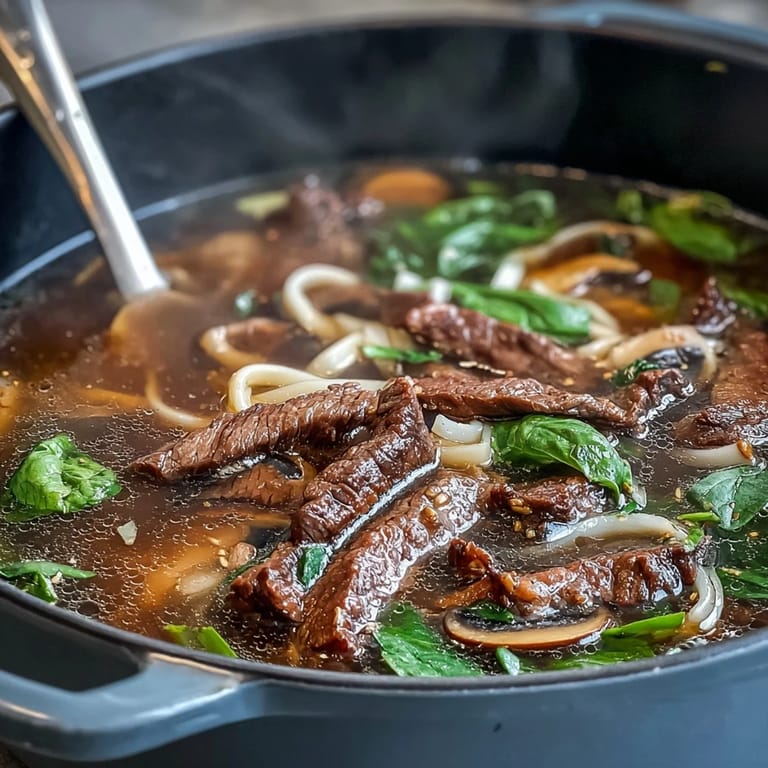
- Each person adds their chosen noodles, vegetables, beef, and herbs directly to the simmering broth, cooking to their exact preference (beef takes literally seconds). Watch how engaged people become when they're in control of their own meal.
- Finish with freshness and flavor:
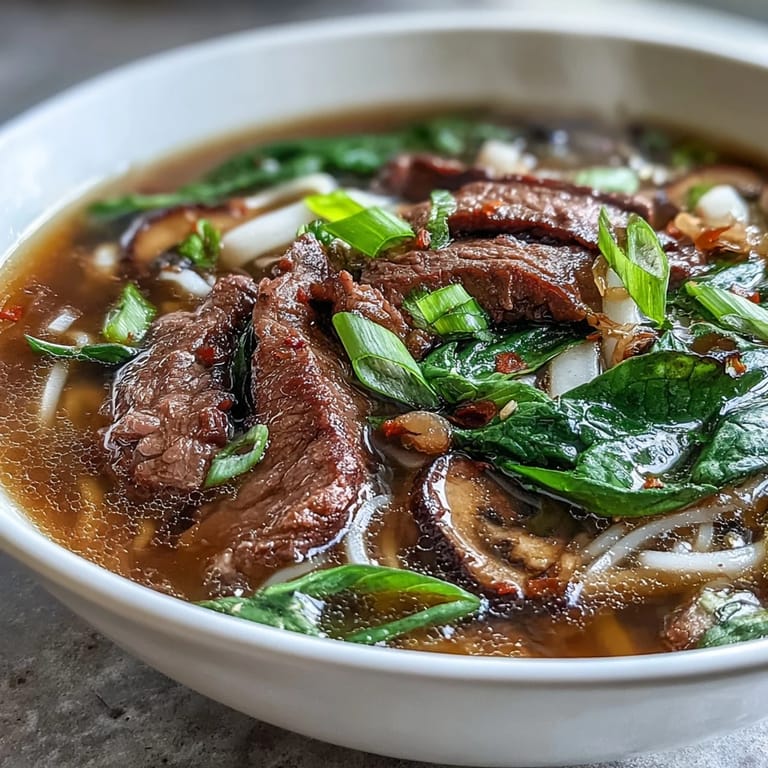
- Ladle the cooked items and broth into bowls, then let each person top with cilantro, Thai basil, fresh lime juice, and whichever dipping sauces they prefer. This final step is where personal preference truly shines.
 Save
Save Last winter, my teenage nephew refused to eat anything green until he made his own bowl at the hot pot, added bok choy himself, and realized he actually liked it when he'd cooked it. That single moment felt like winning the lottery as a parent of a picky eater. Food tastes different when you've had control over making it.
The Broth is Everything
People often ask if they can use store-bought broth or shortcut the aromatics, and the honest answer is yes, but you lose the soul of the dish. The 20-25 minutes of simmering isn't wasted time, it's investment time where those spices, ginger, and lemongrass transform simple broth into something that smells like a memory you didn't know you had. I once tried to skip the simmering step to save time, and the broth tasted flat and forgettable, like eating at a chain restaurant instead of a place you actually want to return to.
Preparing Beef Like a Professional
The freezing trick for beef is genuinely life-changing, and I learned it the hard way after mangling three pounds of meat with a dull knife because I was impatient. Partially frozen meat slices like butter, and slicing against the grain means each piece breaks apart in your mouth rather than becoming chewy. If you can't freeze ahead, ask your butcher to slice it for you because thin, uniform slices cook evenly and look beautiful arranged on the platter.
Making it Yours with Customization
This dish thrives on personalization, which is partly why people love it so much. My vegetarian friend brings her own tofu and extra mushrooms, my neighbor swaps beef for shrimp, and my mom adds spinach and daikon that she grows in her garden. The framework stays the same, but everyone's bowl becomes their own creation.
- Substitute chicken, shrimp, or tofu for beef depending on dietary preferences or what's on sale that week.
- For a fully vegetarian version, use vegetable broth, skip the fish sauce, and load up on mushrooms, tofu, and leafy greens.
- Have multiple dipping sauces available because hoisin, sriracha, and soy sauce each bring different energy to the same noodles.
 Save
Save This meal taught me that sometimes the best cooking isn't about perfecting a technique, it's about creating space where people feel invited to be part of the process. There's something genuinely magical about gathering around a pot of simmering broth where everyone's in control of their own dinner.
Recipe FAQs
- → How do I prepare the broth for the hot pot?
Simmer beef broth with aromatics like ginger, garlic, lemongrass, and star anise for 20-25 minutes, then strain to remove solids for a clear, flavorful base.
- → What is the best way to slice the beef for this dish?
Freeze the beef sirloin for about an hour to firm it up, then slice thinly across the grain to ensure tenderness and quick cooking.
- → How long should the rice noodles be soaked before cooking?
Soak dried rice noodles in warm water for 20-30 minutes until pliable, then drain before adding to the simmering broth.
- → Can I substitute the beef with other proteins?
Yes, thinly sliced chicken, shrimp, or tofu work well as alternatives, allowing for customization based on dietary preferences.
- → What vegetables complement the hot pot best?
Baby bok choy, shiitake mushrooms, napa cabbage, carrots, and bean sprouts provide a mix of textures and flavors that suit the broth beautifully.
- → How do the dipping sauces enhance the experience?
Options like hoisin, sriracha, and soy sauce add depth and customizable spicy, sweet, or savory notes to each bite.