 Save
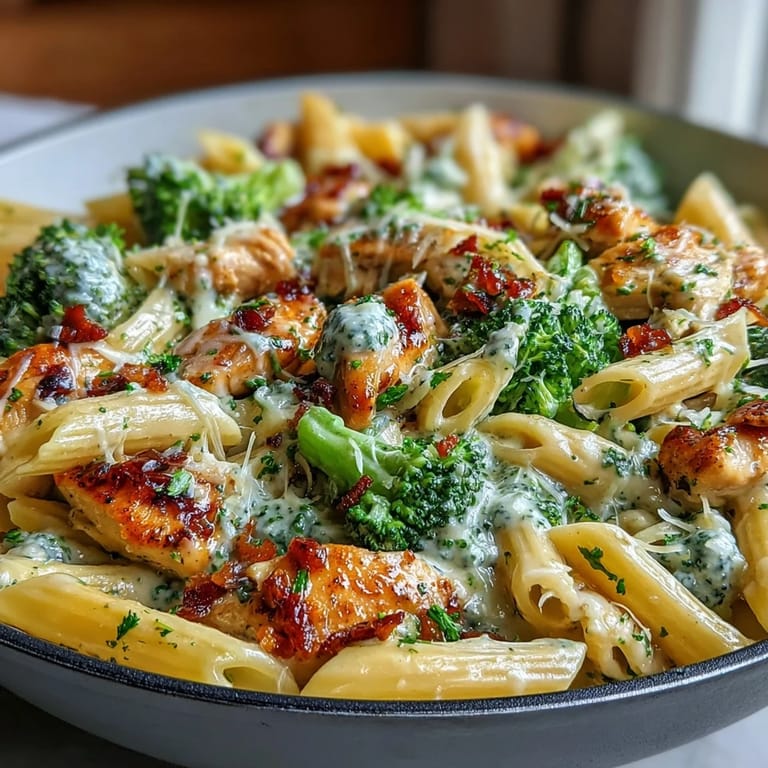
Save There's something about the smell of garlic hitting hot butter that makes you pause mid-chop and just breathe it in. That's the moment this dish grabbed me—standing in my kitchen on a random Wednesday, watching the butter foam, realizing I could have dinner on the table in less time than it takes to order takeout. The creamy sauce that follows feels indulgent but comes together with almost no fuss, and somehow that simplicity makes it taste even better.
I made this for a friend who showed up hungry and skeptical about weeknight cooking, arms full of grocery bags he'd grabbed on impulse. Twenty-five minutes later, he was quiet, just eating, and that felt like the highest compliment a home cook could get. He's made it three times since, which is probably why I keep tweaking it.
Ingredients
- Boneless, skinless chicken breasts: Dicing them yourself instead of buying pre-cut saves money and lets you control the size—aim for roughly equal pieces so they cook evenly.
- Broccoli florets: Fresh broccoli adds color and texture, but frozen works just as well and actually saves time since you skip the chopping.
- Garlic: Minced fresh garlic is worth the effort; jarred tastes flat by comparison and won't give you that moment when the smell hits you just right.
- Onion: The small yellow onion softens into the sauce and adds sweetness that balances the Parmesan's saltiness.
- Short pasta: Penne, fusilli, or rotini all work because they trap sauce in their shapes; avoid long pasta like spaghetti in this dish.
- Whole milk and heavy cream: The combination creates a sauce that's rich without being heavy, and using both gives you better texture than using cream alone.
- Parmesan cheese: Freshly grated melts more smoothly than pre-grated, which contains anti-caking agents that can make the sauce grainy.
- Butter: Unsalted butter gives you control over the salt level in the final dish.
- Chicken broth: Low-sodium lets the garlic and Parmesan shine without getting masked by salt.
- Italian herbs: Dried herbs work fine here since they'll dissolve into the creamy sauce, unlike fresh herbs which you'll want for garnish.
- Olive oil: A good extra-virgin oil adds flavor, but honestly standard olive oil does the job.
Tired of Takeout? 🥡
Get 10 meals you can make faster than delivery arrives. Seriously.
One email. No spam. Unsubscribe anytime.
Instructions
- Toast the chicken in butter and oil:
- Heat both in your skillet over medium heat until the butter foams—you'll see it right away. The diced chicken pieces should sizzle when they hit the pan; if they don't, wait another 30 seconds.
- Build your flavor base:
- Once the chicken's out, the onion goes in and softens quickly in those flavorful drippings. You want it almost translucent before the garlic joins, just 30 seconds of garlic cooking, because it burns faster than you'd think.
- Cook pasta right in the sauce:
- This is where the magic happens—uncooked pasta goes straight into the broth and milk mixture. It'll absorb the liquid as it cooks, thickening the sauce and infusing itself with flavor all at once.
- Add broccoli at the right moment:
- Wait until the pasta's been cooking for about 8 minutes before adding broccoli, or it'll turn to mush. You want it bright green and just-tender when the pasta reaches al dente.
- Finish with cream and cheese:
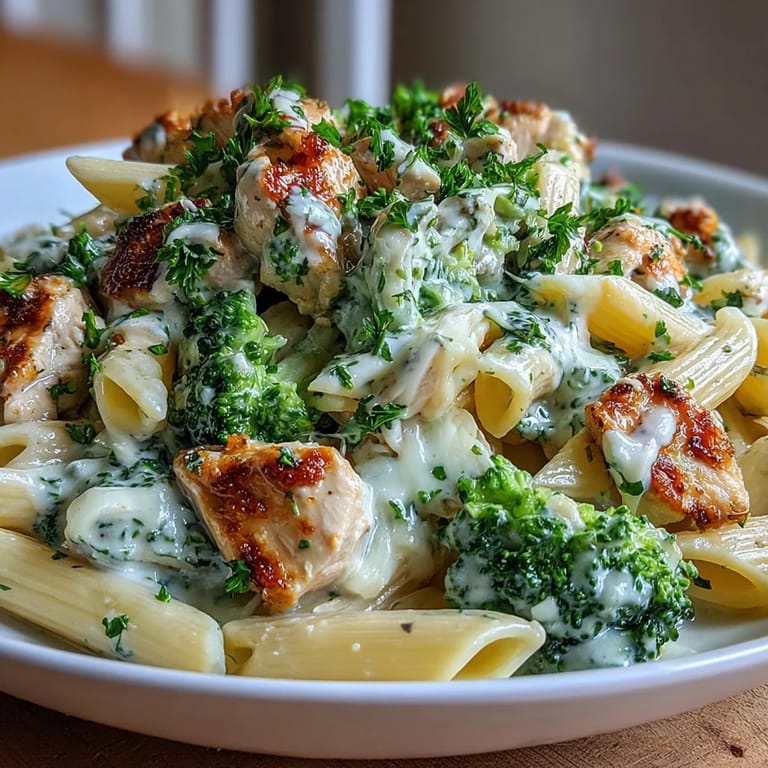
- Lower the heat so the dairy doesn't break, then stir in cream and Parmesan until everything melts into a silky sauce. Return the chicken, stir gently, and give it 2 minutes to warm through.
 Save
Save This dish has become my answer to that exhausted moment around 5 PM when someone asks what's for dinner and you realize you haven't thought that far ahead. It's the kind of meal that feels like comfort in a bowl but doesn't require the three-hour prep that comfort food usually demands, and somehow that contradiction makes it taste even better.
The One-Skillet Advantage
Cooking the pasta directly in the sauce isn't just a shortcut; it changes the whole dish. The pasta releases starch into the liquid, which helps thicken the sauce naturally without needing extra cream or flour. You end up with something that clings to every piece instead of pooling at the bottom of the bowl. The first time I did this, I stood there watching it thicken and felt like I'd discovered something clever that chefs had known all along.
Customizing Beyond the Recipe
I've thrown in spinach instead of broccoli on nights when that's what I had, and the cream absorbs the spinach's earthiness in a way that feels almost Italian in its simplicity. Frozen peas work too if you want something sweeter. My neighbor swears by adding mushrooms sautéed with the onion, and she's not wrong. The formula here is loose enough that you can trust your instincts and your pantry.
When Cooking Becomes Rhythm
There's a rhythm to this recipe that I've grown to love—the sizzle, the smell, the gentle stir of creamy sauce forming. It's the kind of cooking that doesn't demand all your attention but rewards it if you give it, and somehow that balance makes it feel both easy and worthwhile. It's become the meal I make when I want to cook something real without turning the kitchen into a war zone, and that might be the highest compliment I can give any recipe.
- Taste before serving because ovens and stoves vary, and you might need just a pinch more salt or pepper to make it sing.
- Fresh parsley scattered on top at the end adds brightness that cuts through the richness and makes people think you went to more trouble than you did.
- Leftover pasta reheats gently on the stovetop with a splash of milk stirred in, bringing the sauce back to creamy instead of thick.
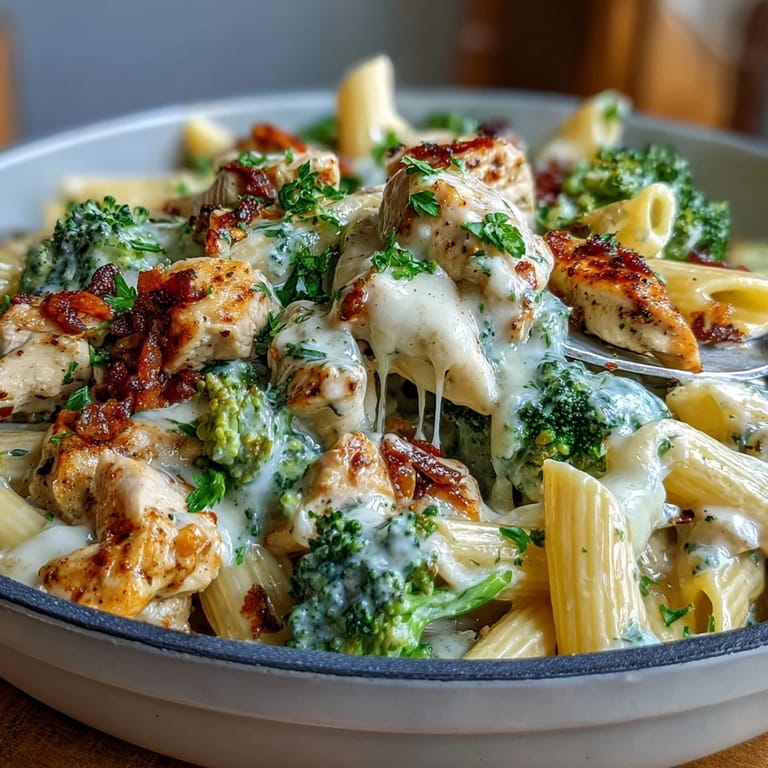 Save
Save This is the meal that proved to me that weeknight cooking doesn't have to be a compromise between easy and delicious. Make it once and you'll understand why it keeps coming back around.
Recipe FAQs
- → Can I use rotisserie chicken instead of raw chicken breasts?
Yes, rotisserie chicken works perfectly. Skip the initial chicken cooking step, shred about 2 cups of meat, and add it back in step 5 when you return the chicken to the skillet. This cuts the total time down to about 25 minutes.
- → What type of pasta works best for this dish?
Short pasta shapes with nooks and crannies are ideal because they catch the creamy sauce. Penne, fusilli, rotini, or even gemelli work beautifully. Avoid long strands like spaghetti—the sauce won't cling as effectively.
- → Can I make this ahead and reheat it?
This pasta is best enjoyed fresh, as the sauce thickens significantly when refrigerated. If you do have leftovers, reheat gently with a splash of milk or cream to loosen the sauce back to its creamy consistency. The pasta will continue to soften, so don't overheat.
- → How do I prevent the sauce from separating?
Keep the heat low when adding the heavy cream and Parmesan. High heat can cause dairy to break and become grainy. Stir constantly until the cheese melts smoothly, and avoid boiling after the cream is added.
- → Can I use frozen broccoli instead of fresh?
Frozen broccoli works in a pinch, but fresh yields better texture. If using frozen, thaw it first and pat dry to prevent watering down the sauce. Add it during the last 3-4 minutes of cooking since it's already blanched.
- → Is there a lighter version I can make?
You can reduce the heavy cream to 1/4 cup and increase the whole milk to 1 1/2 cups. For even fewer calories, swap half-and-half for the cream and use less Parmesan—though the sauce will be thinner and less rich.