 Save
Save My neighbor Maria swore by her Greek salad, and one summer afternoon while watering plants over the fence, she finally handed me a bowl with that knowing smile. The first bite was a revelation—crisp lettuce giving way to creamy feta, briny olives, and that punch of vinegar that made everything sing. I went home and made it that same evening, and somehow the simplicity of it became exactly what I needed after a long week.
Last summer I made this for a potluck, and honestly I was nervous because everyone else brought elaborate casseroles and desserts. But mine disappeared first, and a friend asked for the recipe right there on the patio, pencil in hand. That's when I realized some dishes don't need to be complicated to feel special.
Ingredients
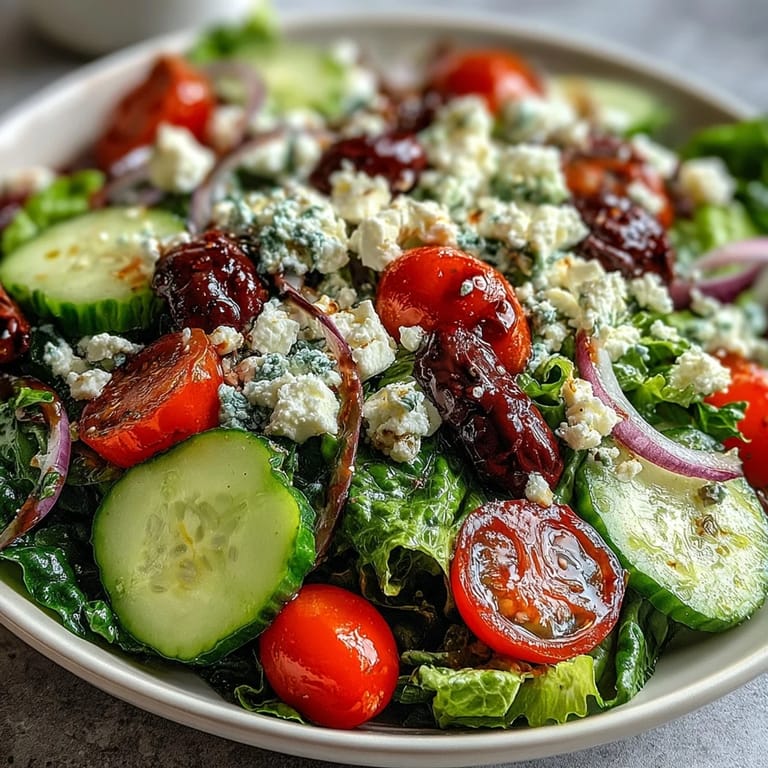
- Romaine lettuce: The sturdy leaves hold up better than delicate greens, especially if you're transporting this somewhere or letting it sit for a bit.
- Cherry tomatoes: Halving them instead of using large chunks means every bite gets a little burst of sweetness without watery centers.
- Cucumber: Slice thin enough to fold easily into the leaves but thick enough to stay crisp and not turn mushy.
- Red onion: The thin slices matter here—they soften slightly but keep that sharp, peppery edge that balances the creamy feta.
- Feta cheese: Buy a good block if you can and crumble it yourself; pre-crumbled tends to be dustier and less flavorful.
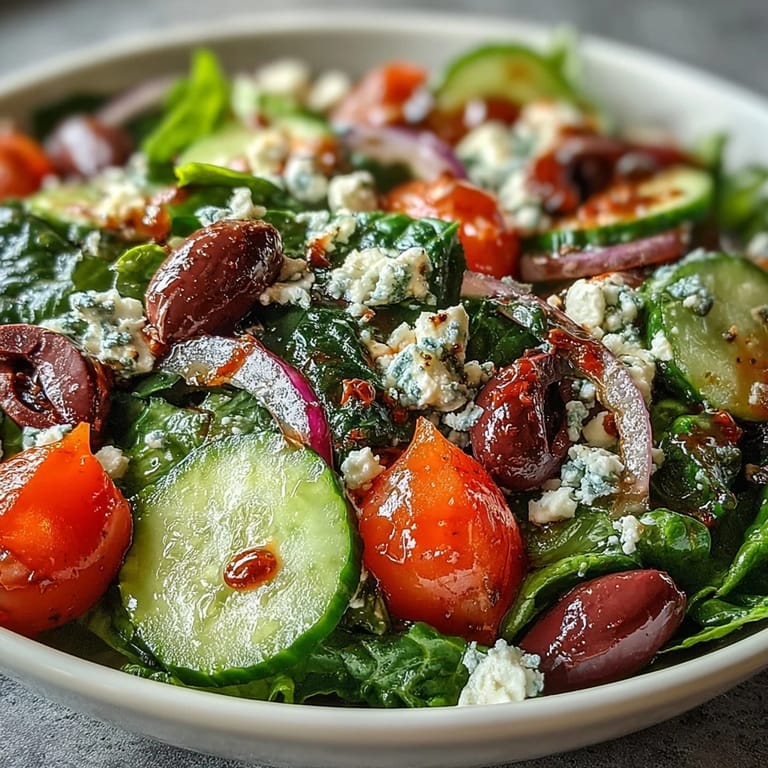
- Kalamata olives: Pit them yourself if possible, or double-check the jar—nothing ruins a salad faster than biting down on a hidden pit.
- Extra-virgin olive oil: Don't skimp here; this is one of three ingredients in the dressing, so quality truly matters.
- Red wine vinegar: It's sharp without being shrill, and plays perfectly against the salty feta.
- Dried oregano: If you have fresh, use three times the amount, but dried oregano has an earthiness that actually suits this salad beautifully.
- Garlic: One small clove minced fine enough that you barely see it but taste it everywhere.
- Dijon mustard: Just a touch acts as an emulsifier, helping the oil and vinegar stay together instead of separating.
Tired of Takeout? 🥡
Get 10 meals you can make faster than delivery arrives. Seriously.
One email. No spam. Unsubscribe anytime.
Instructions
- Build your bed:
- Chop the romaine into bite-sized pieces and pile it into your largest bowl—you want enough lettuce to anchor everything else. This is where the salad's structure lives, so don't be stingy.
- Add the rainbow:
- Toss in the tomatoes, cucumber, and red onion in one gentle motion. The colors should look almost too pretty to eat, but we're fixing that next.
- Crown it with treasure:
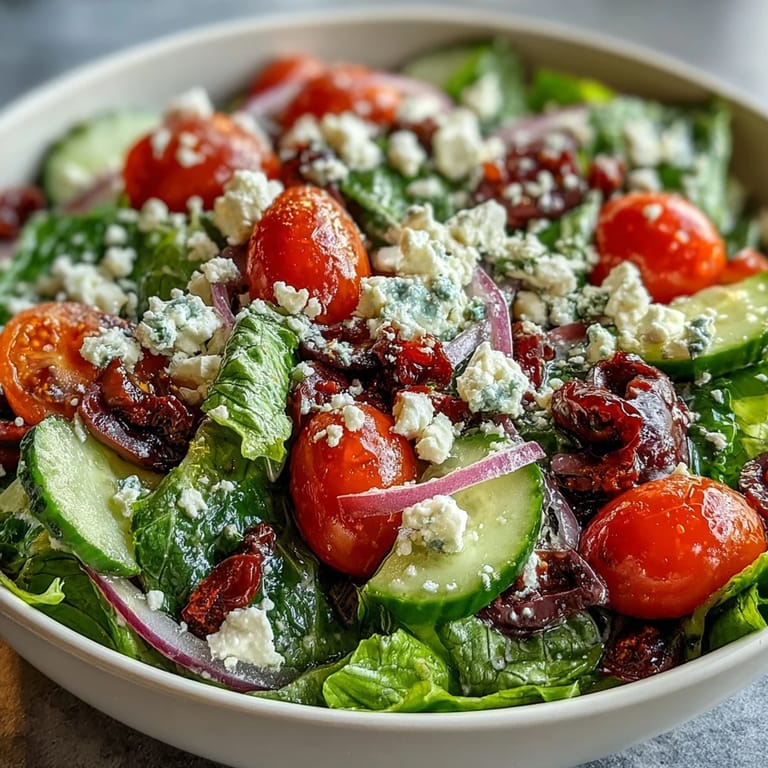
- Scatter the crumbled feta and halved olives across the top like you're plating something special. They don't need to be perfectly distributed—honest rustic looks better anyway.
- Shake up the dressing:
- In a jar or small bowl, combine oil, vinegar, oregano, minced garlic, mustard, salt, and pepper. Whisk or shake hard for about 30 seconds until it looks creamy and emulsified; that mustard is doing real work here.
- The final toss:
- Drizzle the dressing over everything and toss gently with your hands or two forks, being careful not to bruise the lettuce. Serve right away while the lettuce is still crisp and cold.
 Save
Save My daughter brought this salad to school for lunch one day and came home saying her friend had never seen olives before. Watching her explain what feta was, with such pride over something so simple, made me remember why I love cooking—it's about introducing people to new tastes and textures, one bowl at a time.
The Magic of Mediterranean Simplicity
There's something almost rebellious about a salad that needs no cooking, that celebrates ingredients in their truest form. You're not trying to impress anyone with technique; you're just letting quality olive oil, ripe tomatoes, and briny olives speak for themselves. That's the whole Mediterranean philosophy right there in one bowl.
Variations That Still Feel Authentic
Bell peppers add a sweet crunch that doesn't compete with the other flavors, especially the red or yellow varieties. A handful of fresh dill scattered on top bridges the gap between Greek salad and something more herbaceous and summery. And if you're feeding someone who eats meat, a few sliced hard-boiled eggs or grilled chicken turns this into a full meal without changing the soul of the dish.
Serving and Storage Wisdom
This salad travels well if you pack the dressing separately and combine them right before eating or just before you dig in. The vegetables stay crisp for a couple of hours that way, and you avoid the soggy bottom syndrome that ruins picnic food. Leftovers can be transformed—toss yesterday's salad into a pita with some hummus, and suddenly you have lunch again.
- Keep the vinaigrette in a jar in the fridge for up to a week, and you can use it on any salad that needs brightness.
- Room temperature feta is actually creamier than cold feta, so consider taking the cheese out 10 minutes before serving if you're really leaning into the flavors.
- A squeeze of fresh lemon juice right at the end adds dimension without overpowering what's already there.
 Save
Save This salad has become my go-to when I'm not sure what to make, and that's the highest compliment I can give any recipe. It's the kind of dish that feels effortless once you've made it twice, and tastes like summer no matter what season it actually is.
Recipe FAQs
- → Can I make this Greek salad ahead of time?
You can prep the vegetables and dressing separately up to 24 hours in advance. Store chopped vegetables in an airtight container and keep the vinaigrette in a sealed jar. Toss everything together just before serving to maintain the crisp texture and prevent the lettuce from wilting.
- → What type of olives work best for this salad?
Kalamata olives are the traditional choice, offering a rich, briny flavor and deep purple color. If unavailable, you can substitute with other Mediterranean olives like black olives or Gaeta olives. Just ensure they're pitted and halved for easy eating.
- → How can I make this dairy-free?
Simply replace the feta cheese with a vegan feta alternative or add extra olives and vegetables for bulk. Many stores now offer high-quality plant-based feta made from almonds or coconut oil that mimics the texture and tangy flavor remarkably well.
- → What proteins pair well with this salad?
Grilled chicken breast, shrimp, or lamb make excellent protein additions. You can also add chickpeas, white beans, or grilled halloumi for vegetarian options. The salad itself provides about 6g of protein per serving from the feta cheese.
- → How long does leftover salad stay fresh?
For best results, enjoy immediately after tossing with dressing. Leftovers can be refrigerated for 1-2 days, though the lettuce will soften and the vegetables may release water. If storing, keep the dressing separate and add fresh just before eating again.
- → Can I use different lettuce varieties?
While romaine provides the ideal crunch and holds up well to the vinaigrette, you can mix in other greens like iceberg for crispness, or add spinach and arugula for more nutrients. Avoid delicate spring greens as they wilt too quickly under the acidic dressing.