 Save
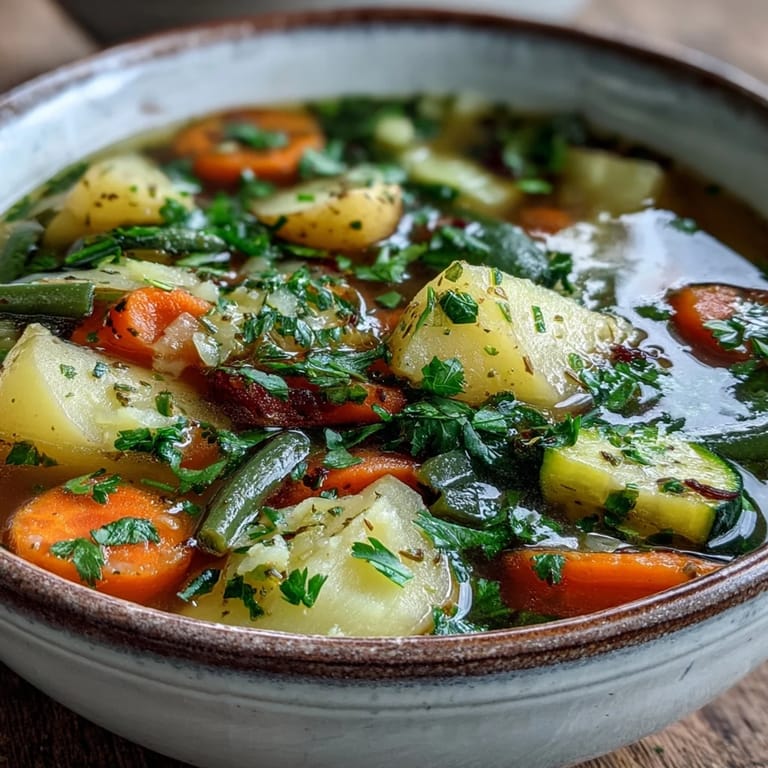
Save The first pot of potato vegetable soup I ever made was on a rainy Tuesday when the farmers market had overwhelmed me with too many beautiful vegetables. Standing in my kitchen, surrounded by produce threatening to spoil, I improvised this recipe while thunder rumbled outside. The comforting aroma filled my apartment as raindrops tapped against the windows, creating a sensory memory that returns with every batch.
Last winter, my neighbor caught a terrible cold, and I brought over a container of this soup. Three days later, she appeared at my door, completely recovered, insisting it was the soup that healed her. While I cant claim medicinal properties, watching her savor each spoonful while wrapped in a blanket on her couch convinced me that comfort food truly has power beyond mere calories.
Ingredients
- Potatoes: I prefer waxy varieties like Yukon Gold that hold their shape rather than disintegrating into the broth, creating those perfect tender bites that make each spoonful satisfying.
- Seasonal vegetables: The beauty of this recipe lies in its adaptability to whatever vegetables you have on hand, though I find the combination of carrots, celery, and onion creates an essential flavor foundation.
- Bay leaf: Dont skip this humble ingredient, as it adds a subtle depth that ties all the vegetable flavors together in a way I cant quite explain but definitely notice when its missing.
- Vegetable stock: The backbone of your soup, so use the best quality you can find, or if you have homemade stashed in your freezer, this is the perfect time to use it.
Tired of Takeout? 🥡
Get 10 meals you can make faster than delivery arrives. Seriously.
One email. No spam. Unsubscribe anytime.
Instructions
- Create your flavor base:
- Heat olive oil in a large pot over medium heat, then add your chopped onion, carrots, and celery. Listen for that gentle sizzle as they hit the hot oil, and stir occasionally until they soften and the kitchen fills with their sweet aroma.
- Add the aromatics:
- Toss in the minced garlic and stir constantly for about a minute. Youll know its ready when the garlic becomes fragrant but hasnt taken on any color.
- Build the body:
- Add your diced potatoes, green beans, and zucchini, giving everything a good stir to coat with oil. This quick saute before adding liquid helps each vegetable maintain its individual character in the finished soup.
- Pour in the liquid:
- Add your vegetable stock along with the bay leaf, thyme, parsley, salt, and pepper. The liquid should just cover the vegetables, creating that perfect ratio of broth to chunky goodness.
- Simmer to perfection:
- Bring everything to a gentle boil, then reduce to a simmer, cover, and let it bubble away for 20-25 minutes. Youll know its ready when the potatoes yield easily when pierced with a fork.
- Finish with color:
- Stir in those vibrant green frozen peas and cook just 2-3 minutes more. Their bright color and fresh flavor will wake up the whole pot.
- Serve and garnish:
- Ladle into bowls and sprinkle with fresh parsley for a pop of color and herbal brightness. The steam rising from each bowl carries all those comforting aromas right to you.
 Save
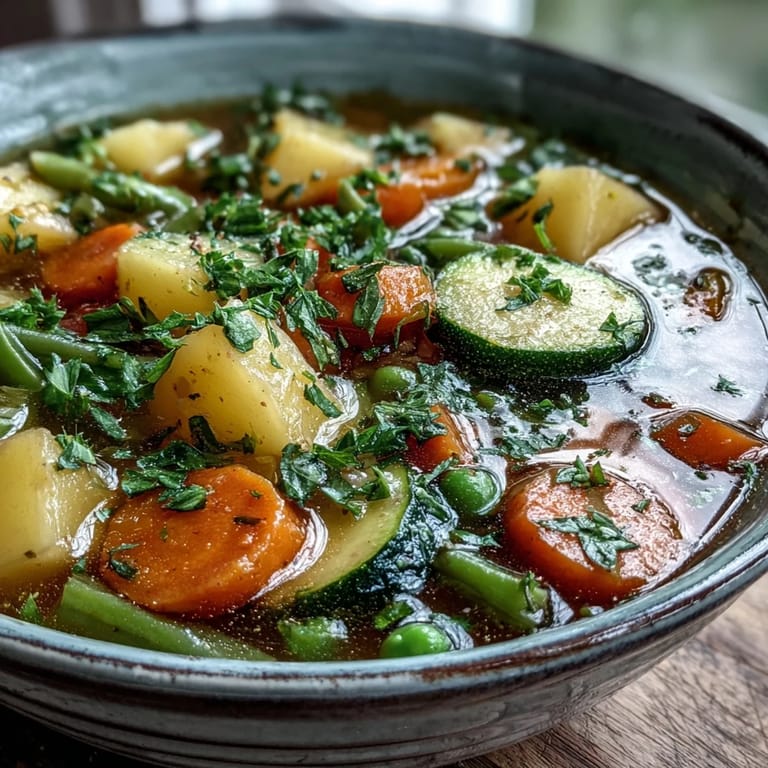
Save My teenage son, notorious for his hatred of anything green, came home from soccer practice one evening to the aroma of this soup simmering. Too hungry to complain, he filled a bowl and proceeded to devour two full servings before announcing, Huh, I guess vegetables arent always gross. That quiet kitchen moment, watching him discover that healthy food could be delicious, remains one of my favorite culinary victories.
Storing and Freezing
This soup keeps beautifully in the refrigerator for up to four days, with the flavors actually improving over time as they mingle. When reheating, I sometimes add a splash of fresh stock if its thickened too much. For longer storage, portion the cooled soup into freezer-safe containers, leaving some headspace for expansion, and freeze for up to three months.
Customizing Your Soup
The basic recipe serves as a canvas for endless variations depending on your mood or what needs using up. Winter brings opportunities for hearty additions like chopped kale or sweet potato, while summer versions might feature fresh corn kernels sliced right off the cob. During spring, nothing beats the bright addition of tender asparagus tips or fresh peas instead of frozen.
Serving Suggestions
While this soup stands perfectly well on its own, pairing it with the right accompaniments elevates a simple meal into something special. On particularly cold evenings, I serve it alongside grilled cheese sandwiches made with sharp cheddar and good sourdough bread for the ultimate comfort food combination.
- A dollop of pesto or herb oil swirled on top adds both visual appeal and an unexpected burst of flavor.
- For additional protein, consider adding a can of drained white beans or chickpeas during the last 5 minutes of cooking.
- A squeeze of fresh lemon juice just before serving brightens all the flavors and cuts through the richness.
 Save
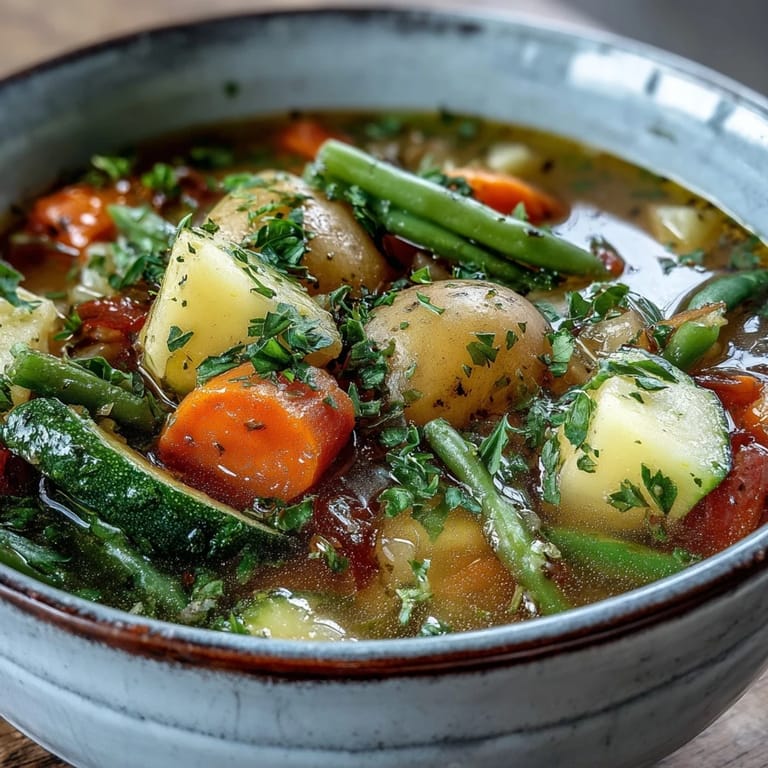
Save This humble pot of vegetables and broth has become my culinary equivalent of a warm hug, ready to provide nourishment on days when the world feels too sharp-edged or cold. I hope it brings the same comfort to your kitchen and the people you share it with.
Recipe FAQs
- → What vegetables work best in this soup?
Root vegetables like potatoes, carrots, and parsnips hold their shape well. Green beans, zucchini, celery, and onions add texture and flavor. You can also add corn, spinach, kale, or tomatoes based on what's in season or available in your kitchen.
- → Can I make this soup ahead of time?
Absolutely. This soup actually tastes better the next day as flavors meld together. Store in an airtight container in the refrigerator for up to 4 days. The potatoes will continue to absorb broth, so you may need to add a splash of stock when reheating.
- → How can I make this soup creamier?
Stir in a splash of heavy cream or coconut milk during the last few minutes of cooking. You can also mash some of the potatoes against the side of the pot to naturally thicken the broth, or blend a portion of the soup and return it to the pot.
- → Is this suitable for meal prep?
Perfect for meal prep. Portion cooled soup into individual containers and refrigerate for up to 4 days or freeze for up to 3 months. Thaw overnight in the refrigerator and reheat gently on the stovetop, adding broth if needed.
- → What protein can I add to make it more filling?
Stir in cooked white beans, chickpeas, or lentils during the last 10 minutes of cooking. Shredded chicken or turkey works well if you eat meat. For a plant-based protein boost, add quinoa or small pasta shapes during the simmering stage.