 Save
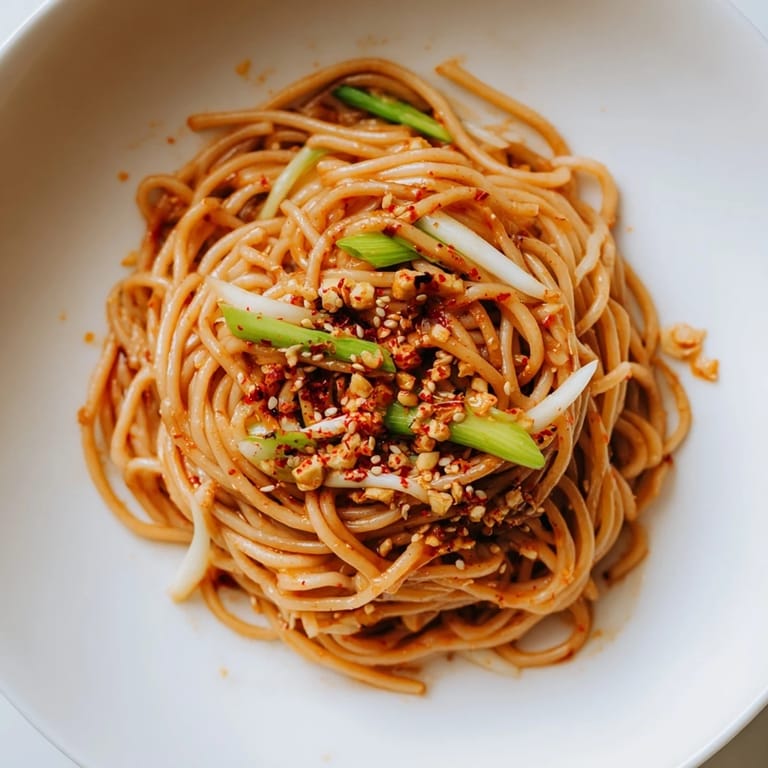
Save Late one Tuesday night, I was craving something fiery and quick, with that particular kind of heat that clears your sinuses and makes you feel alive. I'd been thinking about those nights eating in tiny noodle shops in crowded neighborhoods, where the cook would drizzle hot oil over a bowl of noodles like it was second nature. So I recreated it at home, and what emerged was this: chewy noodles coated in an intoxicatingly fragrant chili oil infused with garlic, the kind of dish that tastes like controlled chaos in the best way possible.
The first time I made this for a friend who claimed they couldn't handle spice, I warned them three times. They ate the entire bowl in silence, occasionally fanning their mouth, then asked for the recipe before they'd even finished chewing. That's when I knew this dish had something special—it's hot without being punishing, bold without being one-note.
Ingredients
- Wheat noodles (200 g): Use fresh or dried Chinese wheat noodles if you can find them, though linguine works beautifully in a pinch—they'll hold the oil better than thinner noodles would.
- Garlic (4 cloves): Mince it finely so it distributes evenly and starts to toast slightly when the hot oil hits it, releasing all its pungent charm.
- Scallions (2): Keep the white and green parts separate—the whites go into the hot oil to bloom, while the greens stay fresh and bright as a finishing touch.
- Chili flakes (2½ tablespoons): Sichuan or Korean varieties bring different personalities; Sichuan adds that numbing tingle, Korean is straightforward fierce—pick what speaks to you.
- Sichuan peppercorns (½ teaspoon): Optional but worth hunting for; they create a pleasant tingling sensation on your tongue that's distinctly different from regular heat.
- White pepper (¼ teaspoon): A subtle background warmth that plays nicely with everything else without demanding attention.
- Sugar and salt (½ teaspoon each): These balance the heat and sharpen the other flavors—don't skip them or the dish will taste one-dimensional.
- Sesame seeds (1 tablespoon): Toasted varieties are non-negotiable here; they add a gentle crunch and nutty depth.
- Neutral oil (3 tablespoons): Something with a high smoke point like canola or grapeseed; this is your vehicle for blooming the spices.
- Light soy sauce (1½ tablespoons): The main salt anchor; taste as you go since brands vary in intensity.
- Chinese black vinegar (1 tablespoon): Chinkiang vinegar specifically has this dark, almost sweet undertone that regular vinegar just cannot replicate.
- Dark soy sauce (1 teaspoon): Adds color and a slightly deeper salty note; totally optional if you're out.
- Sesame oil (½ teaspoon): A whisper of this is all you need—it's intensely fragrant and rounds out the flavor with a toasty finish.
Tired of Takeout? 🥡
Get 10 meals you can make faster than delivery arrives. Seriously.
One email. No spam. Unsubscribe anytime.
Instructions
- Start with the noodles:
- Boil water in a medium pot and cook the noodles according to their package instructions, then drain them thoroughly—you want them well-drained, not slick with starchy water. Save exactly 2 tablespoons of that cooking water; it's starch, it's liquid gold, and it'll help your sauce cling to every strand.
- Build your spice base:
- In a heatproof bowl, combine the minced garlic, white scallion parts, chili flakes, Sichuan peppercorns if you're using them, white pepper, sugar, and salt. Add the sesame seeds too. This mixture is going to sit here, dry and waiting, for your hot oil.
- Heat the oil carefully:
- In a small saucepan over medium-high heat, warm the neutral oil until it shimmers and moves freely, but don't let it smoke—you're not trying to burn it, just get it hot enough to bloom the spices. This usually takes 2 to 3 minutes; watch it closely.
- The dramatic moment:
- Slowly pour that hot oil over your garlic-chili mixture, and you'll immediately hear a sizzle and smell something absolutely intoxicating. Stir everything together right away so the garlic toasts slightly and the flavors meld together.
- Make your sauce:
- In a large bowl, whisk together the light soy sauce, black vinegar, dark soy sauce if using it, and sesame oil, then add that reserved noodle water. This creates your base liquid.
- Bring it all together:
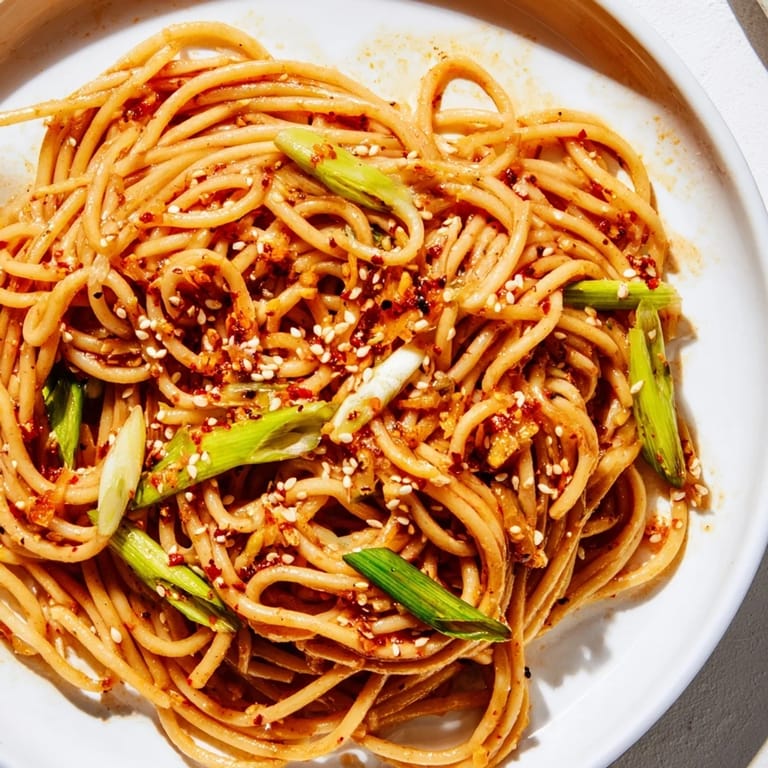
- Add your drained noodles to the sauce bowl, pour that glorious chili oil over top, and toss everything with chopsticks or tongs until every strand is glossy and evenly coated. The oil should cling to the noodles like it's meant to be there.
- Finish and serve:
- Scatter the green scallion pieces across the top and add extra sesame seeds if you're feeling generous. Serve immediately while everything is still warm and the aromatics are at their peak.
 Save
Save One afternoon, my neighbor knocked on the door asking what that incredible smell was, then stayed for a bowl and told me it reminded them of a street vendor they'd loved in another city. Food has this quiet power to carry people back somewhere, and watching that happen over noodles in my kitchen felt like more than just cooking.
Heat Level Control
The beauty of this dish is that heat is entirely up to you—start with 2 tablespoons of chili flakes and taste before deciding if you need the full 2½. Sichuan peppercorns add complexity rather than pure heat, so they're worth including even if you're chili-sensitive. If you're making this for mixed heat tolerances, consider putting the chili oil in a small bowl on the side so people can control their own adventure.
Making It More Substantial
While these noodles are wonderful as-is, they're also a perfect canvas for whatever protein or vegetables you have available. Sautéed mushrooms add earthiness, soft tofu brings creaminess, shredded rotisserie chicken makes it heartier—toss them in after the noodles are coated so they get warmed through without getting lost in the process.
Storing and Reheating
Leftover noodles keep for three days in an airtight container in the fridge, though they're honestly best eaten the same day while the chili oil is at its most fragrant. If you do reheat them, add a splash of water and warm gently in a pan or microwave—the noodles will soften slightly but the flavors stay intact. For meal prep, you could make the chili oil separately and store the cooked noodles and sauce components in different containers, then assemble when you're ready to eat.
- Make the chili oil ahead of time and it'll actually taste even better as flavors deepen over a day or two.
- Keep everything separate if you're meal prepping so textures don't get weird sitting together.
- Always give the noodles one more toss right before eating because the oil settles as they sit.
 Save
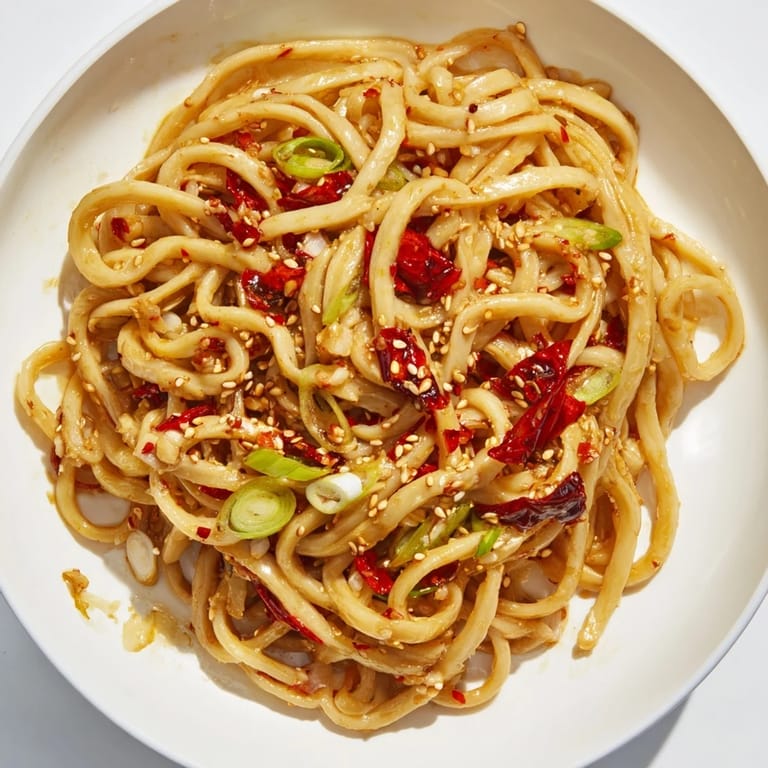
Save This is the kind of noodle dish that tastes like someone understood exactly what you needed in that moment—something quick, something fiery, something that fills you up without fussing. Once you make it, you'll keep making it.