 Save
Save There's something about the smell of lemon and capers hitting a hot pan that instantly transport you somewhere Mediterranean, even if you're just standing in your regular kitchen on a Tuesday night. I discovered this chicken piccata pasta years ago when I was craving something bright and fresh but didn't have hours to spend cooking. What started as a desperate weeknight dinner has become the dish I make whenever I need to feel like I've accomplished something impressive in under thirty minutes. The sauce comes together so quickly that you almost can't believe how much flavor you're packing into the pan.
I'll never forget the first time I made this for my sister during a visit, and she actually paused mid-bite and said it tasted like something from that Italian place downtown she'd been raving about. That moment made me realize it wasn't about complicated techniques or fancy ingredients—it was about respecting simple things: good lemon juice, the patience to let the sauce reduce properly, and knowing when your pan is hot enough to get that perfect golden crust on the chicken.
Ingredients
- Boneless, skinless chicken breasts (2 large): Pound them gently or slice horizontally to ensure they cook evenly and stay tender—thin cutlets cook through without drying out.
- All-purpose flour (½ cup): Just enough to create a delicate, golden crust that catches the pan's heat without becoming heavy.
- Olive oil and butter (2 tablespoons each): The combination gives you the high heat of oil and the richness of butter for perfectly golden chicken.
- Garlic (3 cloves, minced): Fresh garlic wakes up the entire dish in just thirty seconds—don't skip the mincing step.
- Fresh lemon juice (⅓ cup): Use real lemons, not bottled juice; the difference is immediately noticeable in the brightness of the sauce.
- Capers (¼ cup): These briny, tangy little buds are the secret that makes people ask for the recipe—rinse them to control the saltiness.
- Dry white wine (½ cup): It deglazes the pan and adds a sophisticated note, but chicken broth works just fine if wine isn't your thing.
- Chicken broth (½ cup): Low-sodium is important here so you control the final salt level of the sauce.
- Fresh parsley (2 tablespoons): Chopped fresh, not dried, it brightens everything and looks beautiful at the end.
- Spaghetti or linguine (12 ounces): Long, thin pasta catches the sauce perfectly—cook it al dente so it has a slight bite.
Tired of Takeout? 🥡
Get 10 meals you can make faster than delivery arrives. Seriously.
One email. No spam. Unsubscribe anytime.
Instructions
- Start your pasta water:
- Get a large pot of salted water boiling while you prep everything else. This multitasking step saves you time and means your pasta is waiting for the sauce, not the other way around.
- Thin and season your chicken:
- Lay each breast flat and carefully slice it horizontally into two thinner cutlets. Season generously with salt and pepper, then dredge in flour—tap off the excess so you get a light coating, not a heavy shell.
- Build a golden crust:
- Get your skillet hot over medium-high heat, add oil and butter together, and listen for that gentle sizzle when the chicken hits the pan. Cook each side three to four minutes until the chicken is golden and cooked through—you'll know it's done when it feels firm but not hard.
- Create the magic sauce:
- In the same skillet, add minced garlic and let it toast for thirty seconds until fragrant. Pour in white wine, scraping the brown bits off the bottom of the pan—that's flavor you don't want to waste. Add lemon juice, capers, and broth, then let it bubble gently for a few minutes until it reduces and concentrates.
- Make the sauce glossy and rich:
- Lower the heat and whisk in two tablespoons of cold butter, watching as it melts into the sauce and transforms it into something silky and luxurious. Return the chicken to the skillet and spoon all that gorgeous sauce over the top.
- Bring it all together:
- Add your drained pasta directly to the skillet and toss everything gently so every strand gets coated in the sauce. If it looks too thick, add splashes of that pasta water you reserved—it's starchy and will help the sauce cling to the pasta perfectly.
- Serve with celebration:
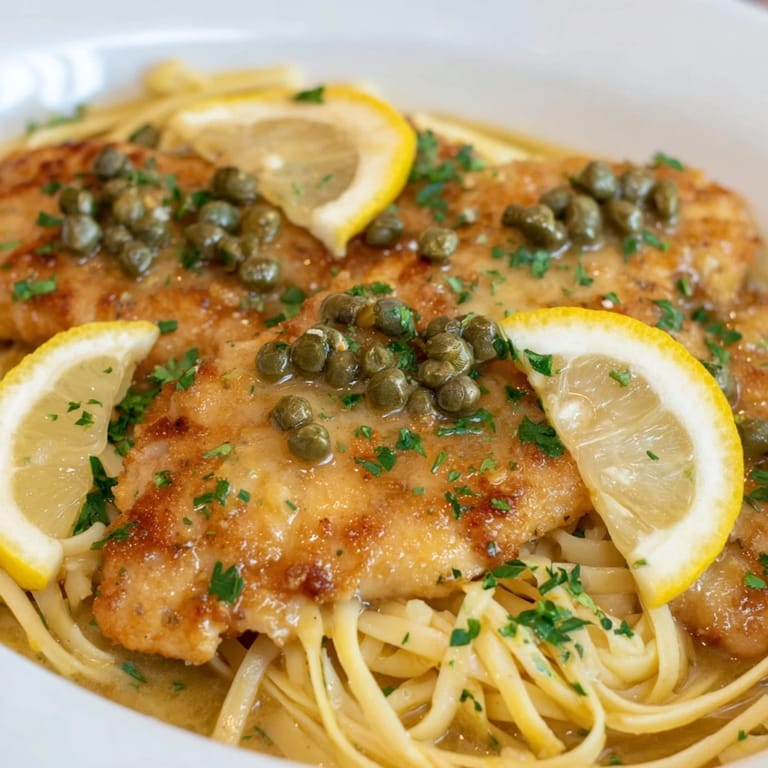
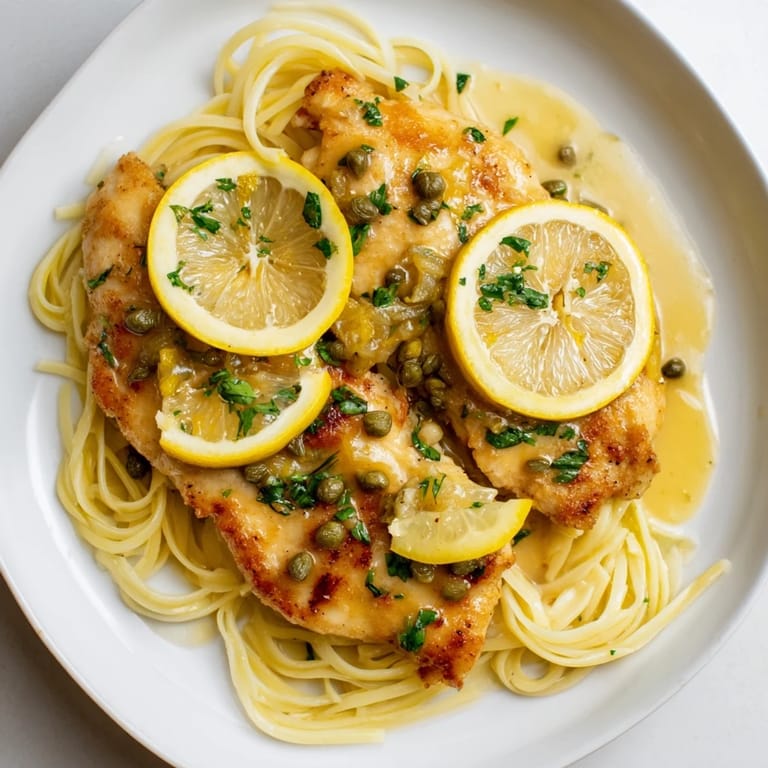
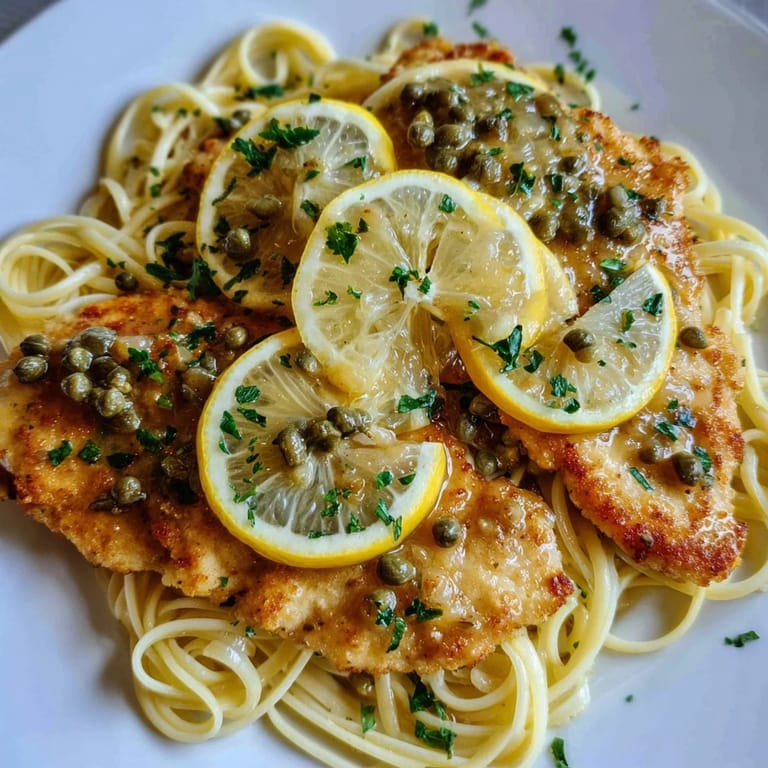
- Plate the pasta, top it with a chicken cutlet, and spoon extra sauce over everything. A scatter of fresh parsley and a few lemon slices finish it off.
 Save
Save What I love most about this dish is how it proves that simple food done right is infinitely better than complicated food done carelessly. There's a gentleness to it—nothing is rushed, nothing is overly fussy, and yet somehow it feels like you've done something special.
Why This Dish Works So Well
The genius of chicken piccata isn't in any single ingredient—it's in how they work together. The acidity of the lemon cuts through the richness of the butter and cream in the sauce, the capers add a briny punch that keeps your palate interested, and the tender chicken is just a canvas for all that brightness. The pasta absorbs the sauce without overwhelming it, which is exactly what you want. It's balanced in a way that feels effortless but actually takes understanding how flavors interact.
Timing Is Everything
The entire success of this dish lives in the order of operations. Your pasta should finish cooking right around the time the sauce is reduced and ready to marry with it, which is why I always start the water first. If you get the timing right, everything finishes at once, and that's when the magic happens—the pasta absorbs the sauce, the chicken stays warm, and you're plating something that looks and tastes like it came from somewhere fancy. When something doesn't taste quite right, it's almost always a timing issue, not an ingredient issue.
Making It Your Own
I've made this dish probably fifty times now, and I've learned that the core stays the same but there's room for your own touches. Sometimes I add a handful of fresh spinach to the skillet at the end, just wilting it into the sauce. Other times I use just lemon and skip the capers if I'm feeding someone who doesn't like them, and it's still fantastic. The bones are strong enough to stand on their own, which is the mark of a truly good recipe.
- Try adding fresh spinach or sun-dried tomatoes if you want more vegetables and color.
- Angel hair pasta works beautifully if you prefer something lighter and more delicate.
- A splash of heavy cream whisked in at the end makes it richer, though it changes the whole personality of the dish.
 Save
Save This is the dish I make when I want to remind myself why I love cooking in the first place. It's satisfying without being heavy, impressive without being stressful, and it tastes like you put in way more effort than you actually did.
Recipe FAQs
- → What type of chicken is best for this dish?
Boneless, skinless chicken breasts work well, sliced into thin cutlets to ensure quick, even cooking and tenderness.
- → Can I substitute the white wine in the sauce?
Yes, low-sodium chicken broth can replace white wine for a similar depth without the alcohol.
- → Which pasta types are recommended?
Spaghetti or linguine are ideal for holding the light, buttery sauce; angel hair pasta can be used for a lighter texture.
- → How do I make sure the chicken stays juicy?
Cooking thin cutlets over medium-high heat for a few minutes per side and resting them shortly helps retain moisture.
- → What garnishes enhance the final presentation?
Fresh parsley and lemon slices add brightness and a pop of color, enhancing both flavor and appearance.