 Save
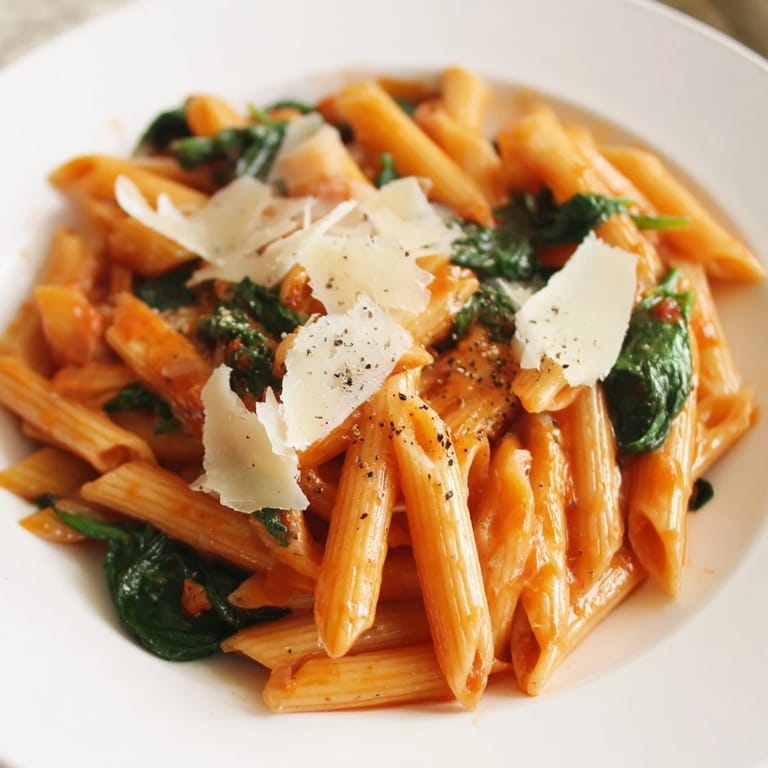
Save There's something about a weeknight when you're standing in front of the open pantry, exhausted, and spot that familiar red jar of marinara sitting right there like an old friend. I discovered this pasta almost by accident one Tuesday evening—I'd planned something fancier but my energy had other ideas. What started as a quick fix turned into one of those dishes that somehow tastes both satisfying and bright, especially when you wilt that fresh spinach right into the warm sauce and watch it transform from crisp to silky in seconds.
I made this for my roommate on a rainy afternoon when neither of us had the motivation to leave the apartment, and I remember being genuinely surprised when she asked for the recipe—not because it's complicated, but because something about the way the pasta soaked up that garlicky marinara with the soft spinach woven through made it feel special. That's when I realized this wasn't just weeknight survival food; it was actually something to crave.
Ingredients
- Dried spaghetti or penne (12 oz): The shape matters less than cooking it to that perfect point where it still has a gentle resistance when you bite it—overcooked pasta will turn mushy in the sauce.
- Salt: Don't be shy with salting the pasta water; it's your only chance to season the pasta itself from the inside.
- Olive oil (2 tbsp): Use something you'd actually taste on salad, not the cheap stuff—it makes a quiet difference in how warm and inviting the garlic tastes.
- Garlic (3 cloves, minced): Fresh garlic fills your kitchen with that exact smell that makes you feel like you're cooking something worthwhile, even if you're just opening jars.
- Marinara sauce (24 oz jar): This is your base, so pick one that tastes good to you on its own—the pasta won't make a mediocre sauce better.
- Fresh baby spinach (5 oz): It wilts down to almost nothing, so don't panic when you see how much it takes up in the pan raw.
- Red pepper flakes (1/2 tsp, optional): If you like a whisper of heat that builds as you eat, add it; if you want none, skip it completely.
- Black pepper: Grind it fresh over the finished dish—it adds a peppery brightness that bottled stuff never quite captures.
- Parmesan cheese (1/4 cup grated, plus more): The salty, umami punch that somehow makes pasta taste like pasta.
- Fresh basil (optional): A few torn leaves at the end feel like a small luxury, even on ordinary Tuesdays.
Tired of Takeout? 🥡
Get 10 meals you can make faster than delivery arrives. Seriously.
One email. No spam. Unsubscribe anytime.
Instructions
- Get Your Water Going:
- Fill a large pot most of the way with water, salt it generously, and get it boiling hard before you add the pasta. You'll know it's ready when steam is rolling off the surface and you can actually see the rolling motion.
- Start the Sauce:
- While the water is heating, warm olive oil in a skillet over medium heat and add your minced garlic, stirring for about 30 seconds until the kitchen suddenly smells incredible. Don't let it brown—you want fragrant, not bitter.
- Build Depth:
- Pour in the marinara sauce and let it come to a gentle bubble, then add red pepper flakes if you're using them. This is when the sauce starts waking up, losing that straight-from-the-jar taste.
- Introduce the Spinach:
- Dump the baby spinach into the warm sauce and stir it constantly for about 2 to 3 minutes while it transforms from a bright green pile into something soft and integrated. It happens fast, and the color shift is oddly satisfying.
- Combine and Adjust:
- Add your drained pasta to the sauce and toss everything together so every strand gets coated. If it looks thick or dry, splash in some of that reserved pasta water you saved—a little at a time until it feels right, silky but not soupy.
- Season and Finish:
- Stir in the Parmesan, crack some fresh pepper over top, and taste it. This is your moment to decide if it needs anything else, and usually it doesn't.
- Serve Right Away:
- Plate it up immediately while everything is still warm and the pasta has that tender-but-toothy texture that makes eating pasta worth the effort. A little extra Parmesan and maybe some basil on top, and you're done.
 Save
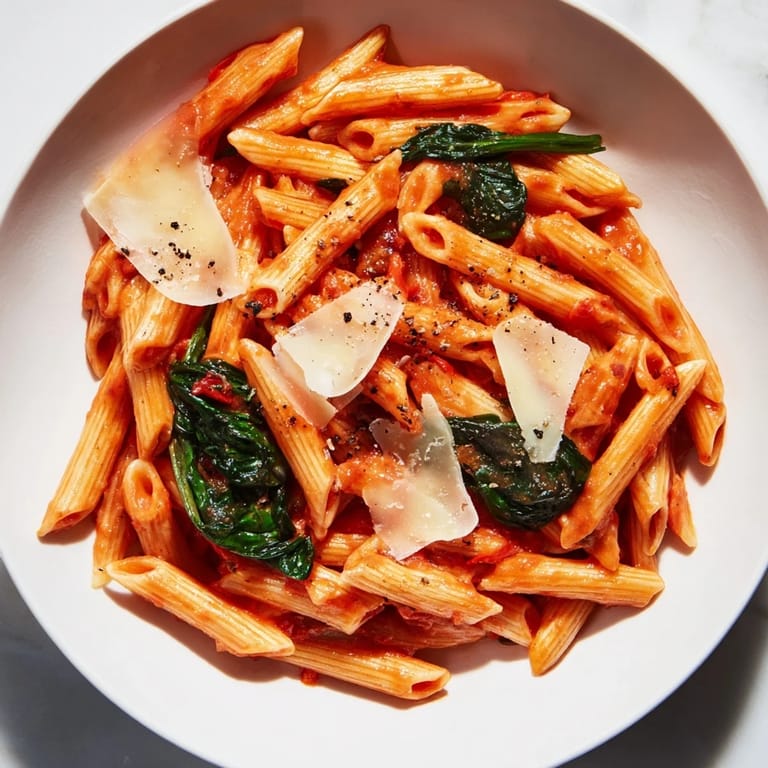
Save There's a moment near the end of cooking this—right when you're tossing the pasta and spinach together in that warm marinara—where you suddenly realize you're not just making dinner, you're making something that brought someone joy before. That's when it stopped being just about being quick and easy, and started being about feeding people something that actually matters.
Why Pasta Water Is Your Secret Weapon
The starch in pasta water isn't just filler—it's an emulsifier that helps sauce cling to pasta and creates this subtle, glossy finish you can't get any other way. I learned this the hard way by making this dish a dozen times without saving it, wondering why restaurant pasta always looked better than mine. Now I understand that cooks aren't performing magic; they're just respecting the science of what they're actually cooking with.
Flavor Building With Jars
Using jarred sauce doesn't mean you're taking a shortcut—you're choosing a ingredient just like you would fresh tomatoes, except someone else already did the peeling and cooking for you. The key is understanding what that jar brings to the table and then building around it, which is exactly what the garlic and spinach do here. When you add fresh elements to something pre-made, you're not being lazy; you're being smart about your time.
Extensions and Variations
This recipe is designed to be forgiving, which means you can nudge it in different directions without breaking anything. A handful of white beans adds protein and makes it feel more substantial; sautéed mushrooms bring a quiet earthiness that complements marinara in ways that surprise you. If you're cooking for someone vegan, the Parmesan swaps out painlessly and the rest of the dish stays intact.
- Try adding a can of white beans to make it more filling without changing the flavor much.
- A handful of mushrooms sautéed with the garlic adds umami depth that makes the sauce taste richer.
- Toss in a small pinch of nutmeg if you want something that tastes less expected and somehow more sophisticated.
 Save
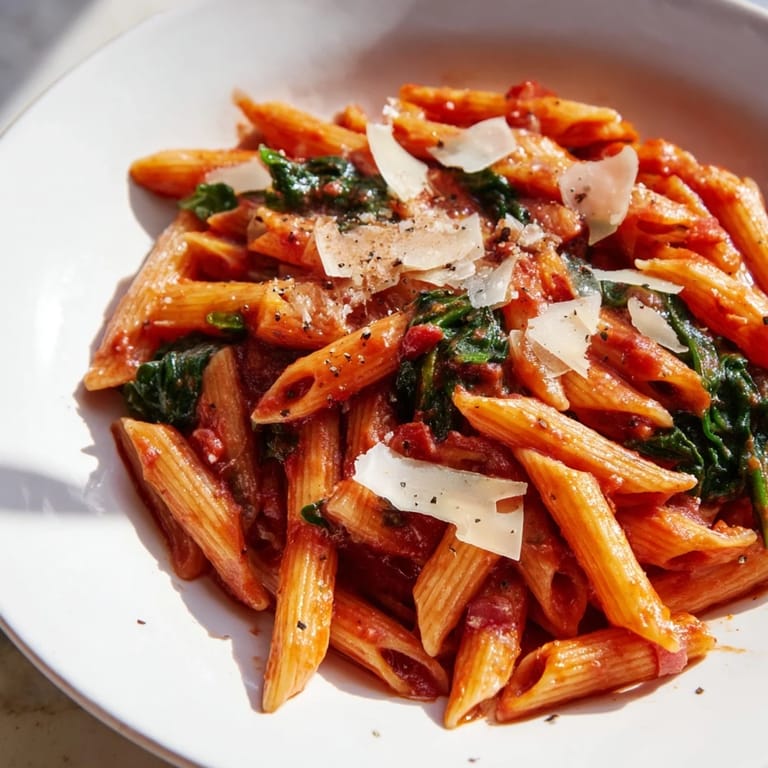
Save This pasta sits in that perfect space where it's simple enough for a Tuesday night but feels complete enough to serve to someone you want to impress. Once you've made it a few times and stopped thinking about the steps, you'll realize you've actually got a technique that works for any number of quick sauces and vegetables.
Recipe FAQs
- → Can I use fresh tomatoes instead of jarred marinara sauce?
Yes, fresh tomatoes can be simmered with garlic and herbs to create a homemade sauce, but it may require longer cooking time.
- → What pasta types work best with this dish?
Spaghetti, penne, or other medium-sized pasta shapes hold the sauce well and work perfectly.
- → How do I keep the spinach vibrant and tender?
Add the fresh spinach towards the end of simmering and cook just until wilted to preserve color and texture.
- → Can I make this dish vegan?
Omit the Parmesan cheese or substitute it with a plant-based alternative for a vegan-friendly version.
- → How do I adjust the sauce consistency if it’s too thick?
Stir in reserved pasta cooking water a little at a time until the desired sauce consistency is reached.