 Save
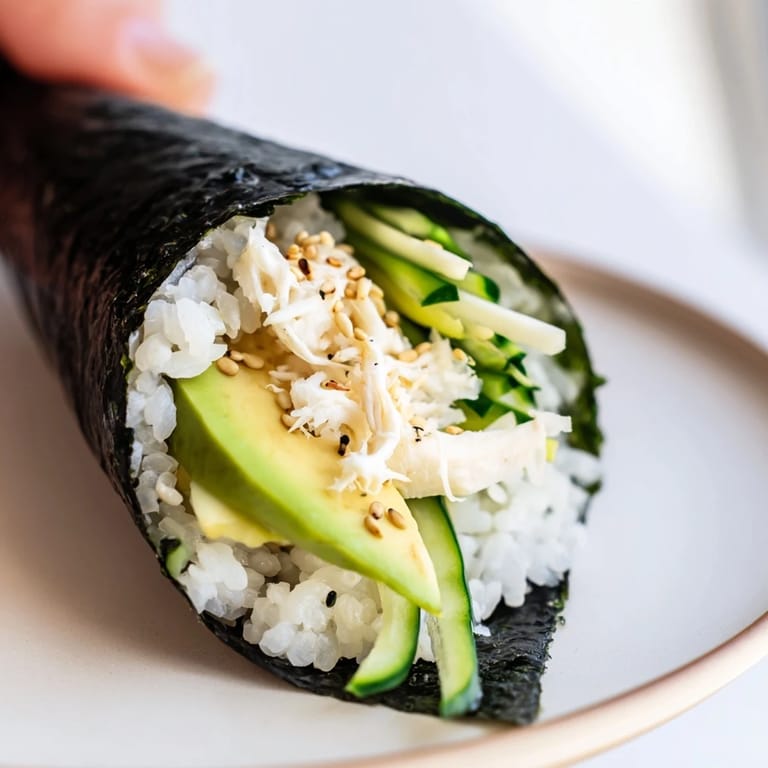
Save The first hand roll I ever made fell apart before it reached my mouth, rice tumbling onto the counter while I stood there holding a limp piece of nori. My friend Kenji laughed so hard he had to sit down, then showed me the trick: less rice, tighter roll, eat it fast. That night we made twenty more, each one better than the last, and I realized sushi at home didn't need to be perfect to be absolutely delicious.
I started making these on Friday evenings when I wanted something light but celebratory. My neighbor smelled the rice vinegar through the window once and showed up with a bottle of sake, and suddenly it became our monthly tradition. We'd sit on the floor, roll our own cones, and argue about whether pickled ginger belongs inside the roll or on the side.
Ingredients
- Sushi rice: Short grain Japanese rice is essential here because it gets sticky enough to hold together but not mushy, and always rinse it until the water runs clear or your rolls will be gummy.
- Rice vinegar: This is what gives sushi rice that signature tangy sweetness, and I've learned the hard way that regular white vinegar tastes harsh and wrong.
- Avocado: Choose one that yields slightly to pressure but isn't mushy, because overripe avocado turns to paste and underripe won't slice cleanly.
- English cucumber: The thin skin and fewer seeds make it perfect for julienne strips that add crunch without watering down your roll.
- Crab meat: I use real lump crab when I'm feeling fancy and imitation when I'm not, and honestly both work beautifully with a little mayo stirred in.
- Nori sheets: Toasted seaweed is surprisingly delicate, so keep the package sealed until you're ready to roll or it'll go soft and chewy.
- Toasted sesame seeds: Just a pinch adds a nutty depth that makes each bite more interesting.
- Soy sauce, pickled ginger, wasabi: The holy trinity of sushi accompaniments, and I always put out more than I think I'll need because people get enthusiastic.
Tired of Takeout? 🥡
Get 10 meals you can make faster than delivery arrives. Seriously.
One email. No spam. Unsubscribe anytime.
Instructions
- Rinse the Rice:
- Swirl the sushi rice in a bowl under cold running water, draining and refilling until the water stays clear instead of cloudy. This removes excess starch and prevents gluey rice.
- Cook the Rice:
- Bring rice and water to a boil, then cover tightly and simmer on the lowest heat for 15 minutes before letting it steam off the heat for another 10. Don't peek during cooking or you'll release the steam.
- Season the Rice:
- Dissolve vinegar, sugar, and salt together, then gently fold it through the hot rice using a cutting motion so you don't smash the grains. Let it cool to room temperature, fanning it if you're impatient like me.
- Prep the Fillings:
- Slice avocado into thin wedges, julienne the cucumber into matchsticks, and if you want, mix the crab with a little mayo for extra richness. Have everything ready before you start rolling.
- Assemble the Cone:
- Hold a halved nori sheet shiny side down and spread 2 to 3 tablespoons of rice diagonally across one corner, leaving space at the edges. Layer your fillings on the rice and sprinkle with sesame seeds if using.
- Roll It Up:
- Start from the filled corner and roll the nori into a tight cone shape, using a grain or two of rice to seal the final edge. The key is confidence, just commit to the roll and it'll hold.
- Serve Immediately:
- Hand rolls are meant to be eaten right away while the nori is still crisp. Pass the soy sauce, ginger, and wasabi around the table.
 Save
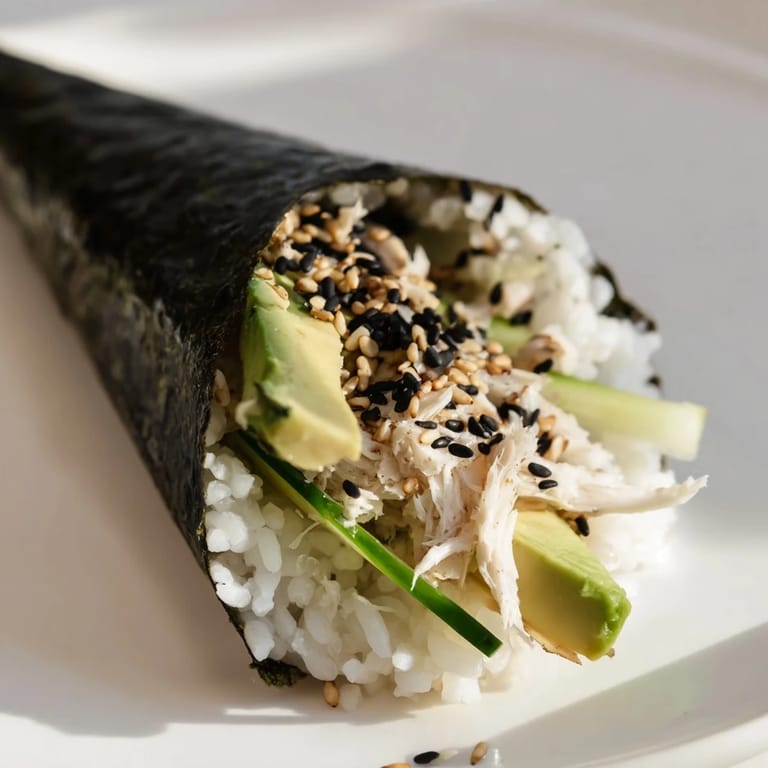
Save The night I served these at a dinner party, my friend who claimed she didn't like sushi ate four and asked for the recipe. She told me later it was the hands on experience that changed her mind, the act of building her own cone exactly how she wanted it. Sometimes food tastes better when you've had a hand in making it, literally.
Choosing Your Fillings
I've stuffed hand rolls with everything from leftover teriyaki chicken to pickled vegetables, and the beauty is almost anything works as long as it's sliced thin. Smoked salmon with cream cheese feels indulgent, spicy tuna with cucumber feels classic, and even plain avocado with a drizzle of sesame oil can be perfect. The rice and nori are your canvas, so paint with whatever's in your fridge or whatever sounds good that day.
Getting the Rice Right
Sushi rice intimidated me for years until I realized it's just about ratios and patience. The vinegar mixture should taste a little too sweet and tangy on its own because it mellows when mixed with the rice, and folding it in while the rice is still warm helps it absorb evenly. I used to rush this step and end up with bland rice, but now I take my time and taste as I go, adding a touch more vinegar if needed.
Serving and Storing
Hand rolls are at their absolute best in the first five minutes after rolling, when the nori still has that ocean crisp snap against your teeth. If you must make them ahead, wrap each cone loosely in plastic but know they'll never be quite the same as fresh. I prefer to set out all the components and let people roll their own, which turns dinner into an activity and guarantees everyone gets theirs at peak crispness.
- Keep extra nori sheets on hand because someone always wants to make one more.
- Leftover seasoned rice keeps in the fridge for a day and makes excellent fried rice the next morning.
- If your avocado isn't ripe, leave it on the counter for a day or two rather than trying to use a hard one.
 Save
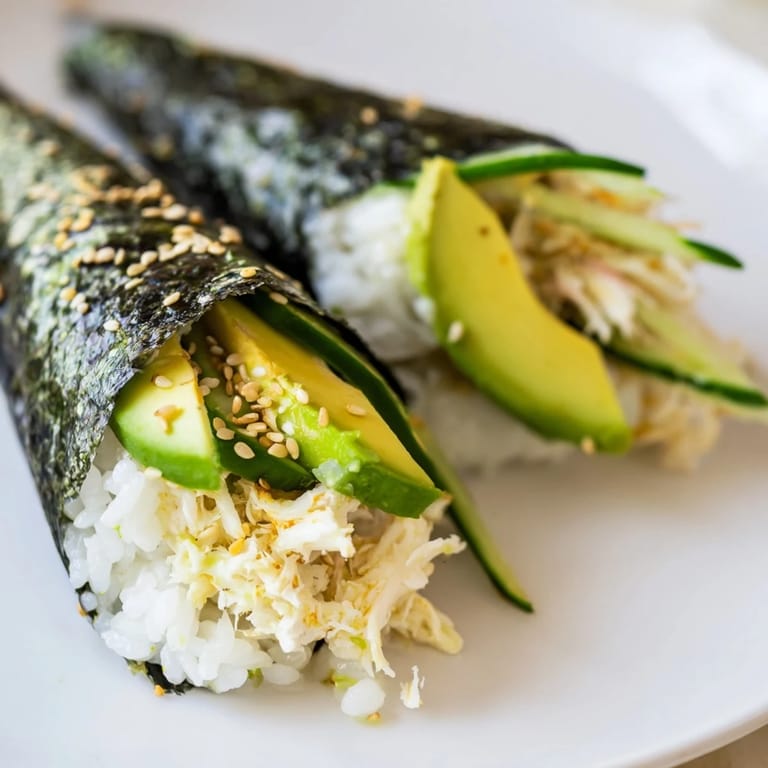
Save These hand rolls have become my answer to so many occasions, from lazy Sundays to impromptu gatherings, because they're impressive without being fussy. I hope they bring as much joy to your table as they have to mine.
Recipe FAQs
- → What type of rice should I use for sushi?
Use short-grain Japanese sushi rice, which has the right starch content and texture to hold together. Rinse the rice thoroughly under cold water until the water runs clear to remove excess starch before cooking.
- → How do I prepare the rice vinegar mixture?
Combine rice vinegar, sugar, and salt in a small bowl and stir until the sugar and salt dissolve completely. Fold this mixture gently into the cooked rice while it's still warm, using a rice paddle to preserve the grain structure.
- → Can I prepare the ingredients in advance?
Yes, you can prepare and chill the fillings several hours ahead. Cook the sushi rice and cool to room temperature, then store covered. Prepare the avocado, cucumber, and crab just before rolling to maintain freshness and prevent browning of the avocado.
- → What are good substitutes for crab meat?
Cooked shrimp, smoked salmon, or cooked chicken work wonderfully as alternatives. For a vegetarian option, use extra avocado, cucumber, or add pickled vegetables like radish or carrot for crunch and flavor.
- → How do I prevent the nori from becoming soggy?
Serve the hand rolls immediately after assembling them. Nori softens quickly due to moisture from the rice and fillings. If preparing ahead, keep nori sheets separate and assemble just before serving for the best texture.
- → What are the best accompaniments to serve?
Traditional accompaniments include soy sauce for dipping, pickled ginger to cleanse the palate between rolls, and wasabi for a spicy kick. Arrange these in small dishes alongside the hand rolls for an authentic experience.